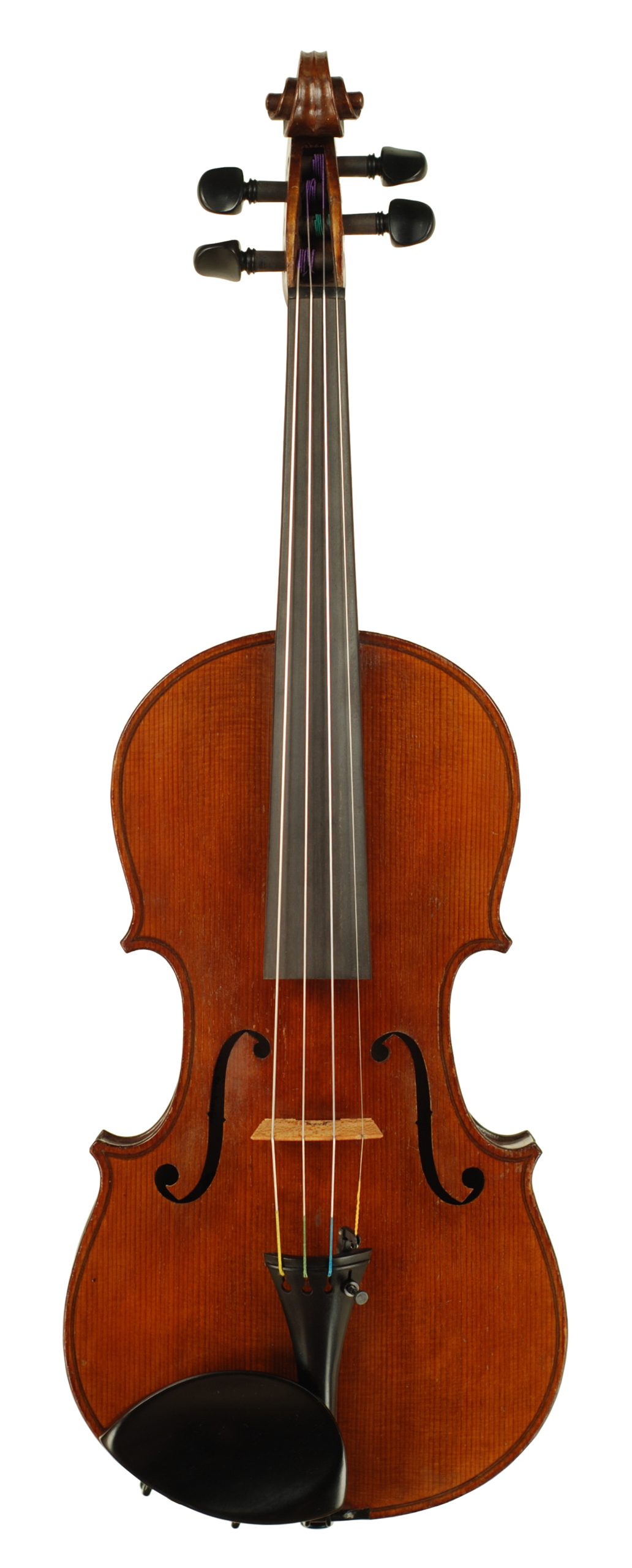
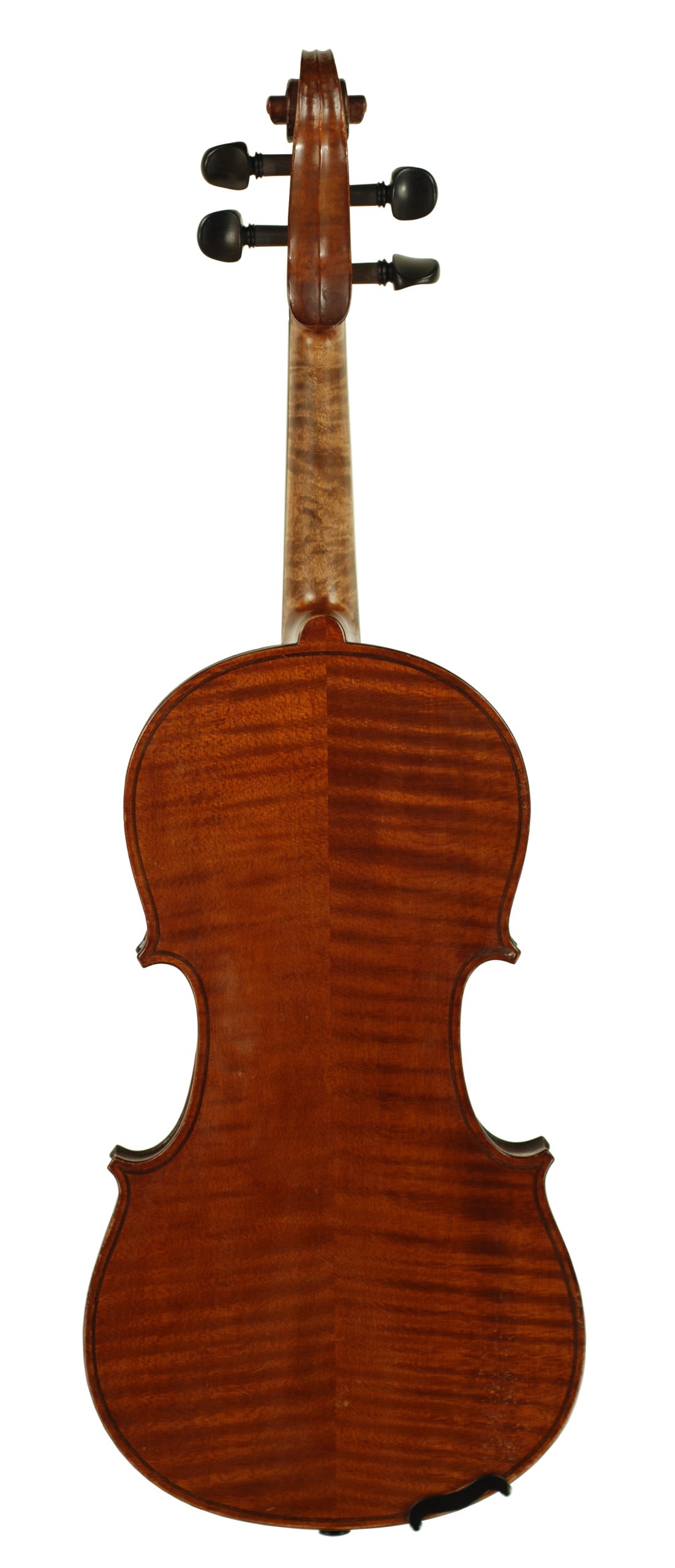
Louis Lowendall Trade Violin – Berlin circa 1890-1900
$1,395.00
click picture to enlarge
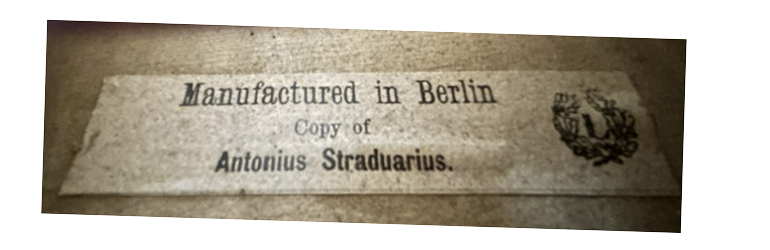
Label:
Copy of ( Lowendall insignia)
Antonius Stradivarius.
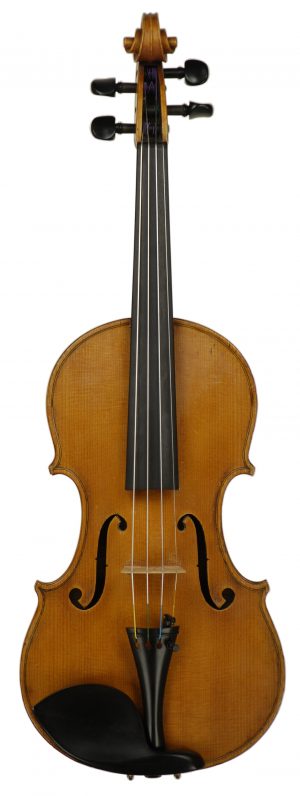
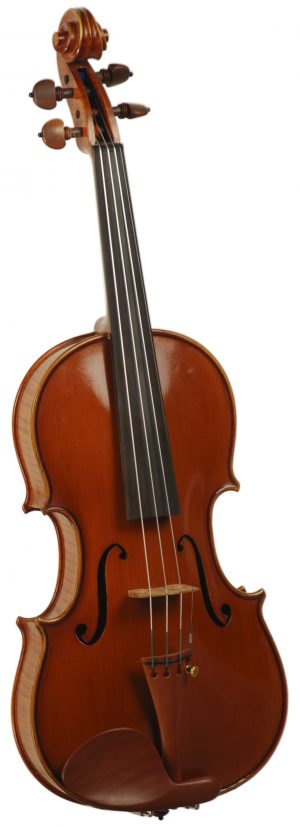
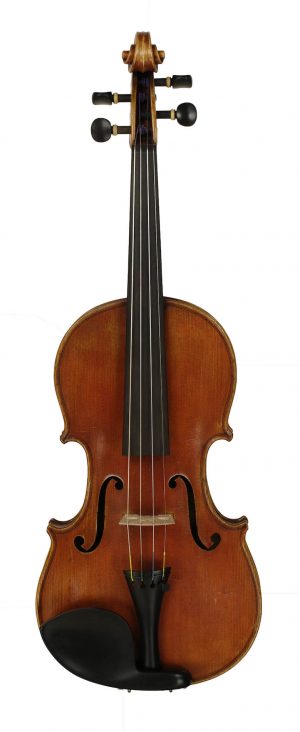
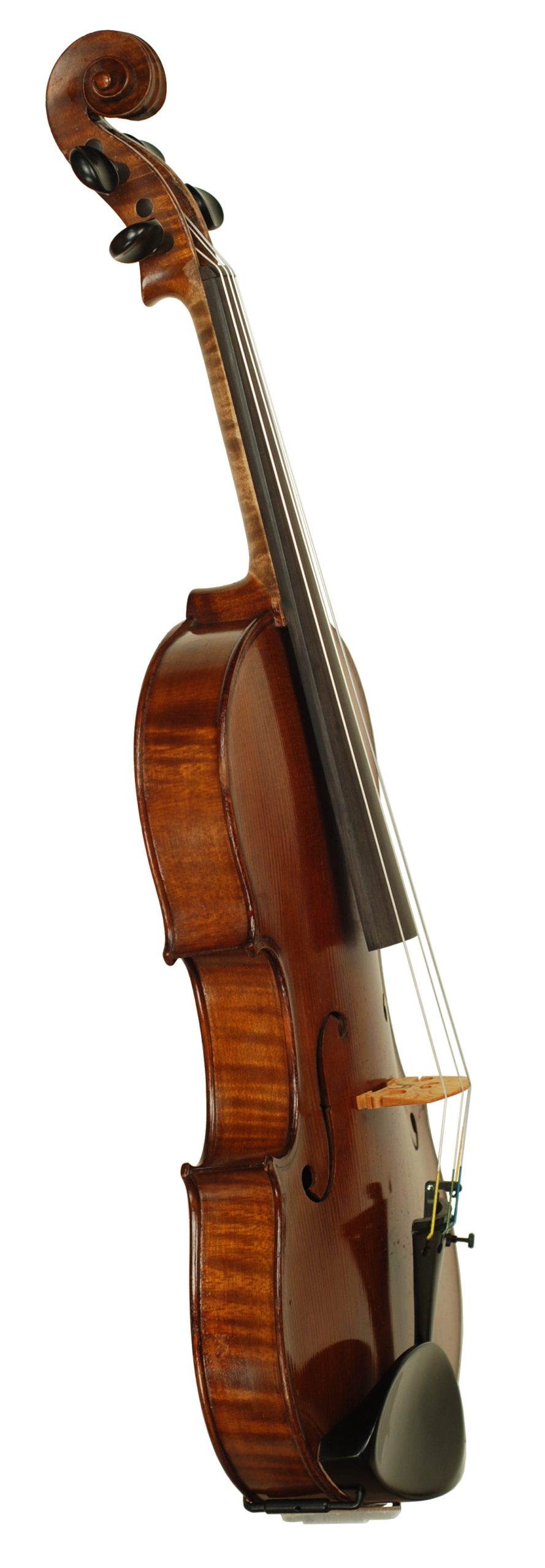
This trade instrument was made in the early 1900’s. It is patterned after a Stradivarius model and carries the traditional Lowendall capital L inside a wreath insignia on the right side of the label. The violin was made in the Louis Lowendall workshop to be sold to the west. The violin has nice patina; signs of playing wear on the edges and some on the back plate. That is a good thing. Someone loved the violin and took care of the instrument. The violin was crafted well, and it has the varnish color I would expect for one of his trade instruments. The violin was made in Germany, where Lowendall was a successful businessman, luthier, and all-around entrepreneur.
Louis Lowendall (1836-1912) was into violins at a young age. His father encouraged this love for the violin. He became interested in construction and the woods used in violin making. At 13 he was enrolled in school at Konigsberg High School, northern Prussia to enhance his musical studies. At 19 he also became proficient at the cello. He further studied violin and bow making with Bausch and Heinrich Knopf. In 1855 he opened a music retail shop in Berlin where he sold many instruments and bows. He did very well as a businessman and is not known as a violin or bow maker. He owned the company and employed the best craftsmen he could find to work for him. Lowendall made various levels of trade instruments with his insignia L, or his name branded inside the violin and/or with a star branded with the L inside the star on the button.
For six years in the late 1880’s-1890’s he lived in America where he befriended George Gemunder, a famous violin maker in New York City. The Gemunder firm purchased many of Lowendall’s instruments, bows, and tonewoods. Lowendall spent much time traveling, dividing his time between America and England. He gained contacts for his business and developed relationships while he sold his instruments and bows. He opened a second larger shop, the Star Works Company, in Berlin in 1889 specifically to import instruments and bows to the West. I purchased this violin in England 4 years ago. I’m sure it was purchased there before World War I.
This violin is antiqued with the traditional amber/brown varnish with a hint of orange throughout. We have gone over the entire instrument and replaced the fingerboard with a new African ebony board, new nut, cut a new set of ebony pegs, new bridge, and a soundpost too. The violin has no issues and is in great condition.
The sound has depth and a powerful drive throughout the entire voicing. The G and D strings ring and have good sustain while the response is impressive. A player will notice this older violin has a darker sound versus that of a brighter or more brilliant new instrument. The violin has power but nothing a player cannot control, and the violin lays well, it is easy to get around on. The E and A strings deliver as well. The treble side shines, the sound is clean, not too bright. I would put this violin up again violins that sell at higher prices. Great sound for the money. This is a terrific violin for the up-and-coming serious player. A perfect match for a player that needs some extra power and sound quality all found in a European instrument.
Related products
-
Carlo Gavoni Violin
$2,400.00 Add to cart