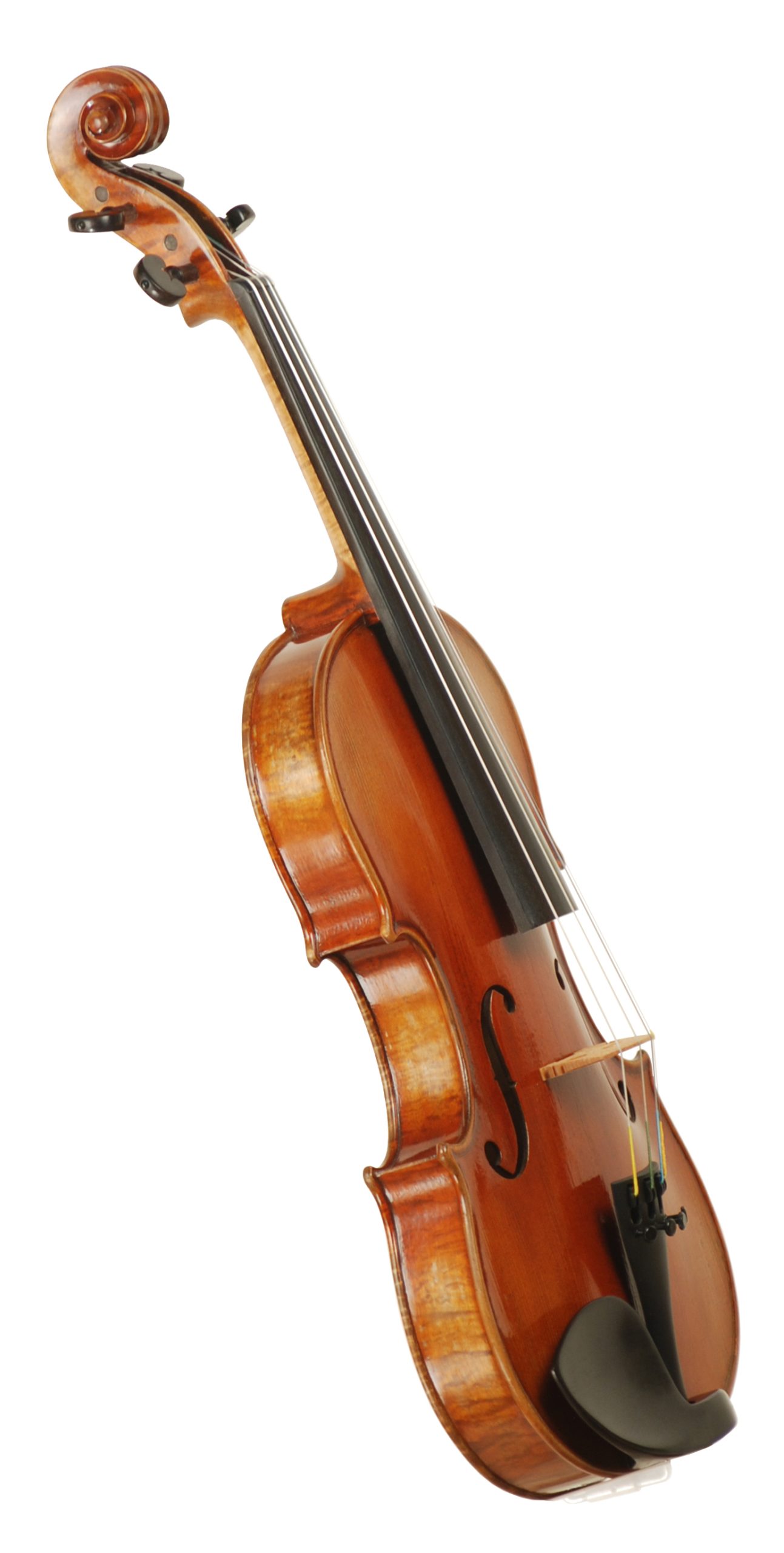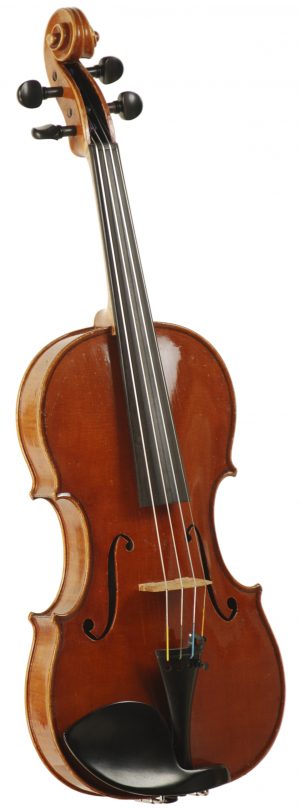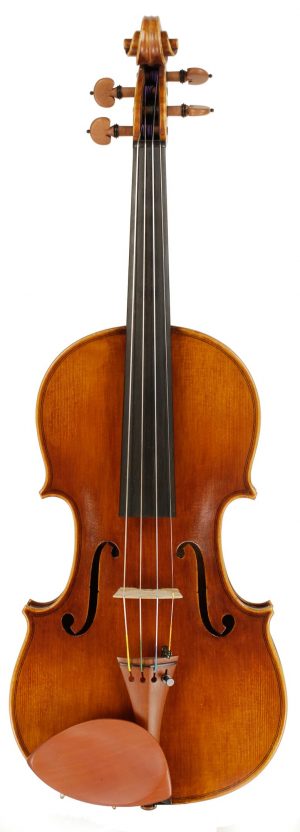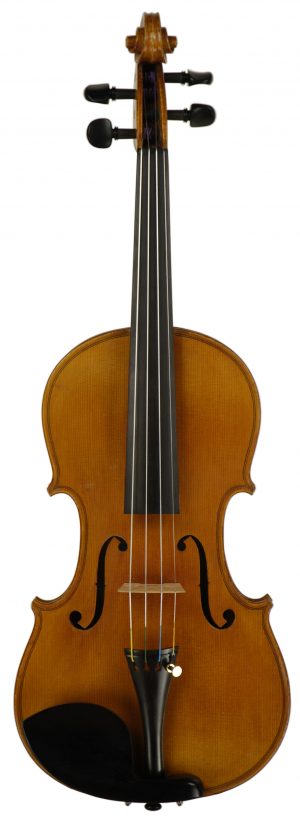
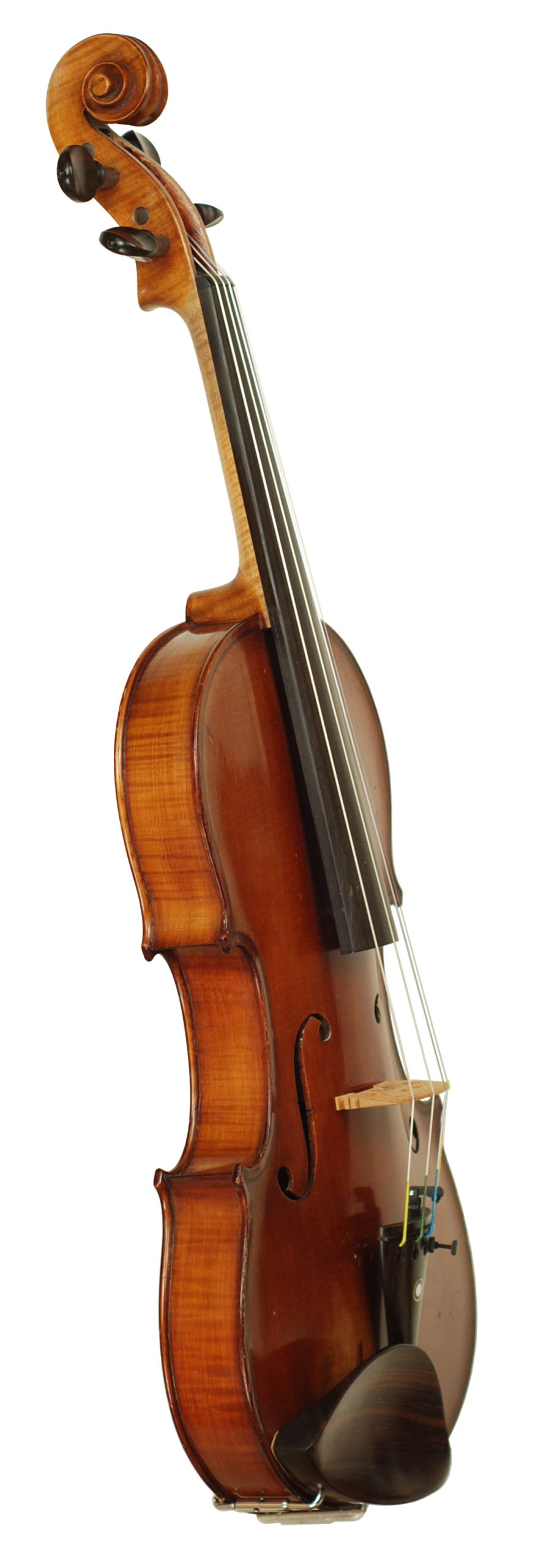
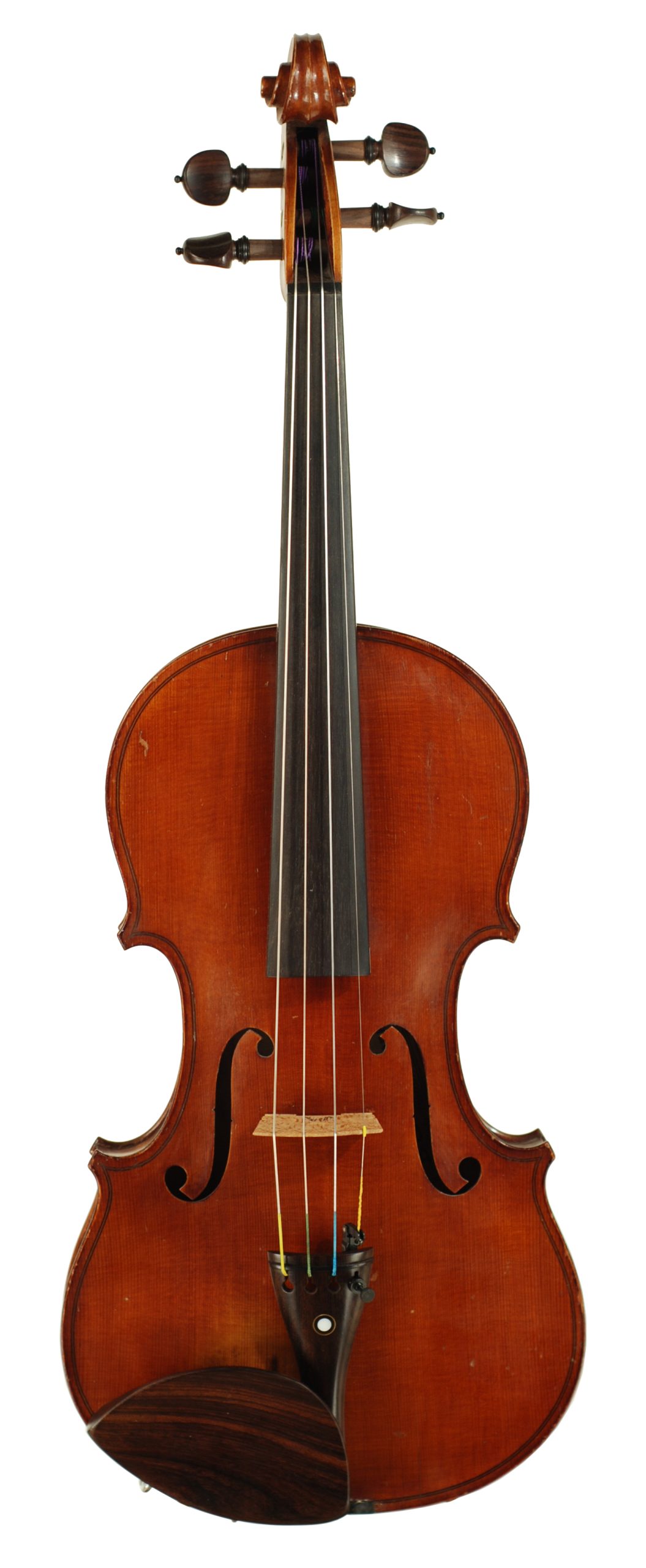
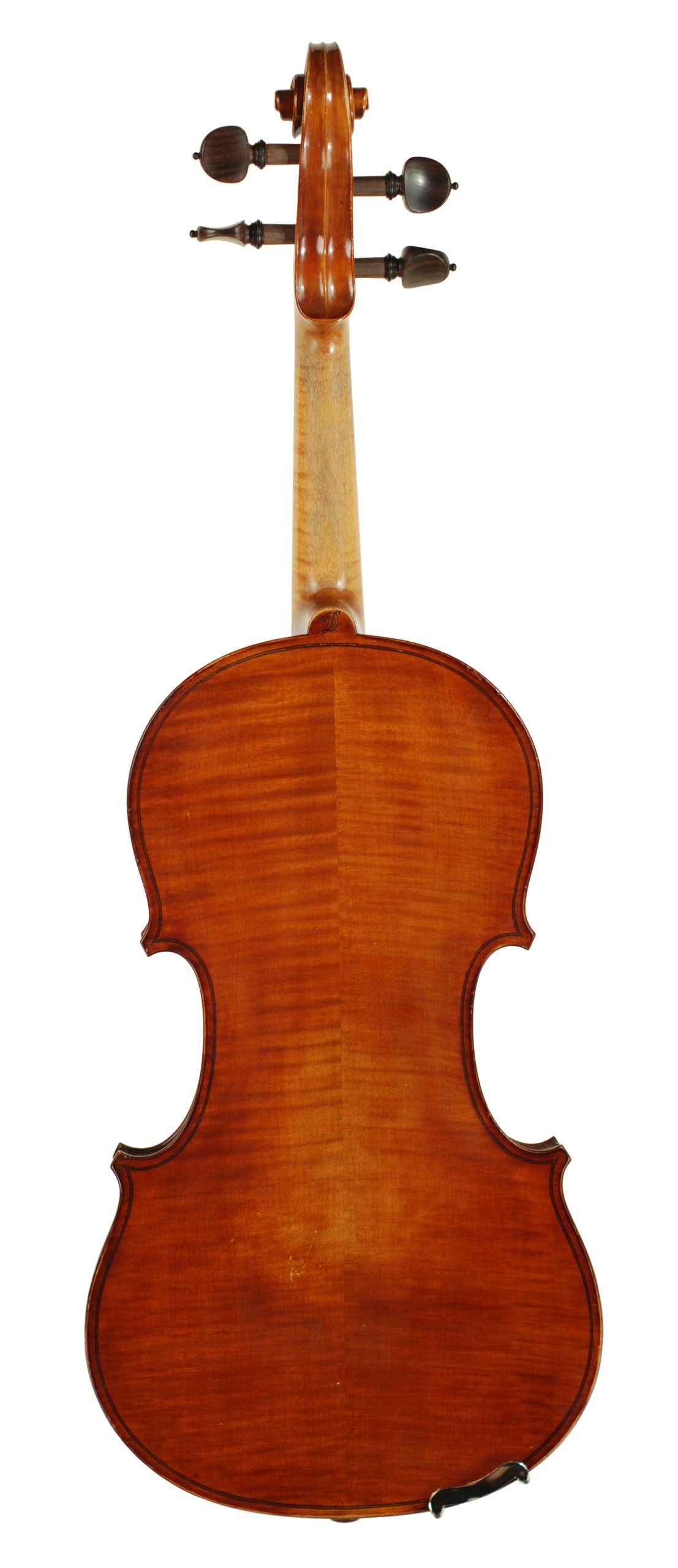
A DURRO German Violin Imported by Samuel Buegeleisen 1901
$2,095.00
click picture to enlarge
Label: Treble Side
B & J New York
Sole Importers
Label: Bass Side
Cremonensis faciebat 1901
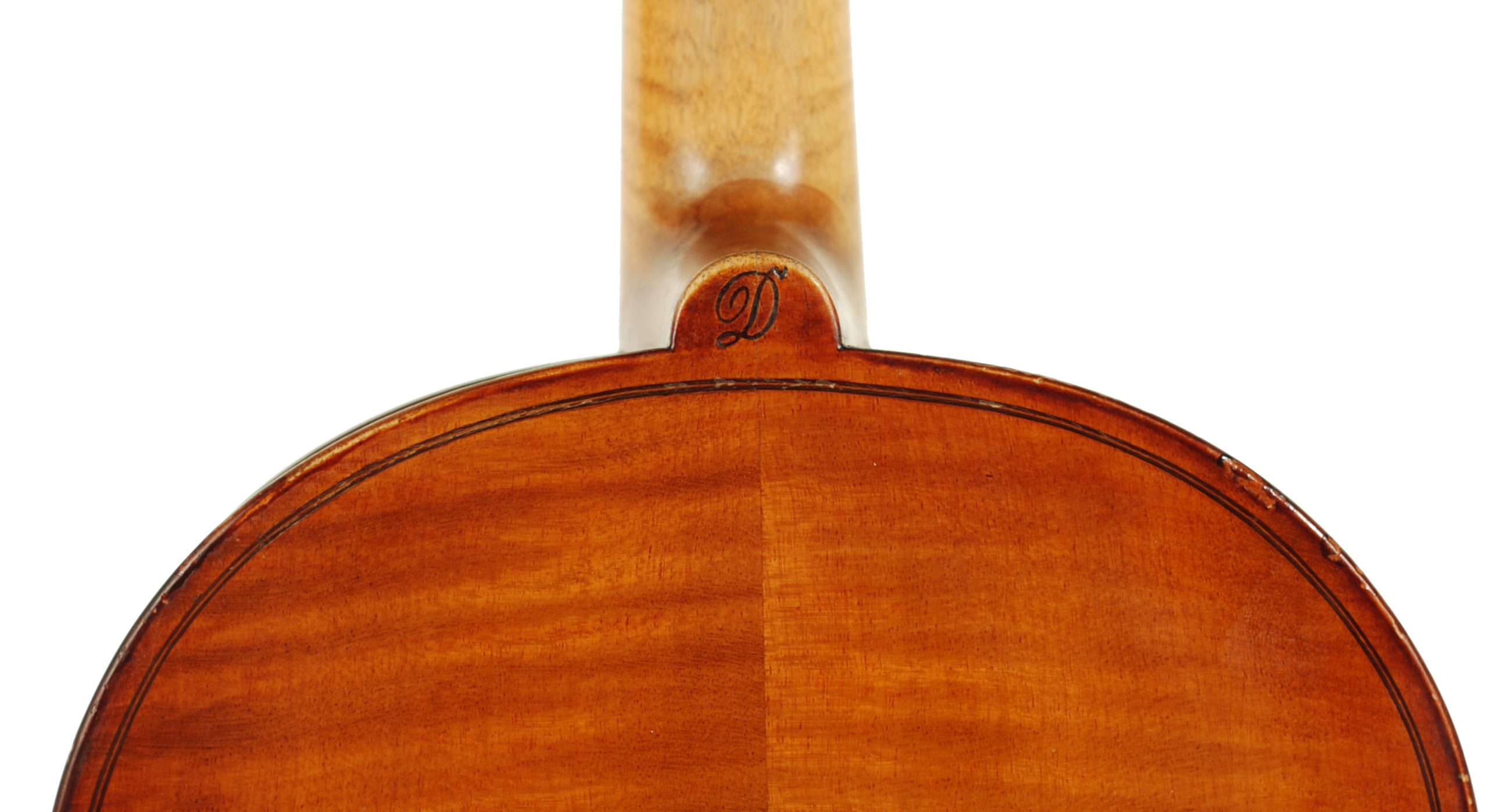
I love doing research and writing on the instruments we restore here at the shop. I spend many hours with my nose in books and calling other makers to try to determine and identify instruments and bows. Growing up my home was in the New York/New Jersey area. With close to eight million people in that area and well before “Antiques Road Show” my dad and I gathered quite a collection of instruments and bows with no help from cell phones or computers. With a decade of collecting, we gathered close to 600 instruments and many more bows. This violin has two labels inside the violin. The Durro label and a nondescript Stradivarius label. The violin is also branded on the tongue with a capital cursive D.
Samuel Buegeleisen (1871-1957) and David Jacobson (1869-1904) worked for Tonks Bros. Co. in Chicago before going into business together in the 1890’s and establishing themselves in New York City in 1901. Jacobson passed away soon after in 1904, leaving Buegeleisen as the sole owner of what would become one of the largest musical import businesses of the early 20th century. The Durro name was used by the Buegeleisen & Jacobson firm of New York City on the violins they imported in the early 20th century. This is a very good trade violin, a gem, imported from Germany and made its way to America. We reworked the entirely new set up in rosewood fittings. A “B” grade Despiau bridge was cut, and new soundpost cut too. The violin is light in weight and carved well which adds to the beauty of the violin. It helps the violin to speak well too. The top plate is two-piece spruce with fine to medium grain. The back plate is flamed maple with the maple ribs matching in degree of the flame. The varnish is a deep orange/ brown with some slight shading to show contrast. It has a few playing marks, all touched up, which helps me understand that someone played on the violin for at least a few generations.
Corpus 359.0 mm., Major Width 210.0 mm., Minor Width 169.0 mm., Rib Height 30.0 mm.
The violin has great response off the strings, almost instant. The violin speaks and has a slight edge to the voice, which I always like. This edge helps the harmonics ring and creates overtones that a player will sense and feel. The violin is light in weight and I’m sure aids in having this instrument sound much better than average. The G and D strings are slightly covered, leaning to a darker sound. The sound carries and will be an instrument I will use in mid-July 2026 to play with our worship team in services if the instrument is still here. I really like the overall temperature of the violin. It has a warm, smooth sound with a touch of maturity on the bottom end. The treble side plays so well and shines even with my bass playing bow arm. If you’re looking for a beautiful sound, not too overpowering, an instrument with German bones, well carved, this could be it. A trade instrument that came to America, nothing fancy but still no small voice. This is it.