Franz Stengel Bubenreuth Violin – Germany 1999 – SOLD June 25, 2026
$2,200.00
click picture to enlarge
Label:
Bubenreuth
hand carved instruments
Anno 1999
Not much is known about the founding of the village of Bubenreuth. The suffix “reuth” indicates that it was created by a clearing of a mighty forest. The town is first mentioned as “Buberrode” in an early document from November 24, 1243. It’s a small town near Nuremberg in southern Germany. Bubenreuth had the most important ingredients for making instruments: tonewoods for the spruce tops and maple for the backs, ribs, and necks. This small town became a huge asset to the instrument making and bow making production of orchestral string instruments soon after World War II. The mayor of Bubenreuth, with a few selected helpers, traveled to many of the refugee camps set up after WW II in Germany and Czechoslovakia. They had a mission to make their hometown something special. God blessed their efforts. They handed out flyers and spoke to hundreds, probably thousands of families, particularly looking to attract luthiers to their village to create a new center for artisan families in Germany. Over 2000 families responded and by 1949 Bubenreuth and the surrounding grew from a village of 400 to over 3,500 people. Wow! Bubenreuth was transformed from a small farming village into one of the main hubs of German string instrument making. These makers produced violins, violas, cellos, basses, bows for those instruments, lutes, mandolins, zithers, guitars, banjos, and recorders. They also attracted not just the displaced luthiers but the supporting cast the instrument and bow makers needed. The village attracted string makers, tonewood dealers, major lumber men, varnish producers, rosin makers, and tool makers. Many came from the Schönbach area of Czechoslovakia and from all over Germany where they were trying to survive. They were welcomed with open arms to resettle in Bubenreuth for the next 10-18 years. The village not only grew in population but also in fame for what had happened. It started from a dream and a mayor who had a vision and acted, not sitting back and waiting. The town saved thousands of families, giving them hope and truly started a special “musical corner” of the world.
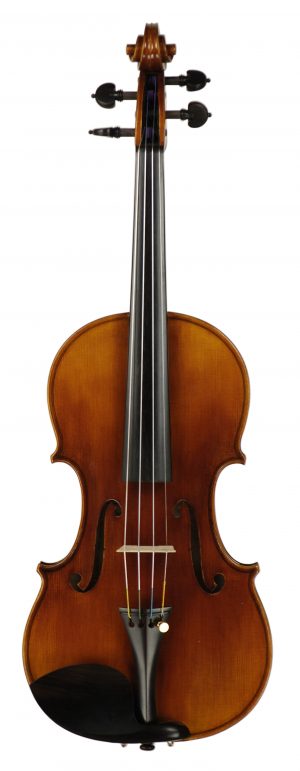
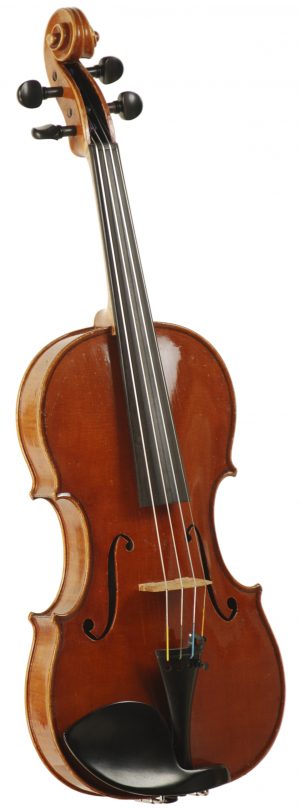
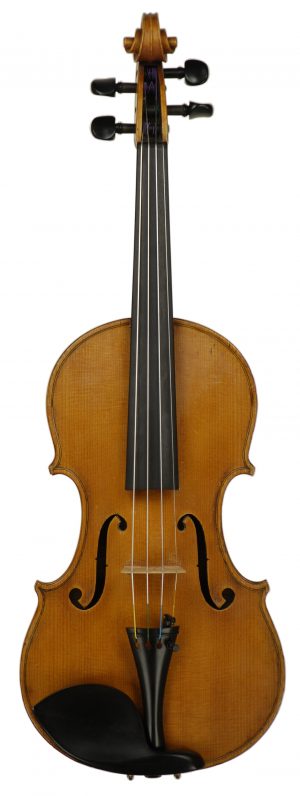
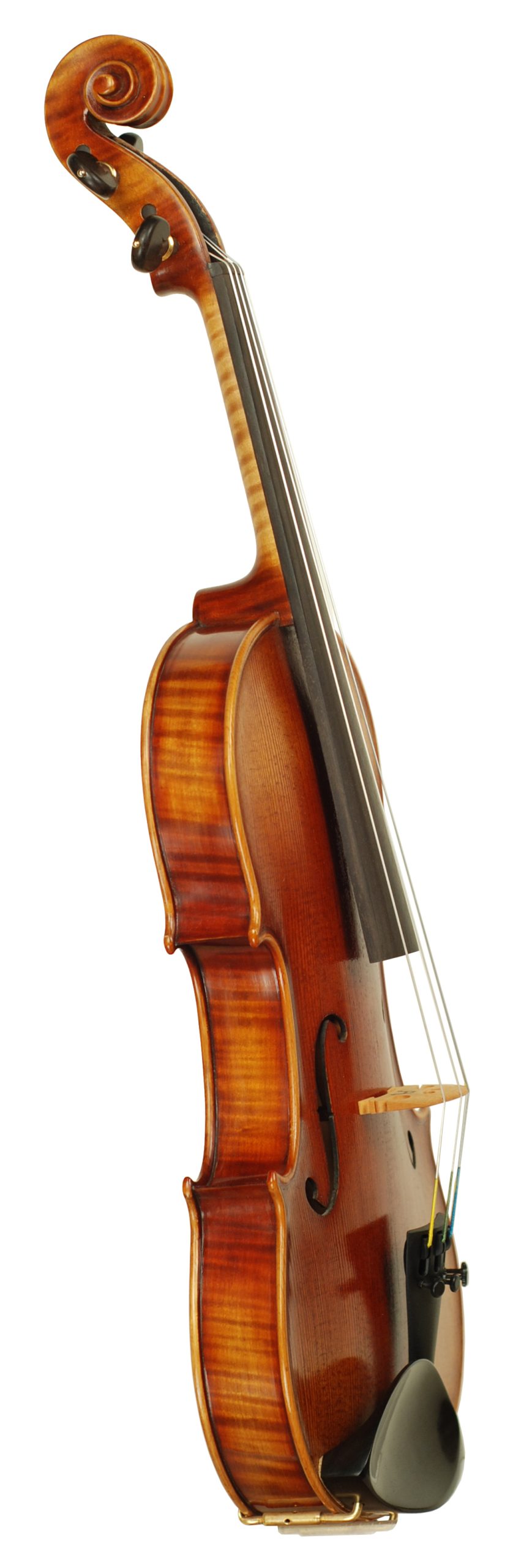
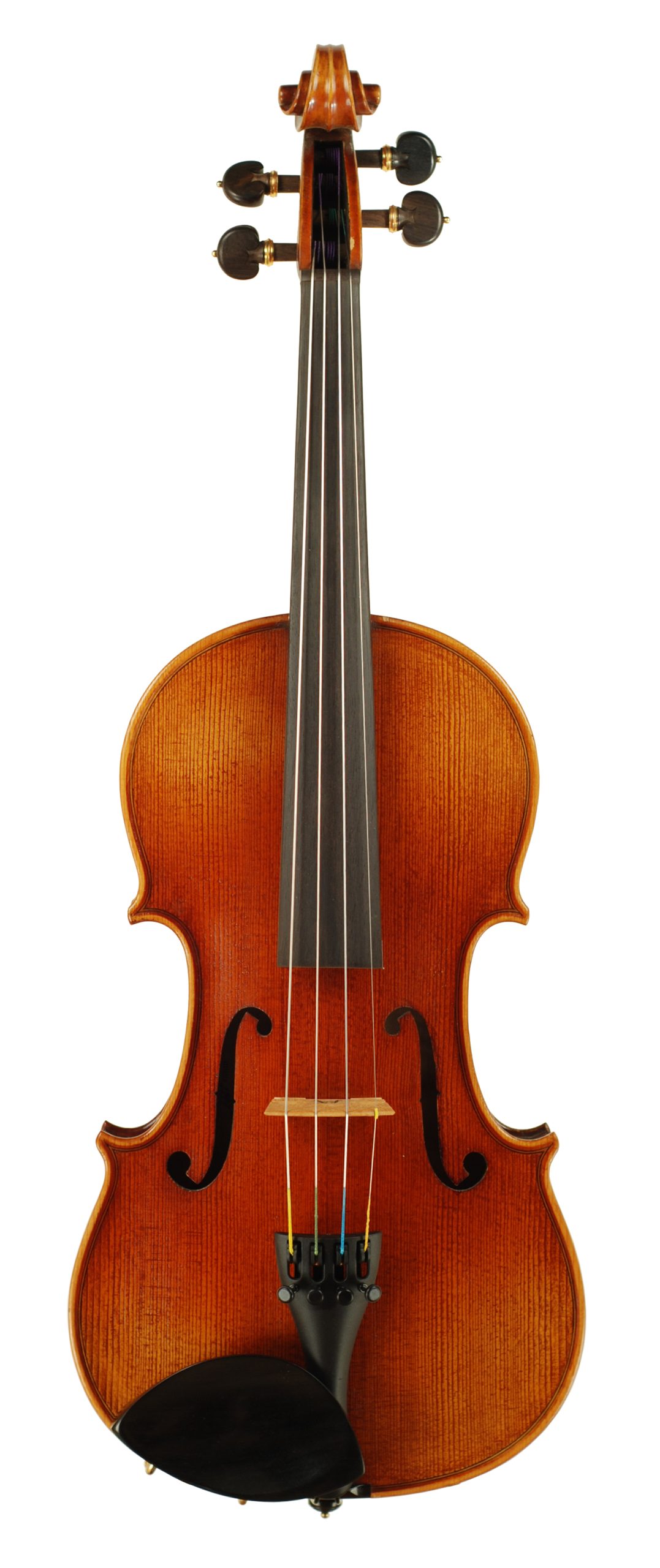
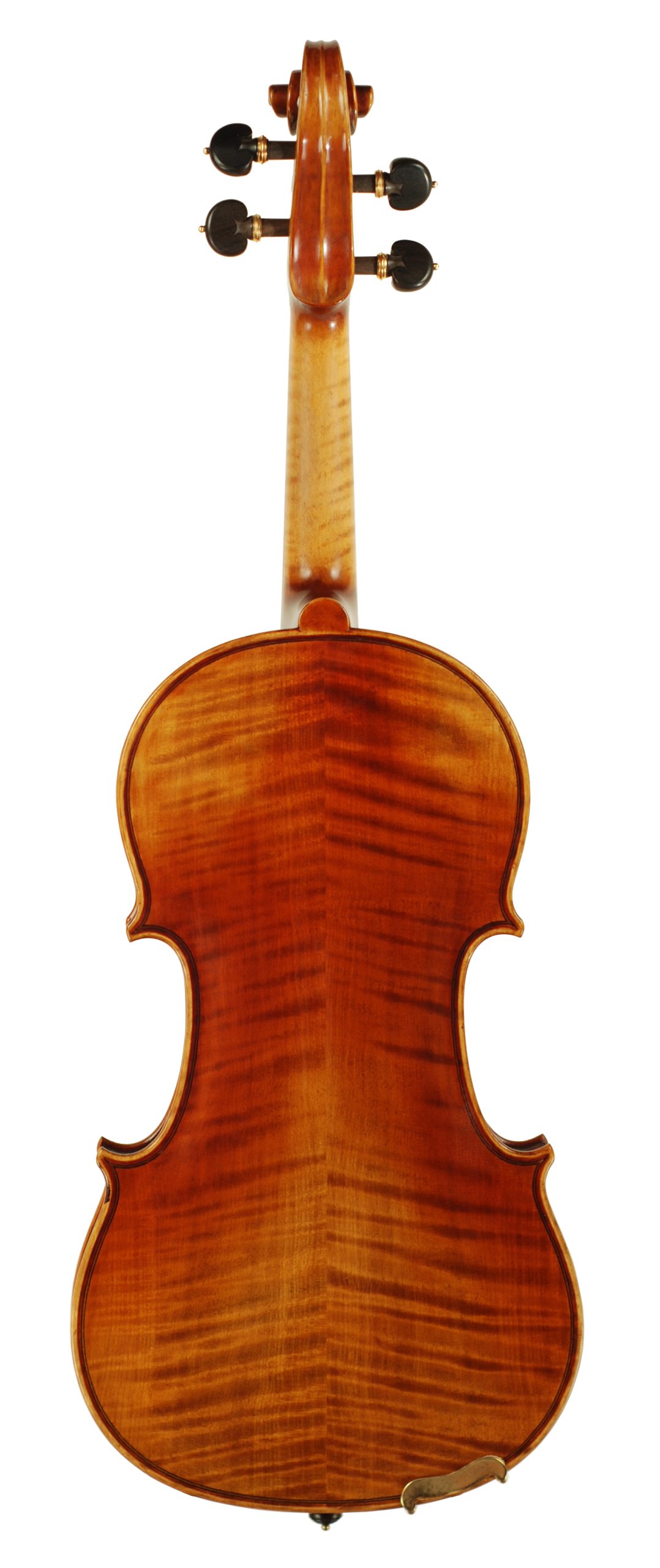
Our Stengel violin comes from this famous area of Germany and was made in 1999. The violin has a two-piece maple back which is highly flamed. The ribs match the flame of the back plate and the spruce top has a fine grain between the f holes centered around the center seam with the grain widening towards the flanks. The fittings are completed in ebony, and the violin has a Wittner Ultra tailpiece. The varnish is orange/brown on an amber/yellow ground. The violin is Guarneri modeling and shows excellent workmanship. It’s simply neat to have a violin from this famous corner of the world which is full of musical history. This area of Germany supplied musical instruments and bows to families all over the world, including myself in the late 1960’s throughout the 1970’s and for my girls who started playing violin and piano when they were four in the mid-1990’s.
Corpus 354.0 mm., Major Width 205.0 mm., Minor Width 165.5 mm., Rib Height 30.0 mm.
The sound is wonderfully resonant and the bottom end is what I call woody and reedy. The tone is smooth, and the character is different from sheer power. The violin has character and the response off the strings is noticeably quick. The E & A are sweet with some brilliance, beautiful to listen to. The violin delivers in sound, it’s always about the sound. For me the craftsmanship also needs to be well done or I won’t have the instrument in the shop. Both the sound and craftsmanship on this violin are high up on my scale. This is a great choice for a section leader or even a violinist who is into to American, Scottish, or Irish fiddling too.
Related products
-
Eastman Model 305 1/4 Size Violin
$1,115.00 Add to cart