Vuillaume A Paris Violin Bow- Mirecourt circa 1920
$1,695.00
click picture to enlarge
Stamped:
I’ve had this stick in storage with hundreds of older bows for 45-49 years. Yup, I’m slow but steady. I found this bow growing up as a kid/teenager in the New York City area. My dad would take me out looking for nice violins, violas, and bows associated with those instruments. I didn’t really know what I was finding at this time, but my dad did. This French bow is awesome and now ready to be played and help create sound on a violin. String players testify that nothing beats the precise resistance, density, and elasticity of pernambuco for projecting the sound on their instrument. Here at our shop, we have over 900 sticks made in pernambuco: completed, restored, and ready for purchase. I hope you will check out the collection.
Pernambuco grows exclusively in North-Eastern Brazil, mostly along the coastal region. Bow making with this wood has not changed for over 280 years has now been deemed off limits by the Brazilian government and the CITES group. The wood for the last 4 years has been banned from use by bow makers. It is very weird because in my thought process trees can be replanted. Bow makers throughout the world only use 200-400 pernambuco trees per year. This cannot be the cause for deforestation in country like Brazil. At any rate pernambuco has been banned from being used in any new making. We have seen a huge surge in our pernambuco bow sales, especially our older restored bows. This ban on pernambuco has also led other countries to require musicians and orchestras to carry special passports for each bow made from pernambuco with them when they travel. This ban may begin to be lifted in 2026-2027. We will wait to see.
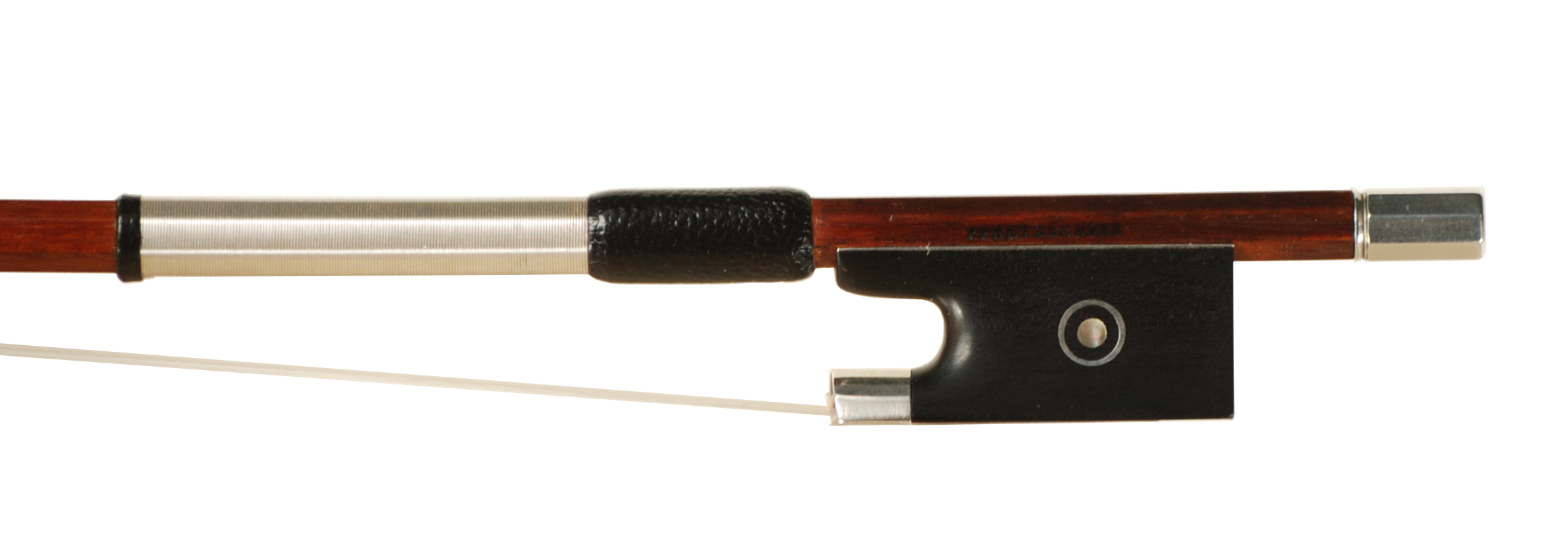
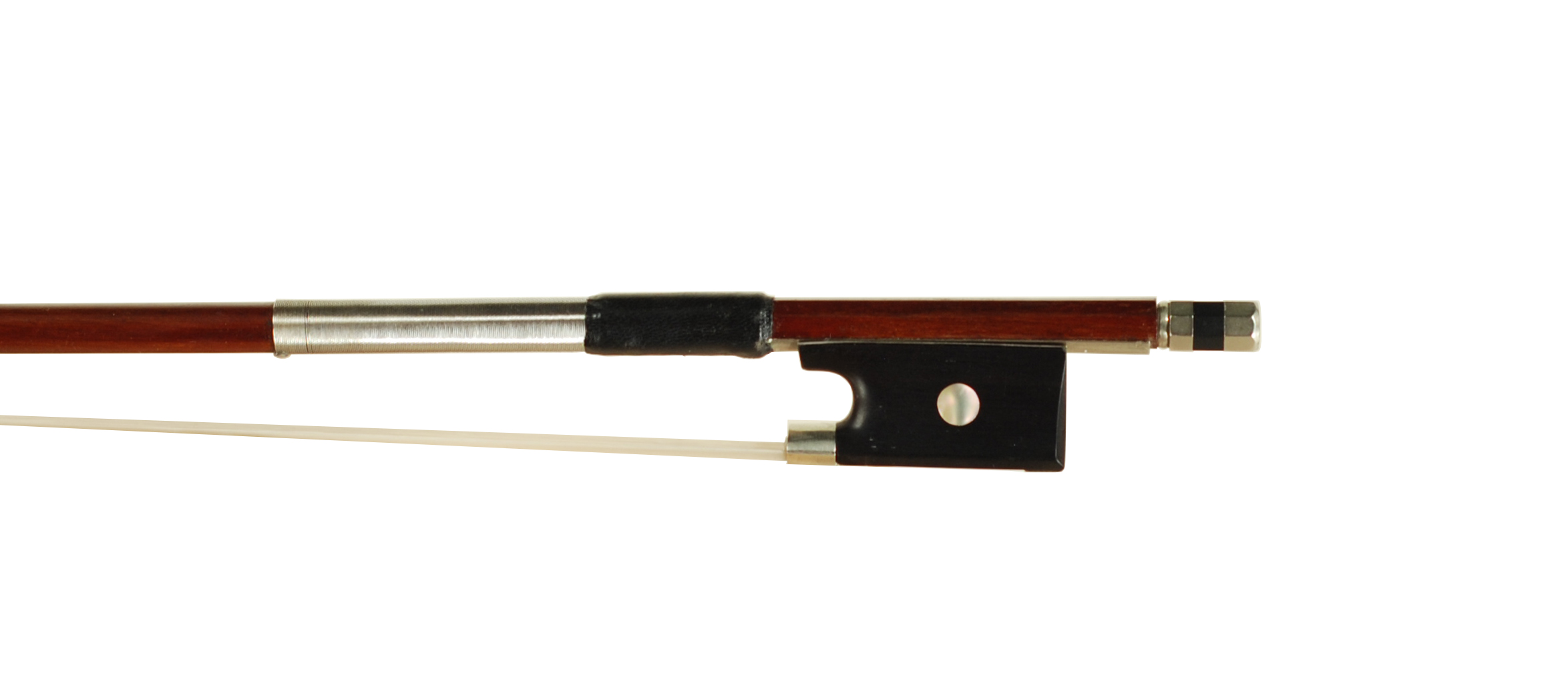
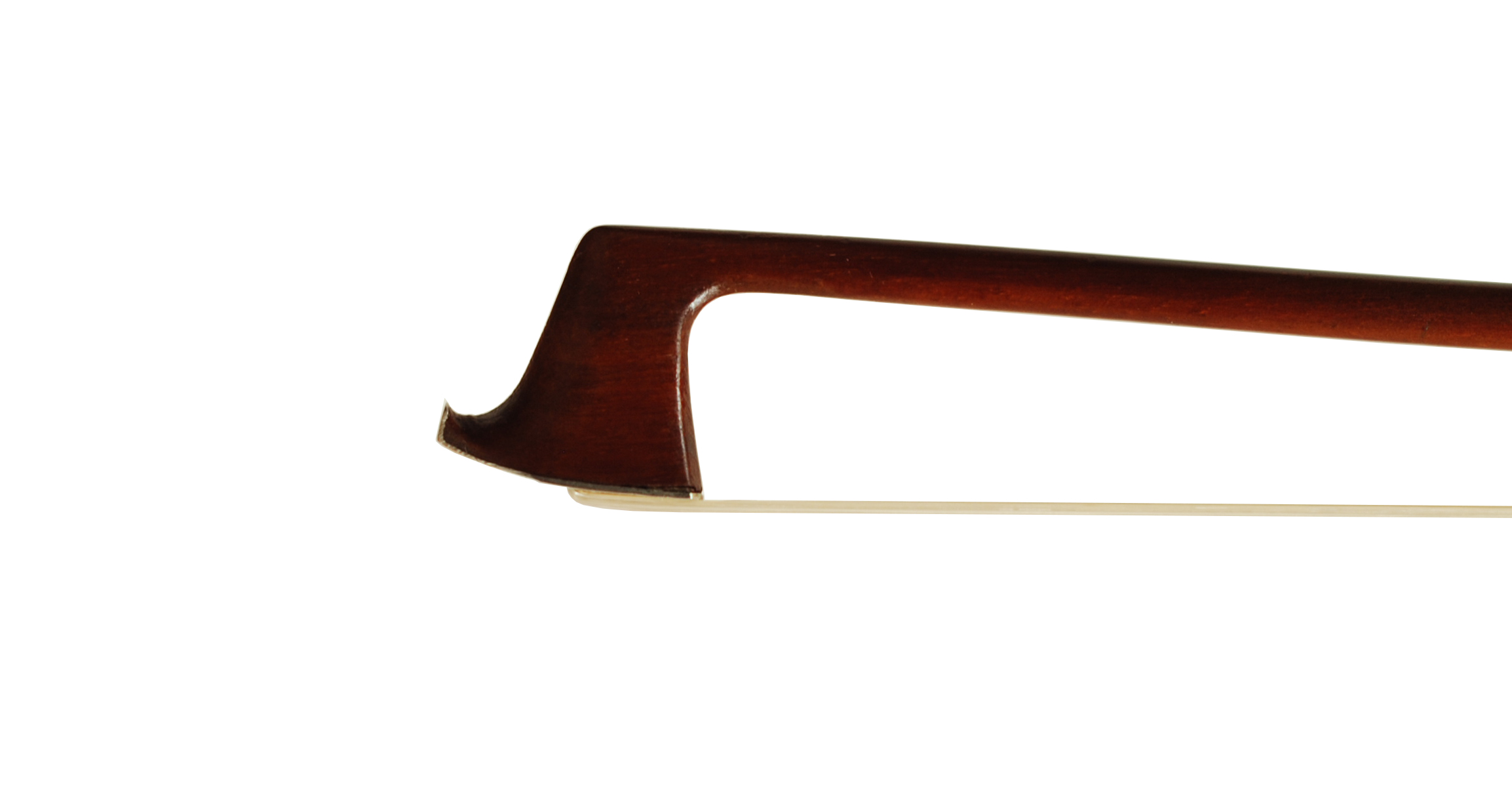
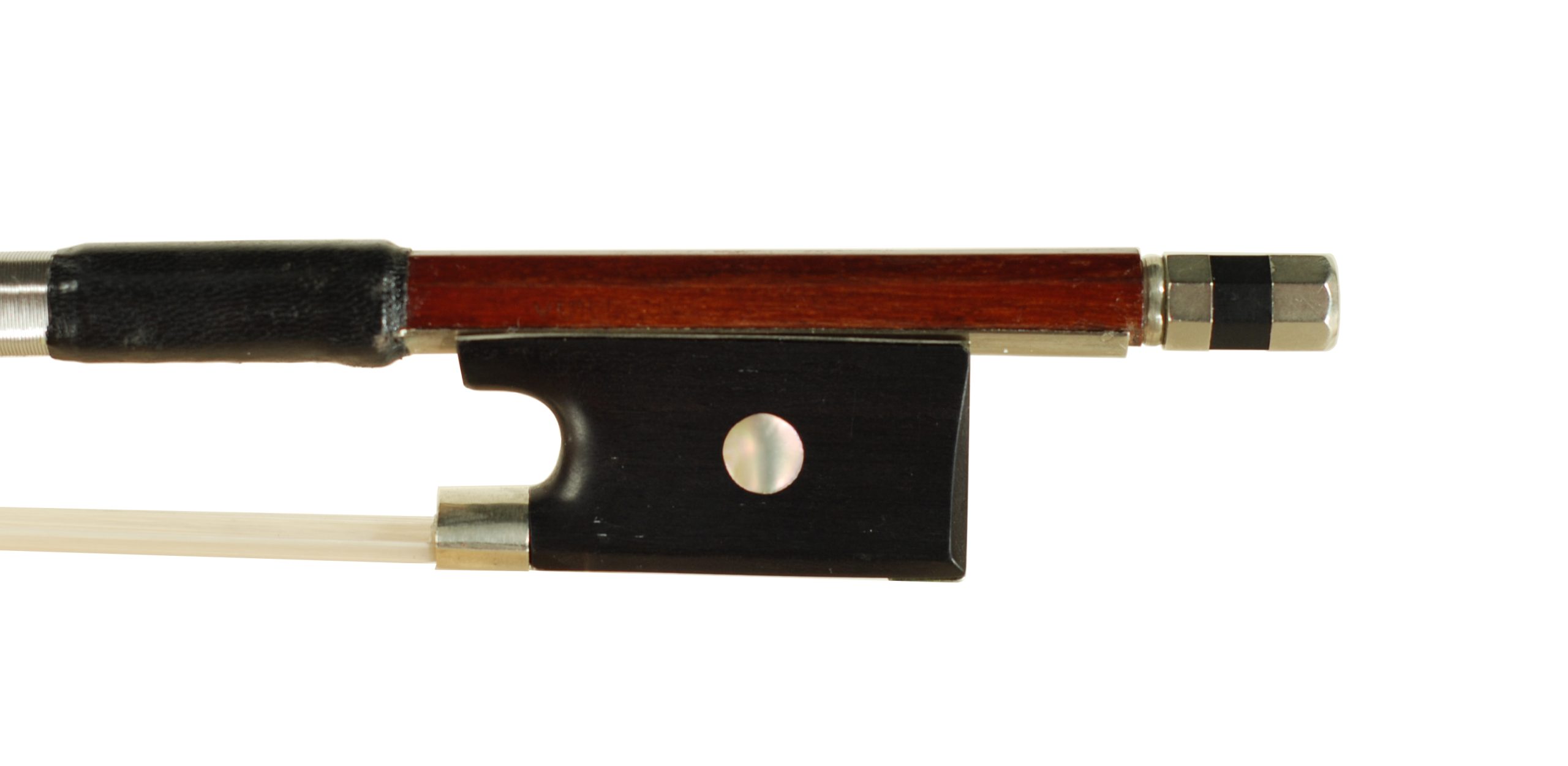
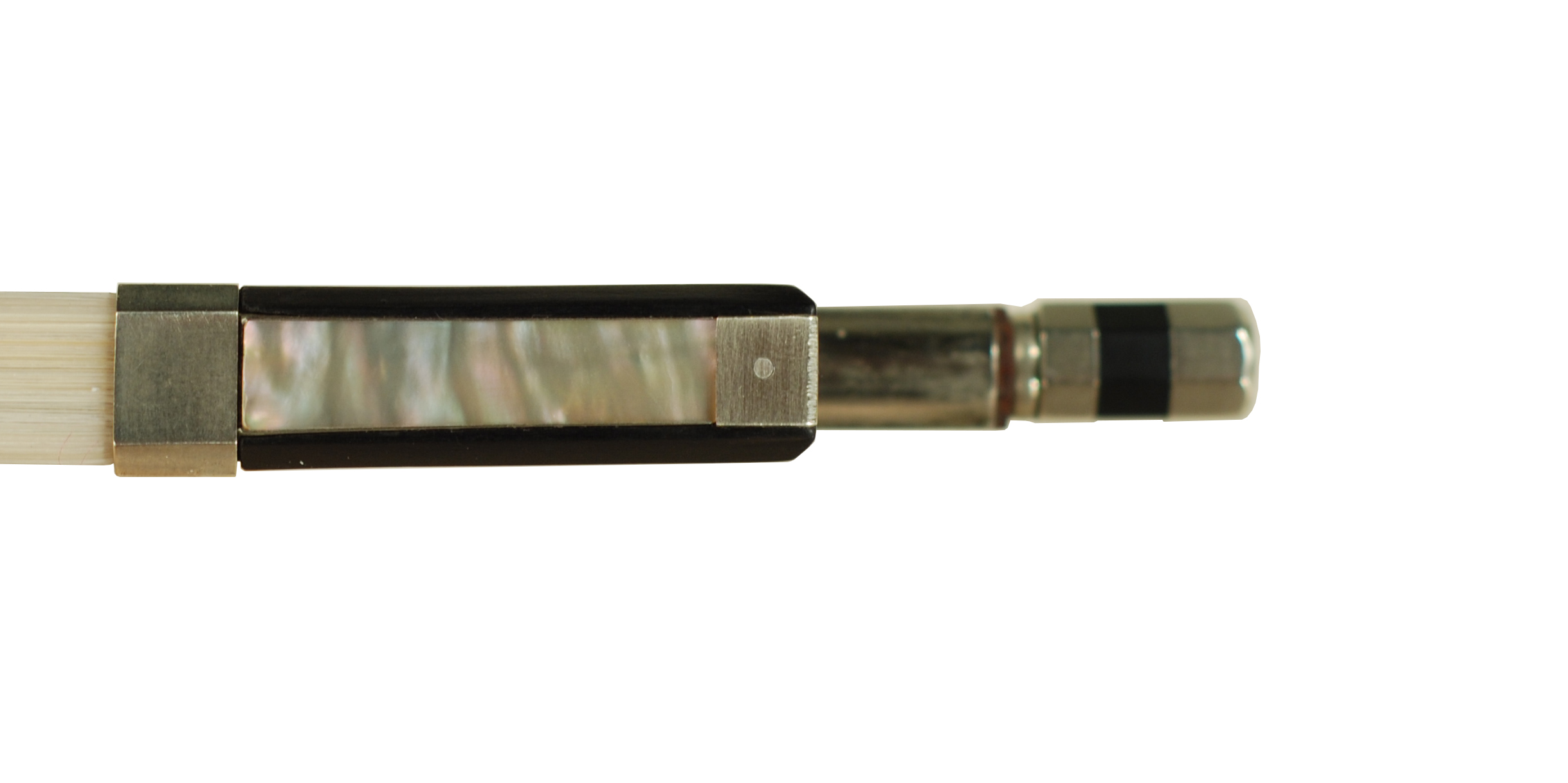
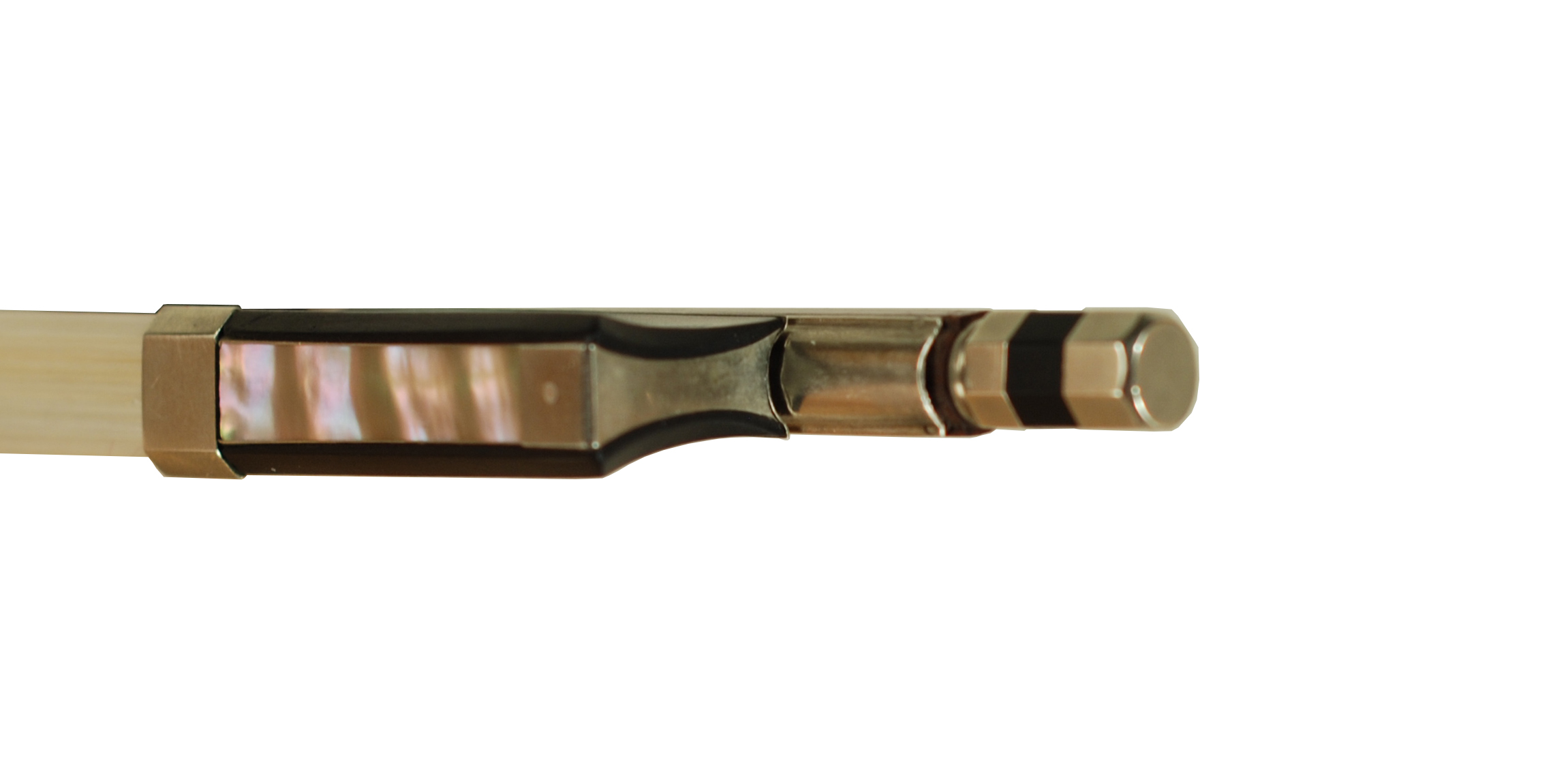
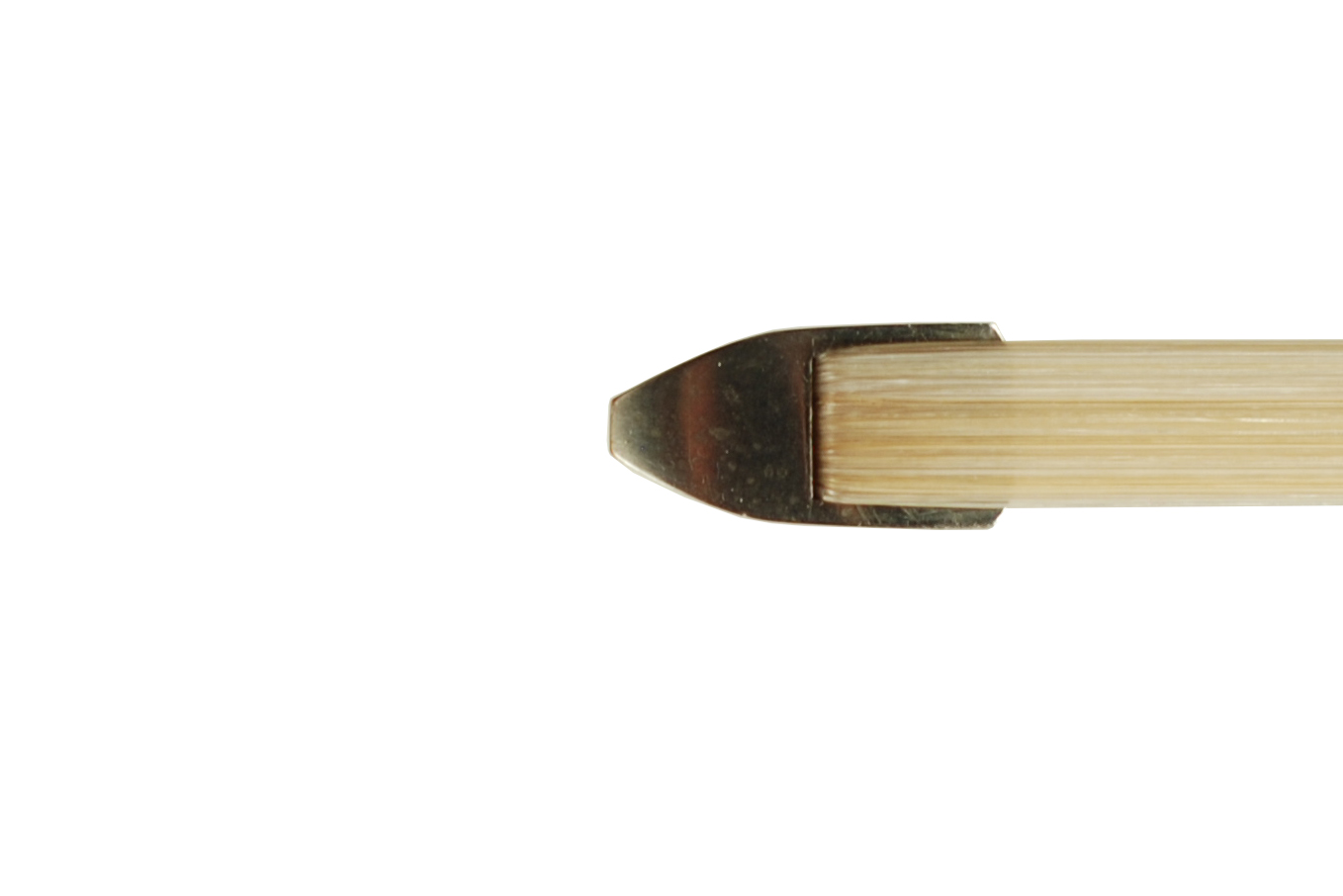
This is a 100-year-old bow. The pernambuco for this stick would have been harvested in the mid to late 1800’s, then dried for 15-20 years after it was sold and transported to become a bow in Mirecourt. Quite a journey from Brazil to France and now in our shop. Made in Mirecourt, France circa 1920, the stick is pernambuco with a deep chocolate color and cut in round section. The stick has fight and a subtle flex. The ebony frog is well chamfered, the heel is one-piece with pin work, and the lining is extra-long and acts as a slide in its function. The lining is rounded as the frog sits on it, not totally in it. The frog has single mother-of-pearl eyes and a pearl slide that is hand worked with the ferrule side being slightly wider than the heel end. I replaced the wind with similar silver wind and added a new leather thumb grip because the original wind and leather were beyond being saved. The workmanship of the bow is evident by the choice wood, and by just the head alone in its curvature -strong upturn in the nose and finished in a sterling silver facial. The thinness of the wood is beautiful and is very well incremented from the head to the button. The stick is always the key to a great bow, and it is worthy of a try on your violin.
The balance point is 23.6 cm from the end button
Weight fully haired 64.8 grams