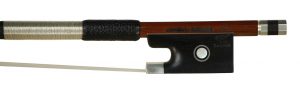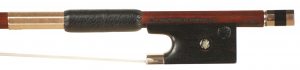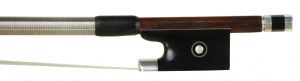
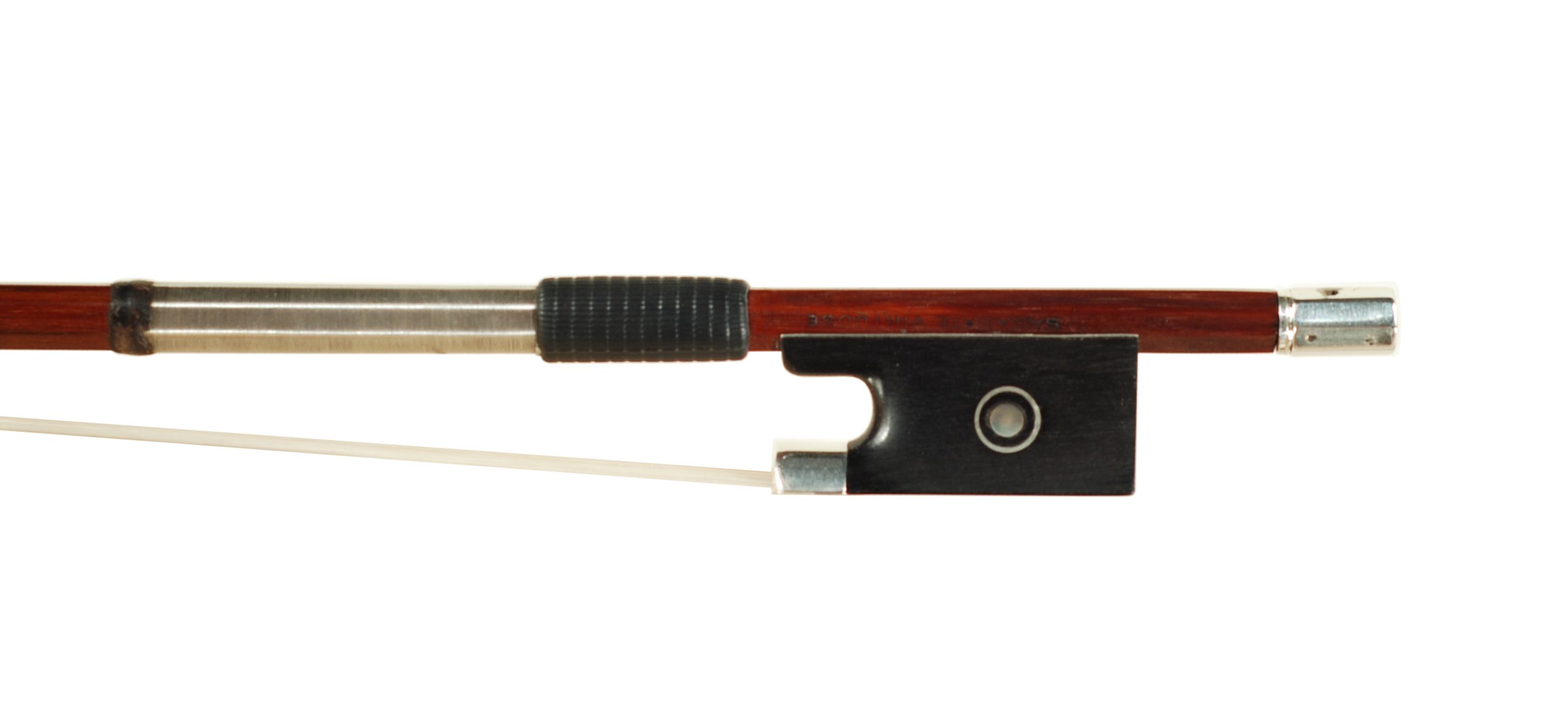
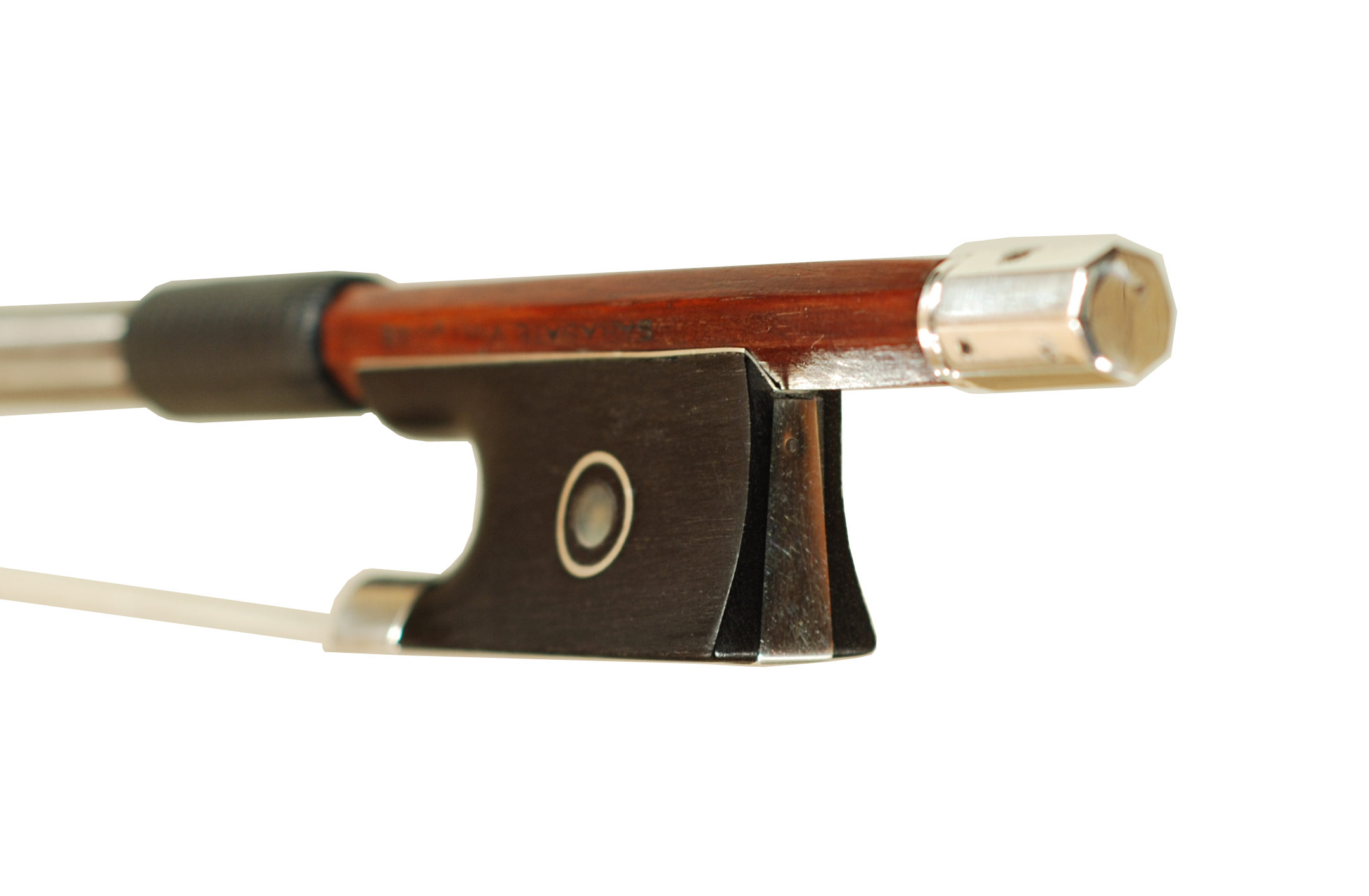
Sarasate-Virtuose Thibouville Lamy Violin Bow – Mirecourt circa 1880-1890 – CURRENTLY OUT ON TRIAL –
$4,000.00
click picture to enlarge
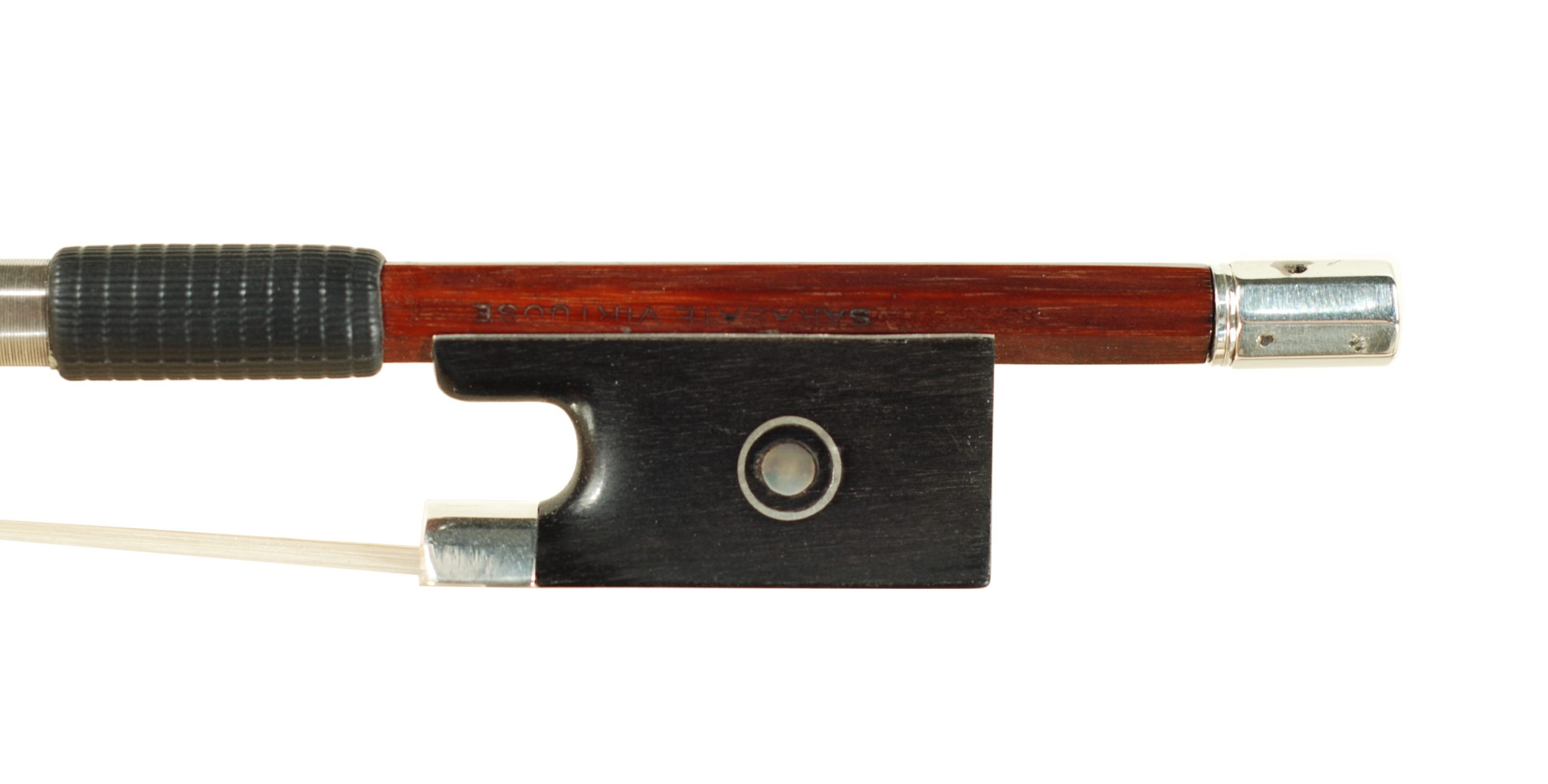
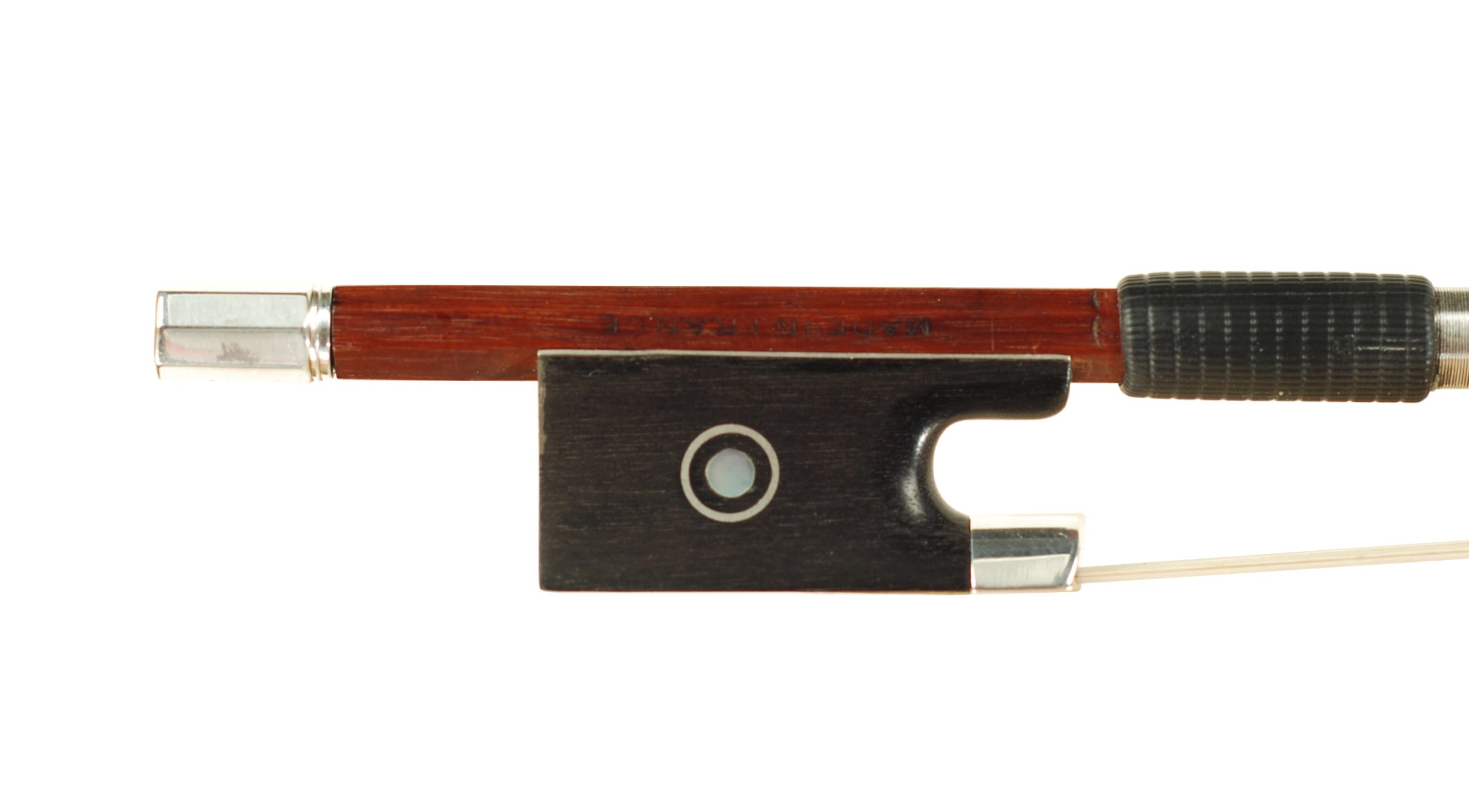
Stamped:
Made in France – audience side
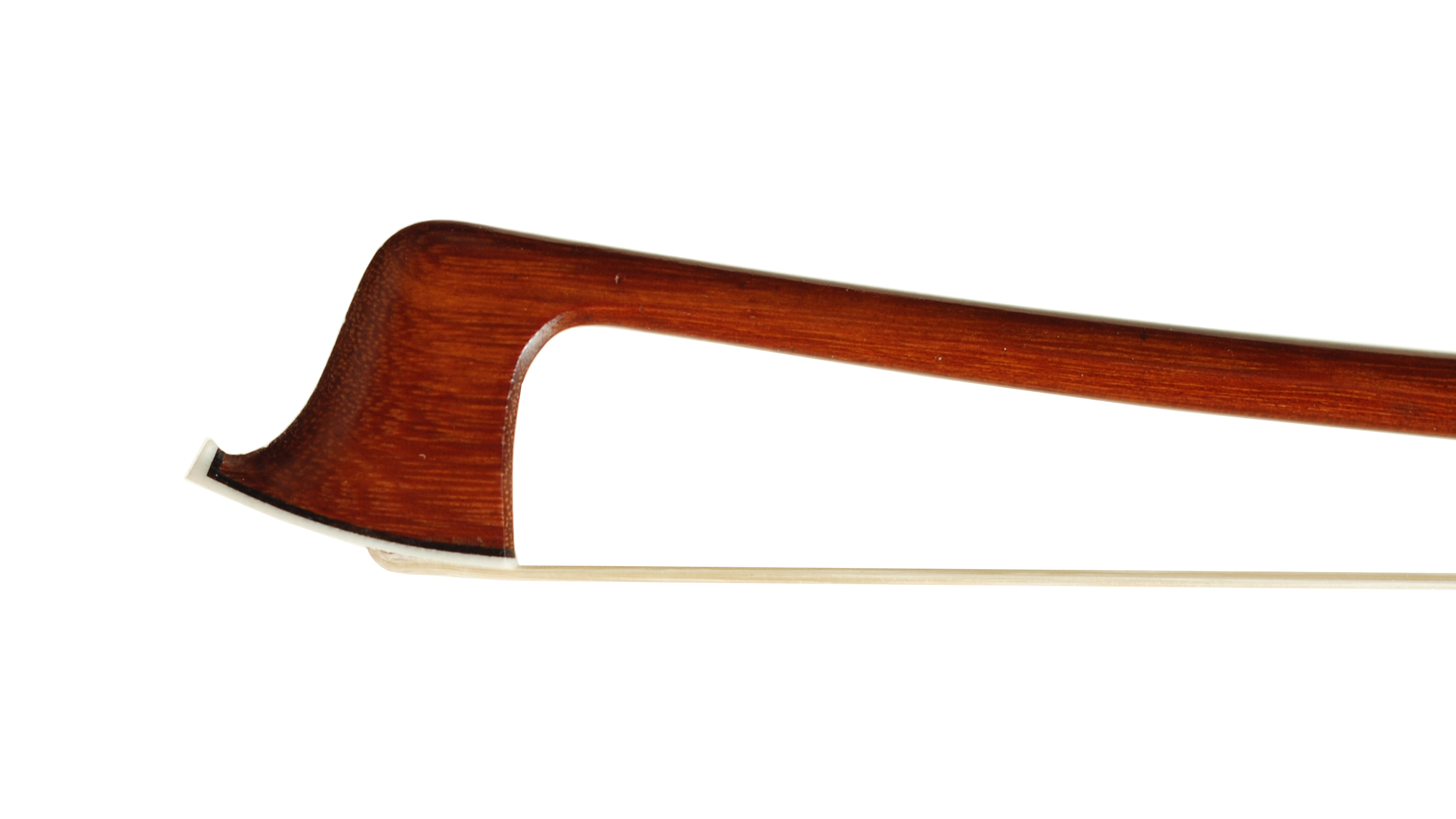
Mirecourt, the sleepy little town east of Paris, was the hub of violin and bow making is also where this bow hails from. Mirecourt was the French equivalent to Markneukirchen in Germany, famous areas in each country where young men who had a dream left home and went to. They came to attach themselves to a shop to learn the art of violin making and/or bow making. These young apprentices gave themselves over to a master maker for very little pay in hopes to learn the art of making violins or bows at a very high level. Each art is so specialized that one would choose at a very young age. They had potential if they showed acute attention to detail and had fine carving skills. The apprentice could move to a different level of worker- journeyman or higher. Their working hours were long and grueling, sometimes sunup to sundown, depending on their contract. We have a very nice French bow made by the firm of Thibouville-Lamy and made by a seasoned bow maker, no mere two-year apprentice. Thibouville-Lamy was born in 1833 and worked as a young man in Mirecourt and in Paris. He was a fine businessman in the trade and had a keen eye for hiring fine craftsmen for his company. His firm grew famously after the 1873 Vienna exposition/fair as the company prospered and continued to be expanded up to when Thibouville-Lamy could no longer work. In 1890 Emile Blondelet lead the firm and in 1914 Alfred Acoulon joined the company and they became directors. The firm made two types of Sarasate bows in this period, one stamped “Sarasate-Maître” – “Master” and the higher bow grade “Sarasate-Virtuose” – “Virtuoso” which is the bow we have in our collection.
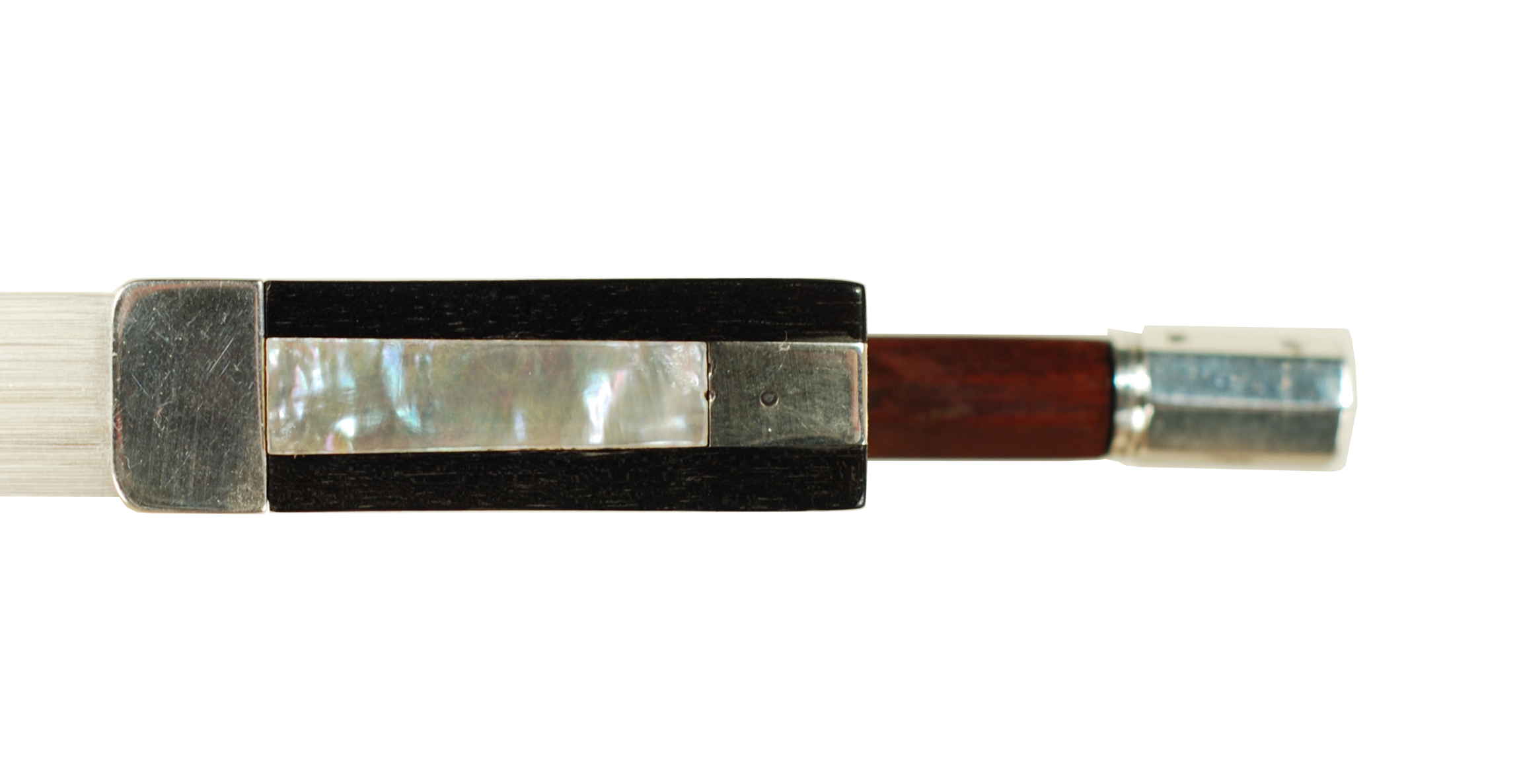
Our Sarasate-Virtuose violin bow is way above the norm. The pernambuco is a choice, older tight grain dense piece of wood, shaped from the throat a tad thinner than many bows because it can handle it. The color is a deep orange/brown and is transparent in color. This wood would have been harvested in Brazil in the mid 1800’s, transported to France, unloaded and dried another 10-20 years before being crafted into a violin bow. The actual tree was growing in the latter third of the 1700’s. It is awesome just to think of all the effort that went into acquiring the materials just to make one bow. Sterling silver, different leathers- lizard, goat, steer, or even kangaroo, ivory or bone for the tip facial plate, the pernambuco wood for the stick that came from Brazil and the ebony wood from Africa, which is one of the hardest and densest specie of wood the Lord makes, Wow! These items would need to be assembled and travel to this famous town in France and come Thibouville-Lamy’s workshop. I enjoy thinking about the process as much as reviewing in my mind the restoration process of a bow like this and doing the work. I love it. I have spent many hours on the bow, the stick and the frog. The frog is Parisian eye model and mounted in sterling silver. The silver ring around each eye is slightly wider than found in a commercial machined frog. The silver work is pinned, and the mother-of-pearl slide is tapered ever so slightly into the heel of the frog. The frog, stick, jewelry work, execution of the increments on the pernambuco from the head (tip) end, and the detailed facets at the frog end which goes for 175.0 mm. to allow the frog to mount are all excellent for study. I know a player will enjoy the bow as much as I do.
Weight fully haired 64.4 grams
Related products
-
Tonk Violin Bow
$1,850.00 Add to cart