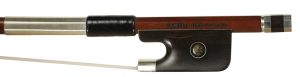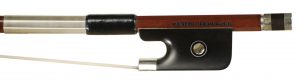
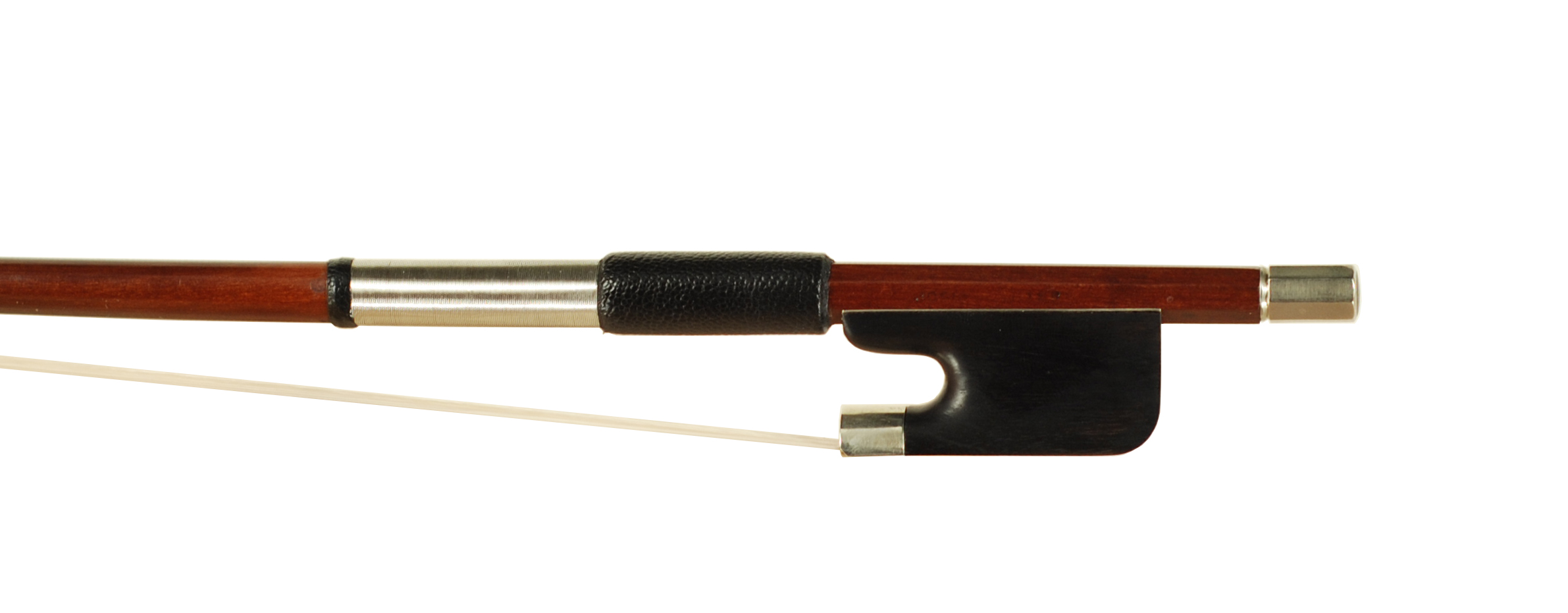
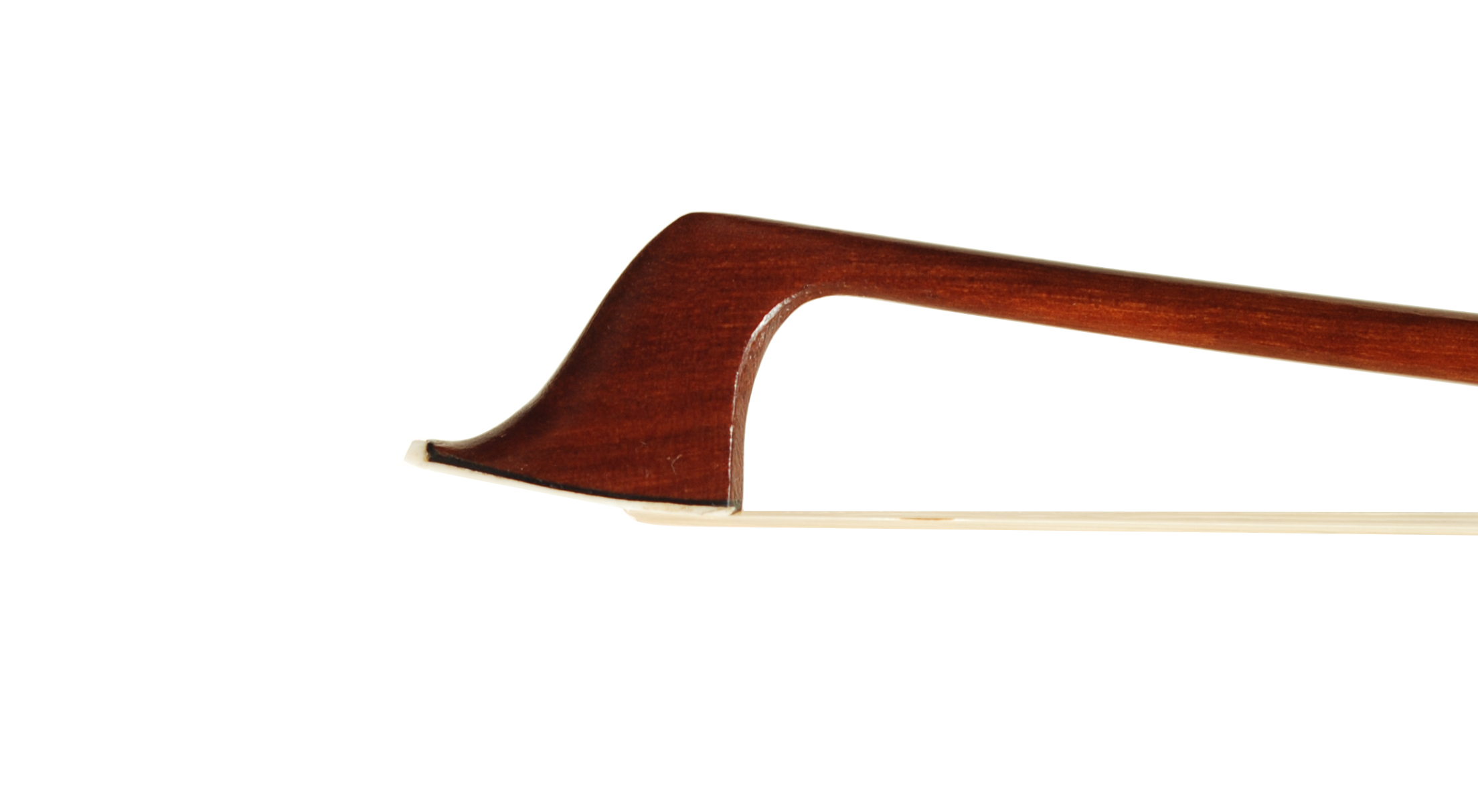
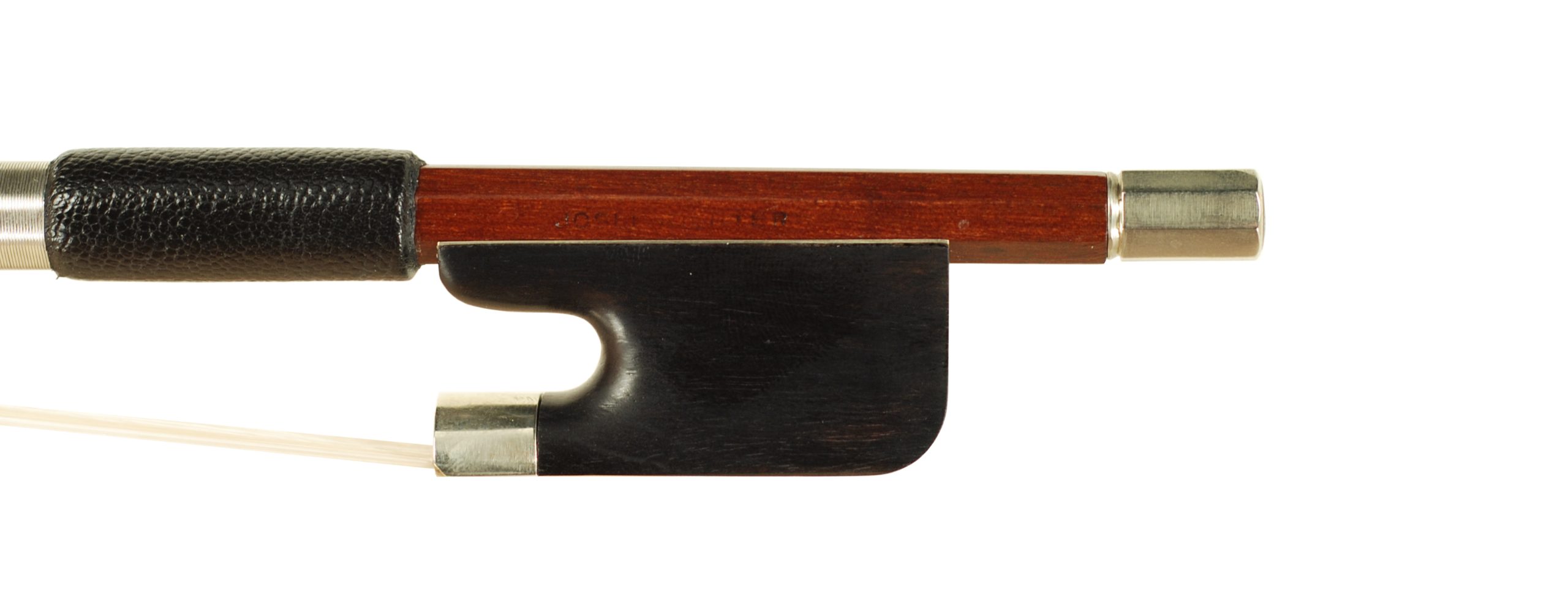
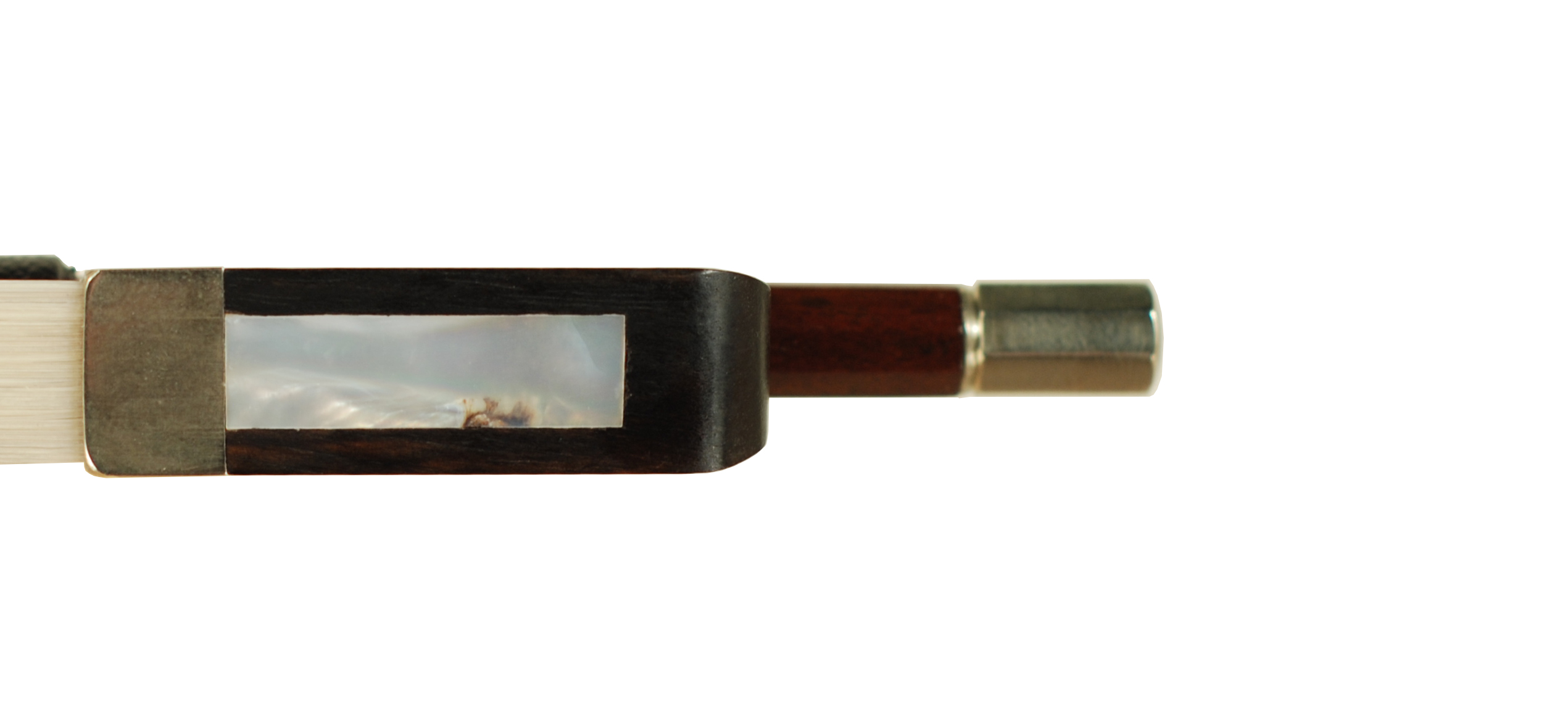
Josef Richter Brazilwood Cello Bow – Bubenreuth Area circa 1975
$515.00
click picture to enlarge
Stamped:
GERMANY – on the butt of the bow
After World War II, many artisans and their families relocated where they found a bond with other instrument makers in the small village of Bubenreuth. Germany. Bubenreuth attracted carvers of all disciplines. The famous cuckoo clock makers, lute and recorder makers, Christmas figurines and Christmas crèche scenes of Christ’s birth, windmills, candle flame driven windmills, whirly gigs, sometimes known as whirlybird weathervanes, they spin in the wind, and just about anything that could be made with wood was made in this small village. Along with those families there were many other makers who made violin, viola, cellos and basses, and there were also makers just concentrating on producing bows – at this time in history just in brazilwood and pernambuco. Carbon fiber was not on the scene yet as a viable alternative in the bow making trade. That sophisticated combination of polymers needed 20 more years to be developed. Bubenreuth became one of the new hubs for carvers that helped save these families economically after the war and brought them to be seen on the international stage long before the cell phone age.
Growing up in the New York City area as a young guy I frequented Ideal Music, Ltd. at West 25th Street and Avenue of the Americans owned by Jack and Kay Loeb. To say Jack carried a huge inventory of fine instruments and their bows would be quite an understatement. I suspect all the “Josef” and “Joseph” Richter bows were imported by Jack. I was a 16-year-old kid then and he was 60 years old. Kay and the close staff, just a few, maybe 2-3 that I remember, always treated me very well and were always genuinely interested in me. It was a great time for me. I worked on and off with Mr. Menzel for nine years when I wasn’t in college and more years after I got married. I always had trouble sleeping the night before a visit to Ideal Music, especially if Mr. Menzel, my boss and the luthier of the shop, had a task for me to chew on. He would have me find a certain maker’s instrument for him and he always wanted me to examine bows, go through hundreds of them and take detailed notes on the specific qualities as he chatted with the owners. We would be there for hours. We always came home with a few new boxes of bows in nickel, sterling, and maybe one or two individual gold mounted bows. I found out that it is fun spending other people’s money. I remember each time we entered the huge building we went up in a small elevator to the 3rd or I think the 7th floor. You were buzzed in. Mr. Menzel would drive us to New York City two or three times a year (always on a Monday, our day off), springtime and summer trips in his JAGUAR! That was a wow for a kid! We always had to check my baseball and umpiring schedule. I got to look through hundreds of violins just bagged in brown paper bags sitting like library books and see rows and rows of metal shelving full of violins, violas, and cellos. There were basses too, even fully carved Roth basses with lion heads carved for the scroll. Not just one. I remember seeing 4-6 of them sitting in a wood rack at the front of the shop on two different occasions. Mr. Loeb’s bow collection was massive! The bows were housed all over in shelves, nickel mounted and sterling silver mounted, pernambuco bow areas, brazilwood bow areas, grouped more by specie and mountings than by size. They were also grouped by maker’s name and region/town in Germany. Just having a few boxes of every size is unbelievable. He had hundreds of boxes from hundreds of makers. They were in corrugated 32” x 8” x 2” boxes that housed 12 bows from each maker. Mr. Loeb had thousands of bows. It was way above awesome!
Richter bows were commercial trade bows, good German stuff, functional, nothing that would necessarily set you back thousands of dollars, but that family also made higher end sticks.
Our Richter brazilwood bow is from that small family workshop in the Bubenreuth area of Germany and I’m sure was imported by the Loebs. This bow is brazilwood, in the same family as pernambuco, the preeminent choice for the finest bows, which is also called “caesalpinia echinata,” the national tree of Brazil. Brazilwood was usually used for student level sticks. It is a decent stick, well-made at just under 80.0 grams. This might be exactly what you are looking for if you have trouble playing with a heavier bow. The average modern weight for a cello bow is 80.0 – 82.5 grams. This bow falls just under the modern norm at 79.2 grams fully haired. It is a half-lined bow, no silver heel. The bow is mounted in German nickel silver, and the stick is finished in round section. The wood is oiled, linseed oil, hand rubbed revealing the wood with a brown color and a hint of orange. The head or tip area is carved in a swan look, slightly sweeping elegant appearance. The winding is new for the stick. I did it in nickel silver with a goat leather lap and thumb. This stick is authentic and in very good condition from the Richter shop and it doesn’t matter how you spell the first name. This Josef Richter cello bow brought back tons of memories as I am writing.
Weight fully haired 79.2 grams
Related products
-
D Chagas Brasil Cello Bow
$990.00 Add to cart