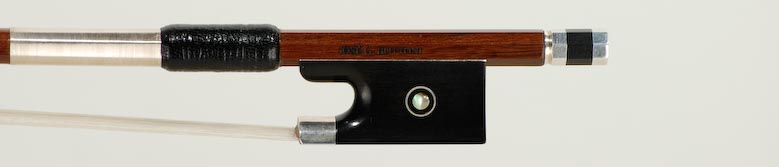
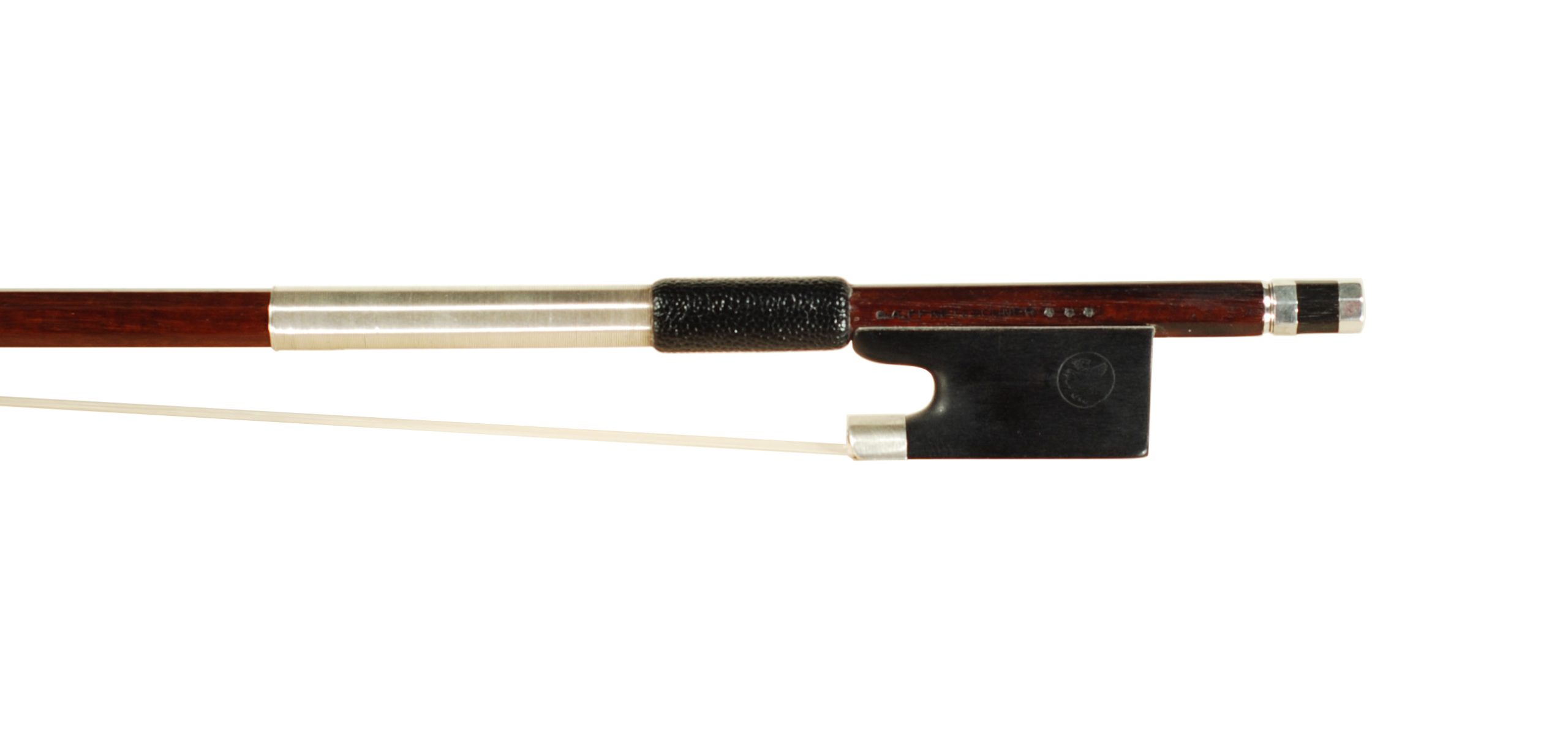
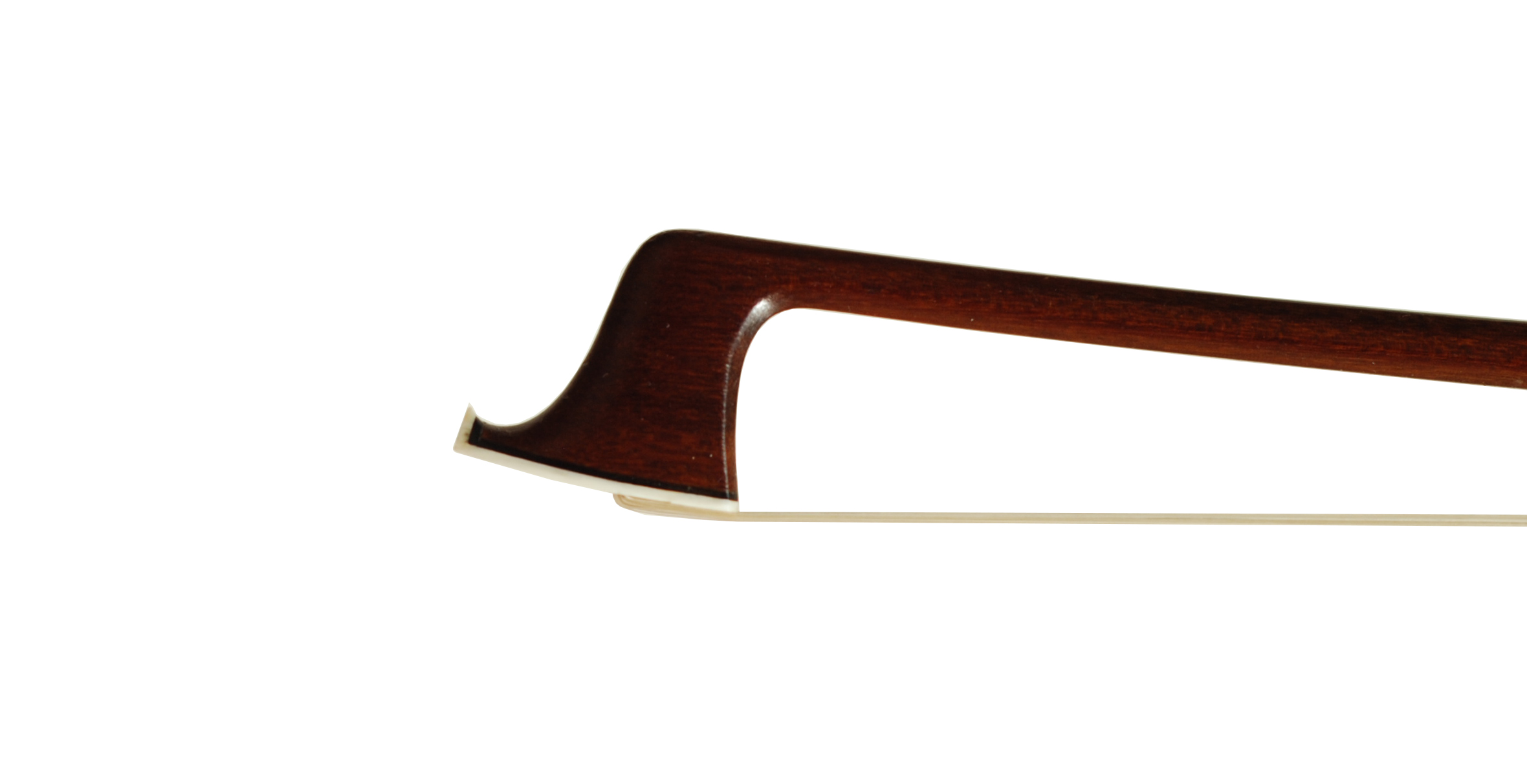
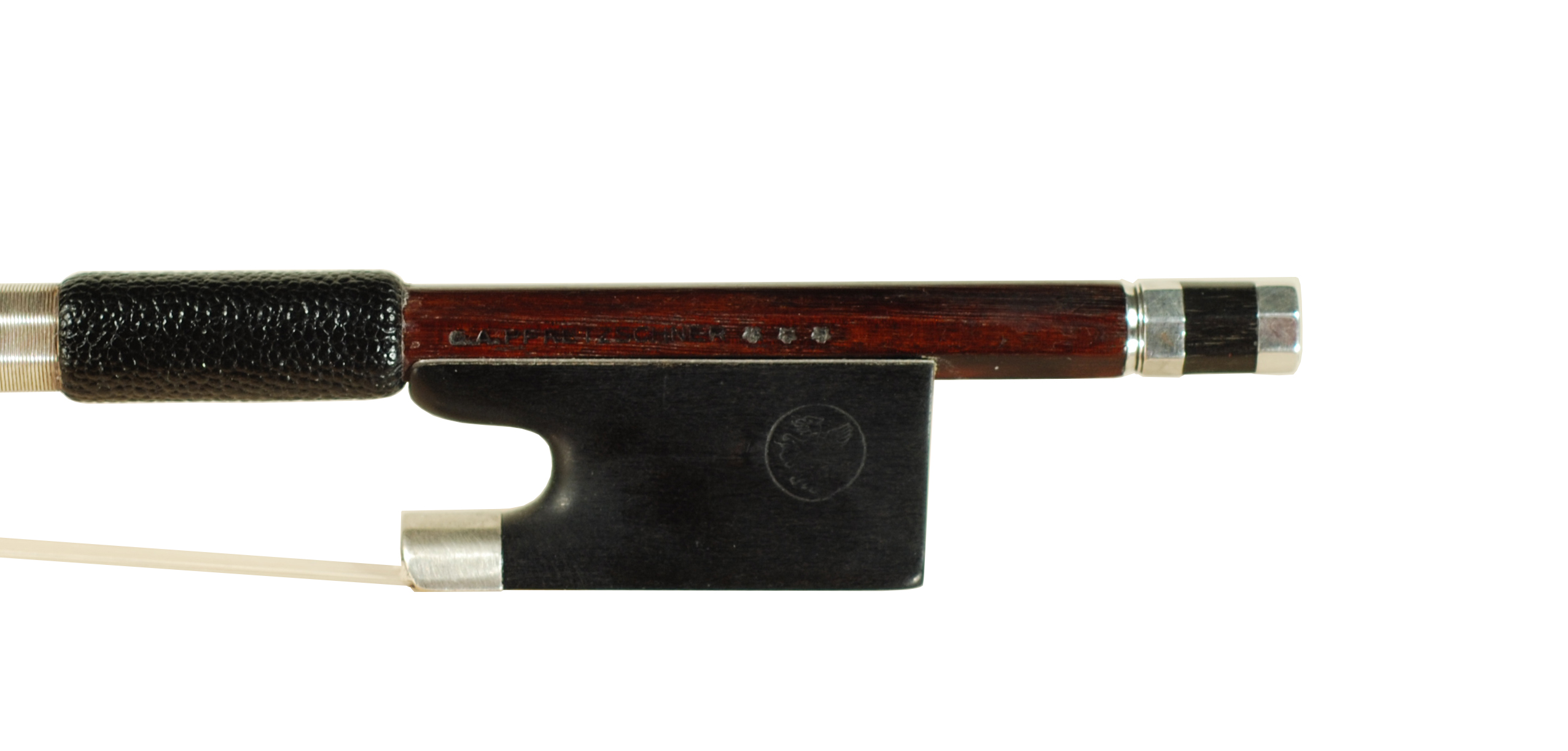
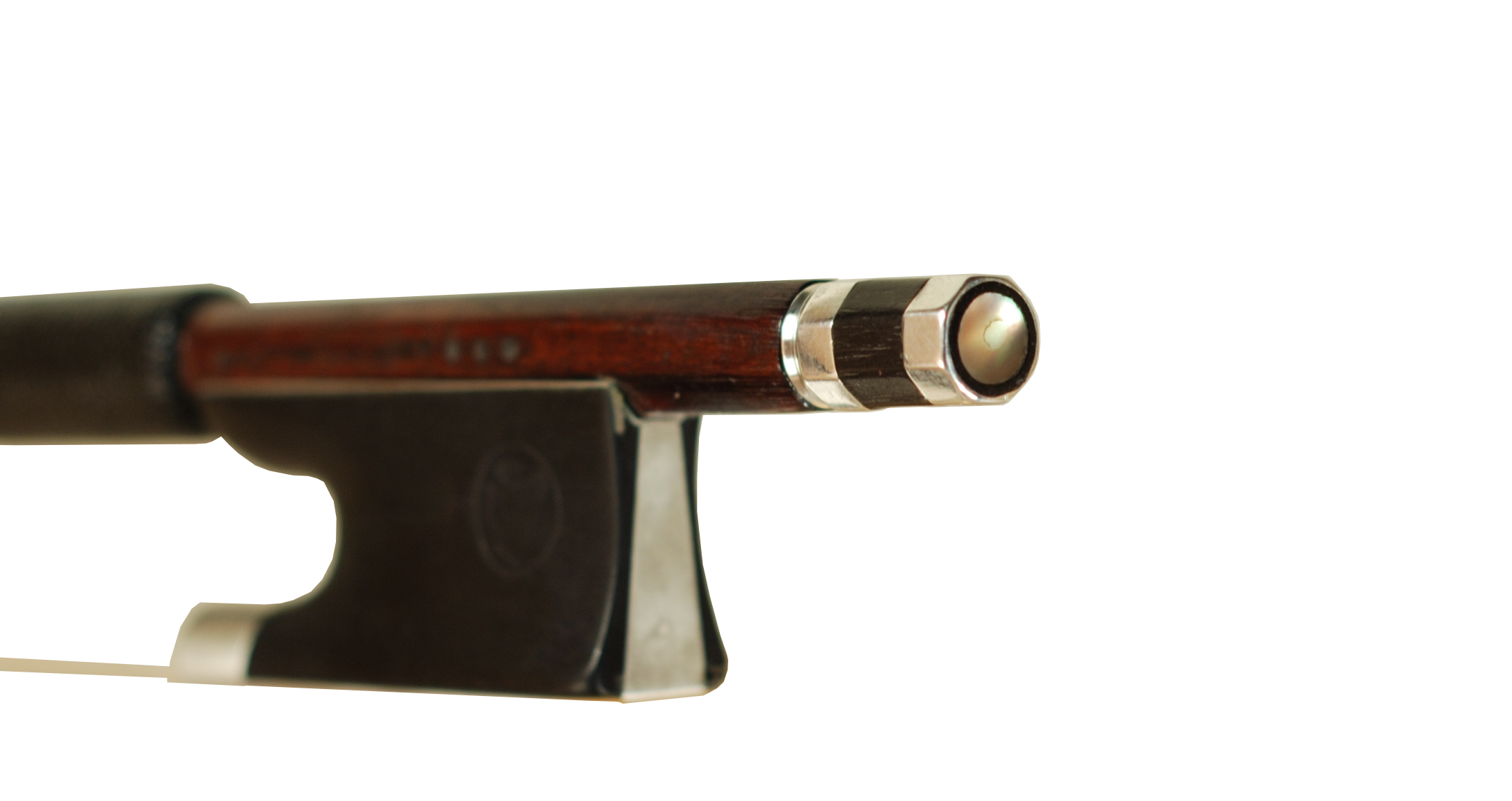
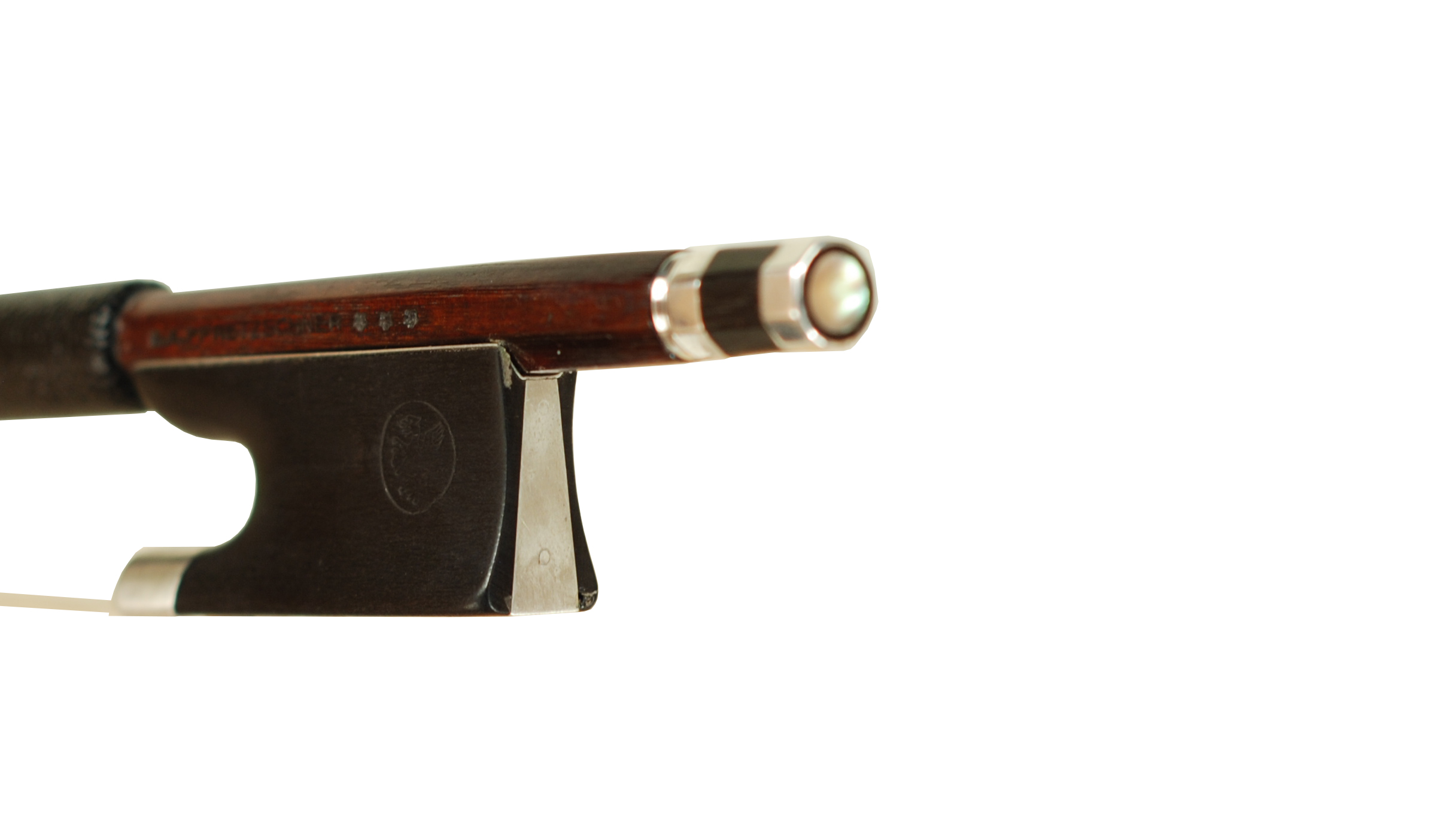
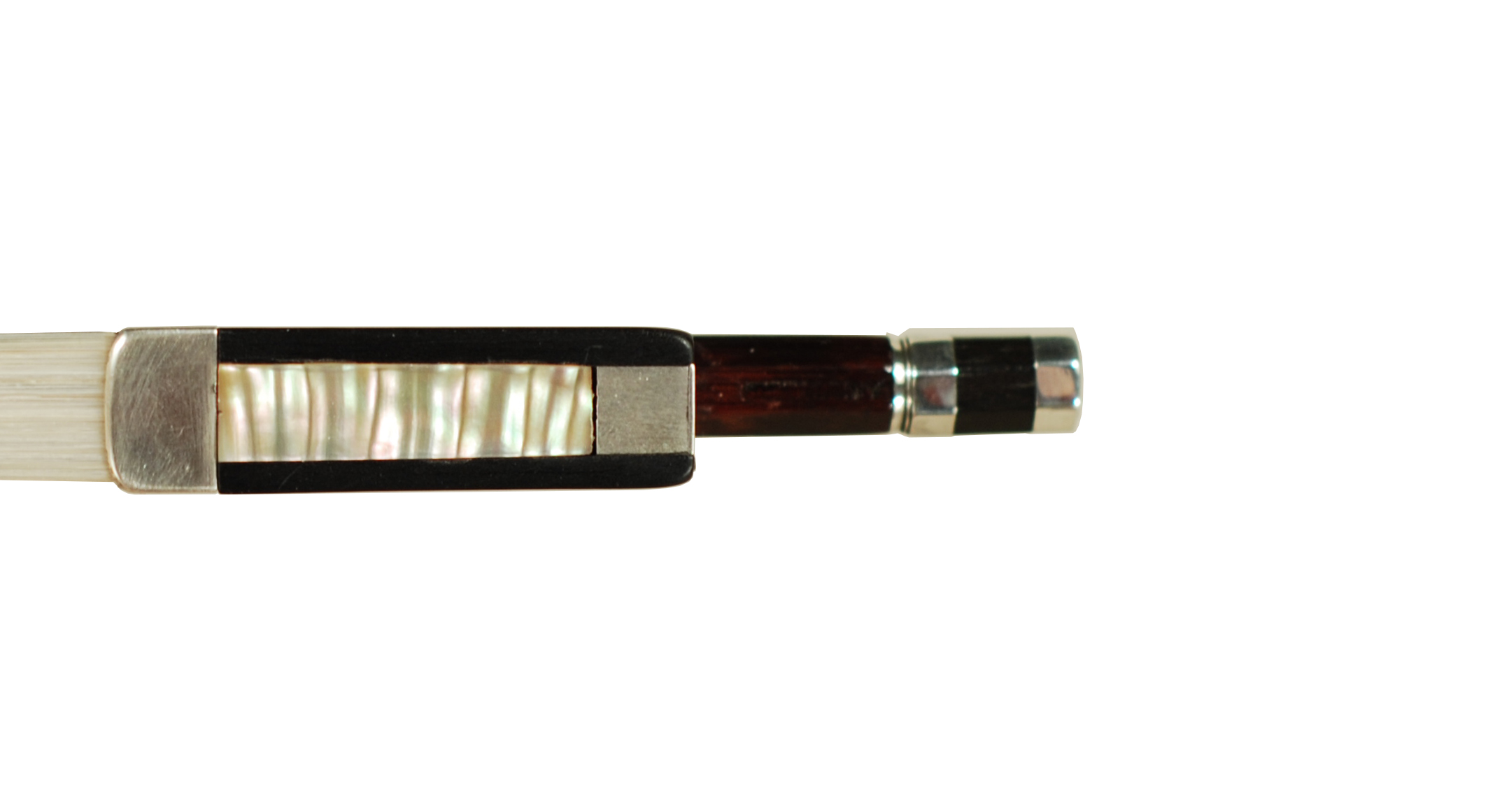
G. A. Pfretzschner Four Star Sterling Violin Bow- Markneukirchen circa 1905-1915
$2,995.00
click picture to enlarge
Stamped:
GERMANY – on the butt of the stick
Winged dragon insignia on player’s side frog
Pernambuco only grows in the country of Brazil. The wood alone would have been great to document on how it got to the Markneukirchen area of Germany. Think about the ebony frog in this bow too. That wood only grows in Africa and certain parts of India. My mind goes to these thoughts as I work on the bows. A bow maker must be into leather work, wood working, a fantastic jeweler working in silver, nickel, or gold, and a hairdresser. They must fit approximately 150 horse hairs with the weaker hair from the far end of the tail placed in the tip of the bow, and the stronger and thicker hair from the tail bone of the horse goes in the frog end so the player can really dig into their strings when the music calls for it. There is something about pernambuco in a bow that assists in making a string instrument sound awesome. These sticks are in high demand here at our shop. Subtle differences in the wood are so important in a bow because they affect the playing qualities of a finished bow. Making a bow that will create the best sound on an instrument requires skill and craftsmanship at a very high level. This is another fine German bow made at these high tolerances.
The Pfretzschner family were legendary Saxon instrument and bow makers. The family dates to the mid 1600’s and brought many of the finest craftsmen of the region together to produce bows and stringed instruments for international distribution. They worked out of Markneukirchen and some of the more famous members of the family were Carl Friedrich, Johann Gottlob, Johann Carl, Elias, Carl Gustave Adolph, and Hermann Richard, who was the most famous bow making member of the family. The Pfretzschner family continued in the violin industry, especially in bow making, until the 1930’s. Carl Gustave Adolf Pfretzschner found the G.A. Pfretzschner Company in 1834. His firstborn, Gustav Adolf, continued the company with great skill. The business traded musical instruments and bows in Gothenburg, Paris, London, Tokyo, Zurich, Philadelphia, and New York. The G.A. Pfretzschner family was also known for leading the way in trading and sourcing horsehair by the ton and strings made from the intestinal casings of sheep for the string business throughout the world in the 19th and early 20th centuries. In 1876 they participated in the Centennial International Expedition in Philadelphia. This one event brought the G.A. Pfretzschner firm 195 new customers purchasing 20,000 frets of strings, 8,000 violins, 16,800 bows, 6,500 accordions, 5,400 concertinas, 2000 guitars, 1500 flutes, and 100,000 harmonicas. Business boomed after the 1876 Exhibition. The G. A. Pfretzschner firm became one of the larger musical instrument businesses at the turn of the 19th century.
This bow is octagonal in section, pernambuco, and mounted in sterling silver. The wood is dark orange/brown in color and is characteristic of old stock pernambuco. It is choice material, dense and firm, with just enough play in the stick to make this bow a great player. The workmanship of the bow is a wow! The execution of the stick from the head down to the butt of the bow is precise. I gave the stick a deep cleaning and have replaced the sterling winding and leather thumb grip. Everything else on the bow is still original. The tip facial is the original ivory and the ebony frog is classic blind eye. The frog also features the encircled winged dragon insignia. The heel is made in two pieces, each piece pinned, and the bow is finished with a three-piece silver and ebony adjuster. The lining is secured to the frog with two steel pins. The bow is a great example of German workmanship, attention to detail, and it is worthy of anyone seeking a fine bow.
Balance Point: 25.4 cm
Length of Bow: 74.5 cm
Weight fully haired 60.0 gramsi>click picture to enlarge
Related products
-
A.N. Sachsen Violin Bow
$1,500.00 Add to cart -
Albert Nurnberger Violin Bow
$1,850.00 Add to cart