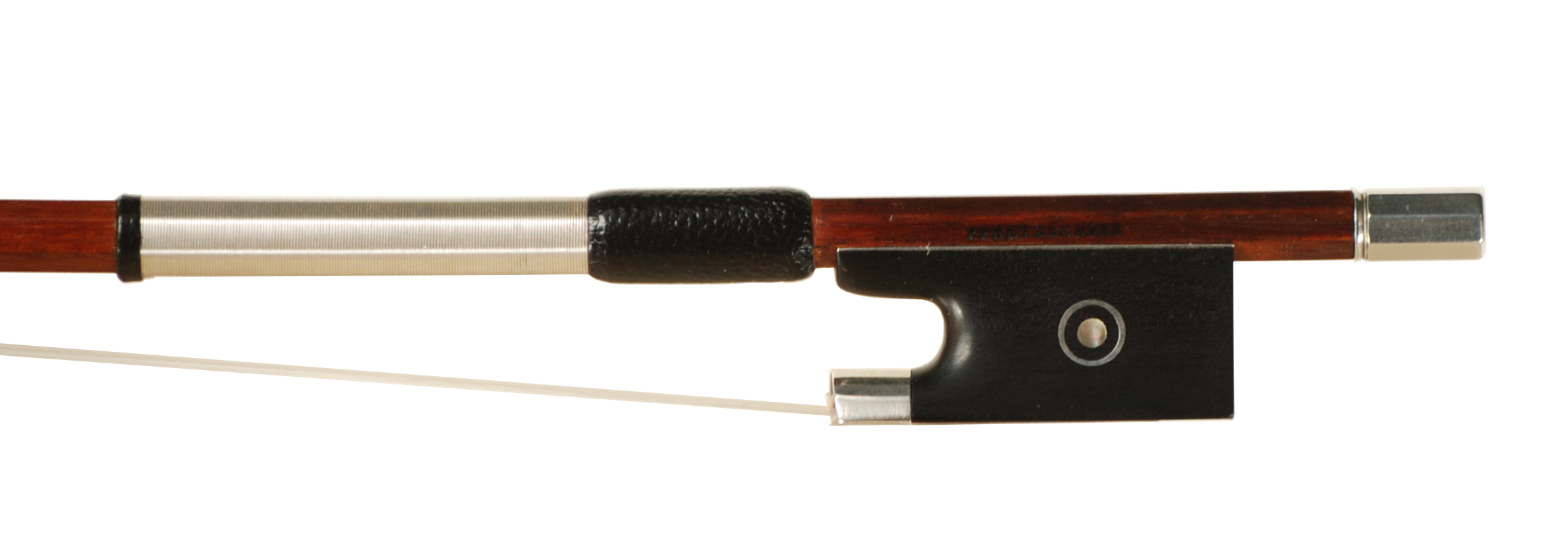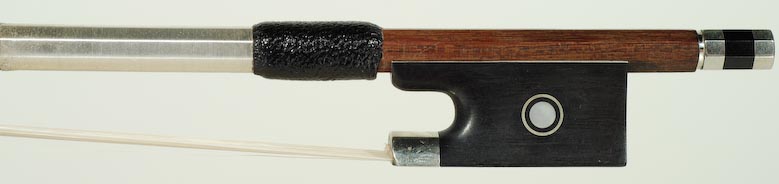
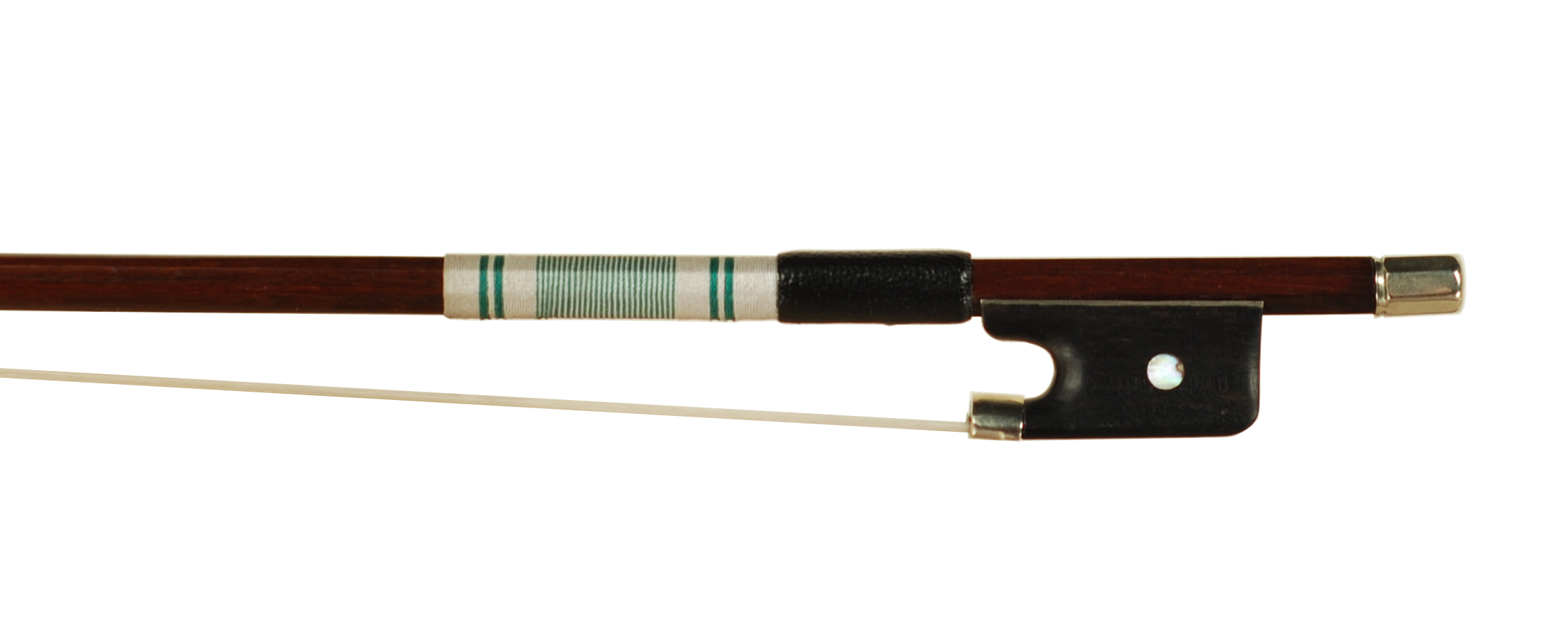
French Workshop Violin Bow – Mirecourt circa 1880-1900
$1,895.00
click picture to enlarge
French bow making goes back to the Renaissance period when craftsmen began making bows for early string instruments for viols and viola da gambas. These early bows were made shorter and often more curved compared to modern bows and were patterned after English and Flemish bows. In the 1800’s Xavier Tourte came along in Paris and transformed French bow making; he is credited for the development of the modern bow, the convex curve, and the wood he settled on, pernambuco. The wood and his new design were renowned for their balance, agility, ability to hold a shape once heated and then cooled, and tonal qualities. Paris and Mirecourt, which is in the Vosges mountains east of Paris, became two of the leading centers for bow making during the 18th and 19th centuries, attracting talented apprentices and makers from across France. Mirecourt became the hub of French bow making where young makers could live for less cost and make bows at considerably less cost. Numerous workshops sprung up in Mirecourt producing bows with exceptional quality. Many shops fostered collaboration and competition among bow makers, pushing makers to make continual refinement. These aggressive young makers and apprentices helped establish French making techniques and their design rose to the top.
Our violin bow comes from Mirecourt, the hub of violin and bow making. Mirecourt was the French equivalent to Markneukirchen in Germany, famous areas in each country that young men who had a dream left home and went to. They came to attach themselves to a shop to learn the art of violin making or bow making. These young apprentices gave themselves over to a master maker for very little pay in hopes to learn the art of making violins or bows at a very high level. Each art is so specialized that one would choose at a very young age. If they had potential, they showed acute attention to detail and fine carving skills, they might make it. The apprentice could move to a different level of worker, to journeyman or higher. Their working hours were long and grueling, sometimes sunup to sundown, depending on their contract. We have a very nice French bow made in a bow making workshop. This bow was made by a seasoned bow maker, no mere one or two-year apprentice. Workshops in Mirecourt were known to employ 10-20 or more workers, all working in the same room or just outside the workshop to have better lighting to make bows.
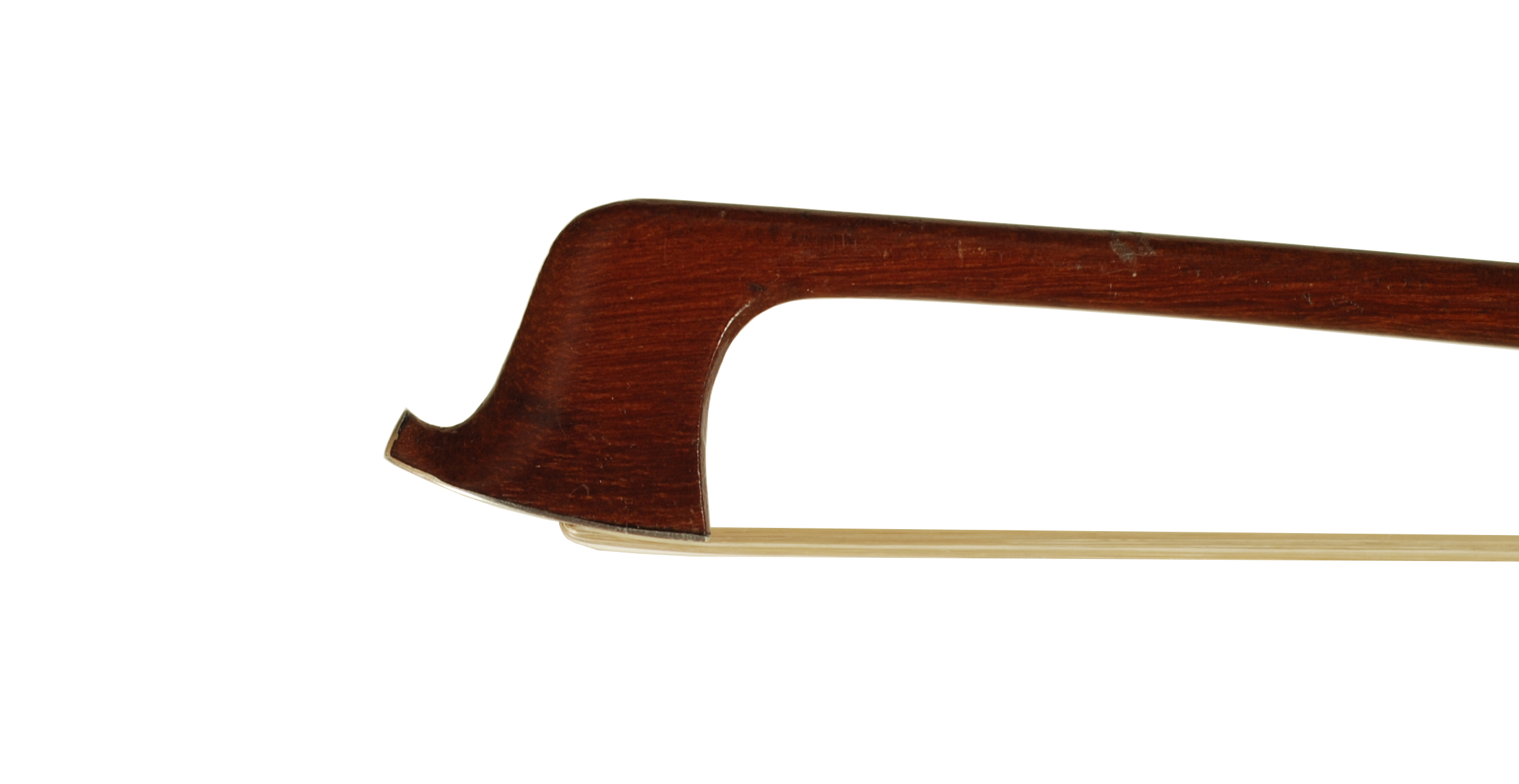
The pernambuco has beautiful chocolate brown color and tapers slightly in round section from about 2.0 cm behind the head where it is thin, gaining incrementation in width directly up to the winding. The pernambuco would have been harvested in Brazil in the mid 1800’s, transported to France, unloaded and dried another 10-20 years before being crafted into a violin bow. The actual tree started to grow in the later third of the 1700’s. Just think of all the effort that went into acquiring the materials to make one bow: the nickel silver for the ferrule, lining, the slide that captures the mother of pearl and the button, different leathers, including lizard, goat, steer, or even kangaroo, ivory or bone for the tip facial plate, the pernambuco wood for the stick that came from Brazil and the ebony wood from Africa, which is one of the hardest and densest species of wood the Lord makes. These items traveled the globe and arrived in Mirecourt by ship and train. I enjoy thinking about the routes, all the natural materials and how they would all arrive to be used in bow work, a very exacting art. I have spent many years studying bows, starting at age 17, and really love the work and still glean much from every stick I work on.
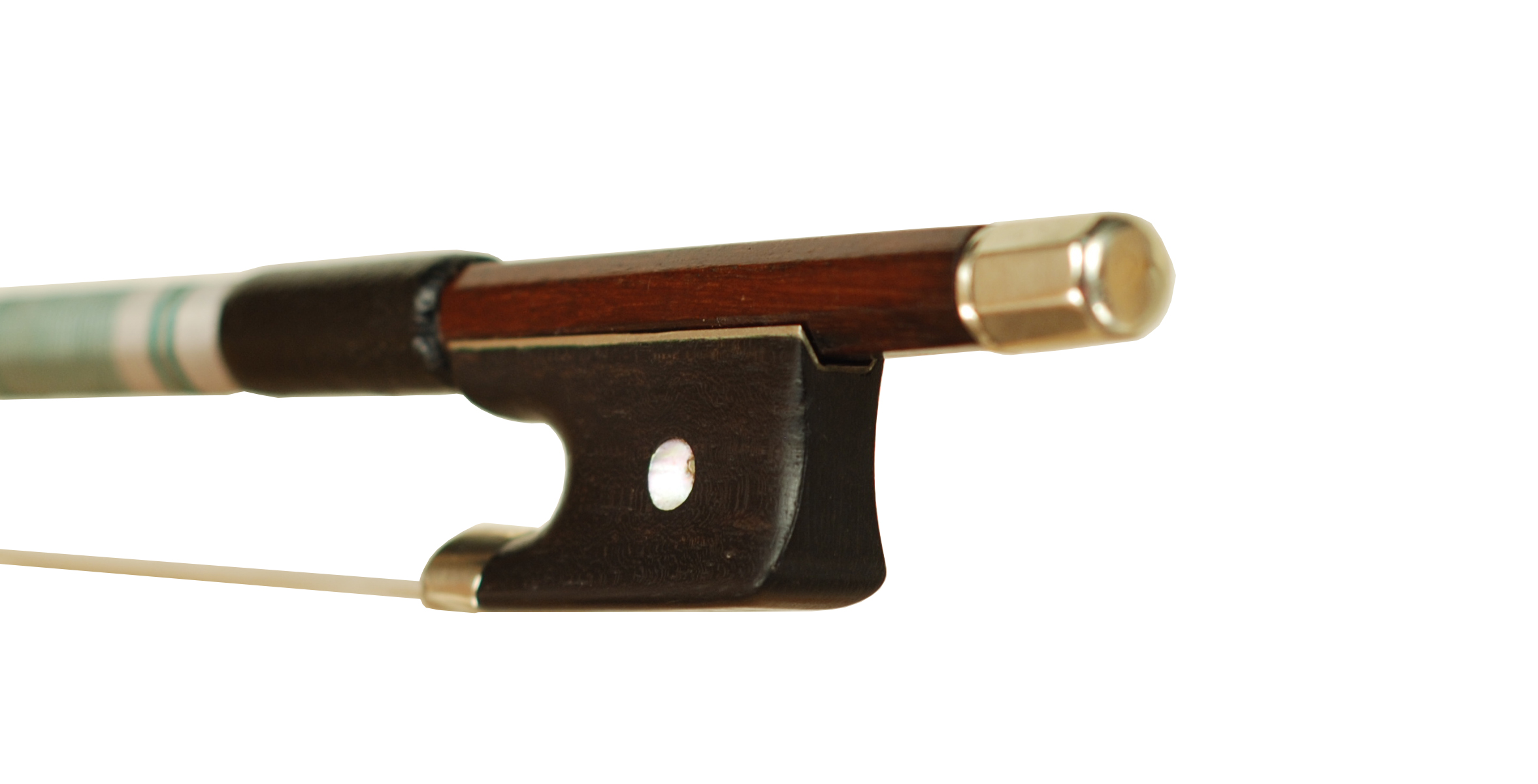
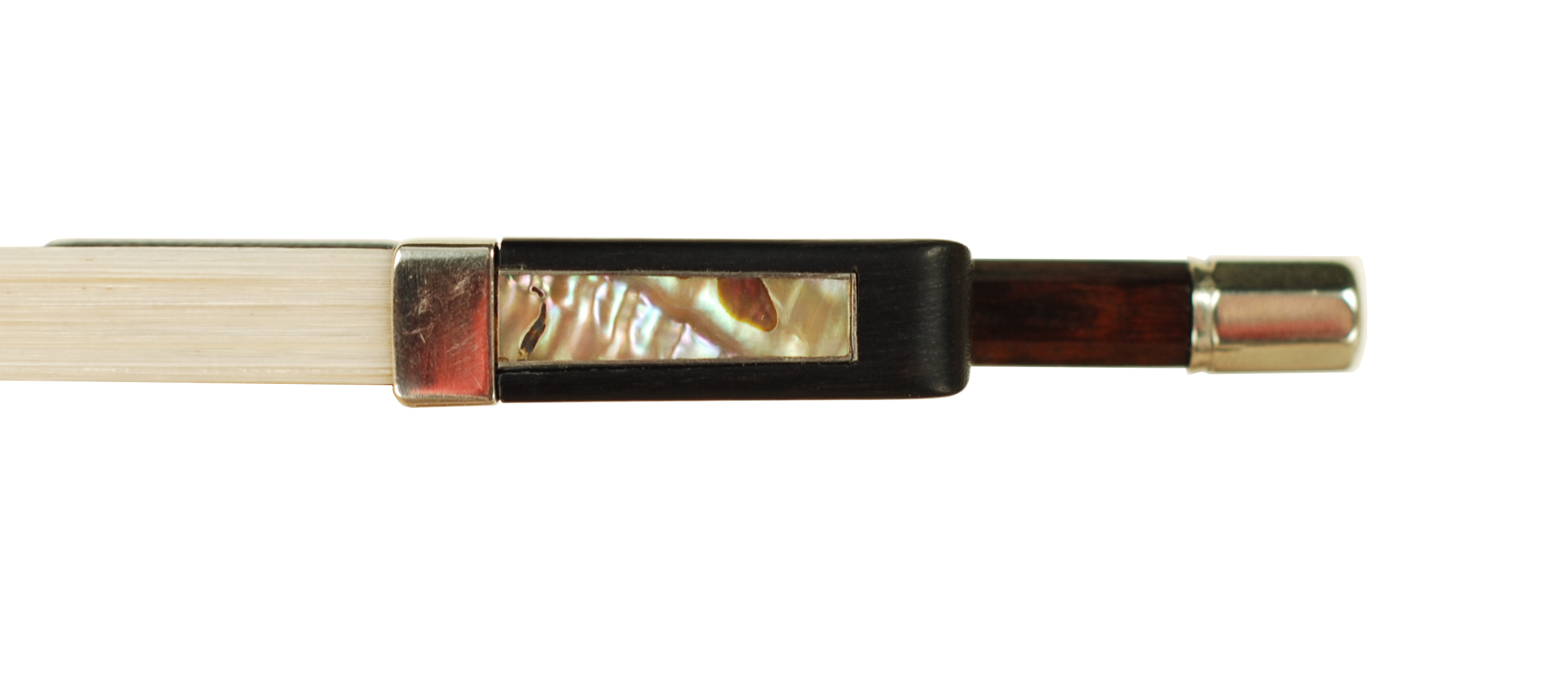
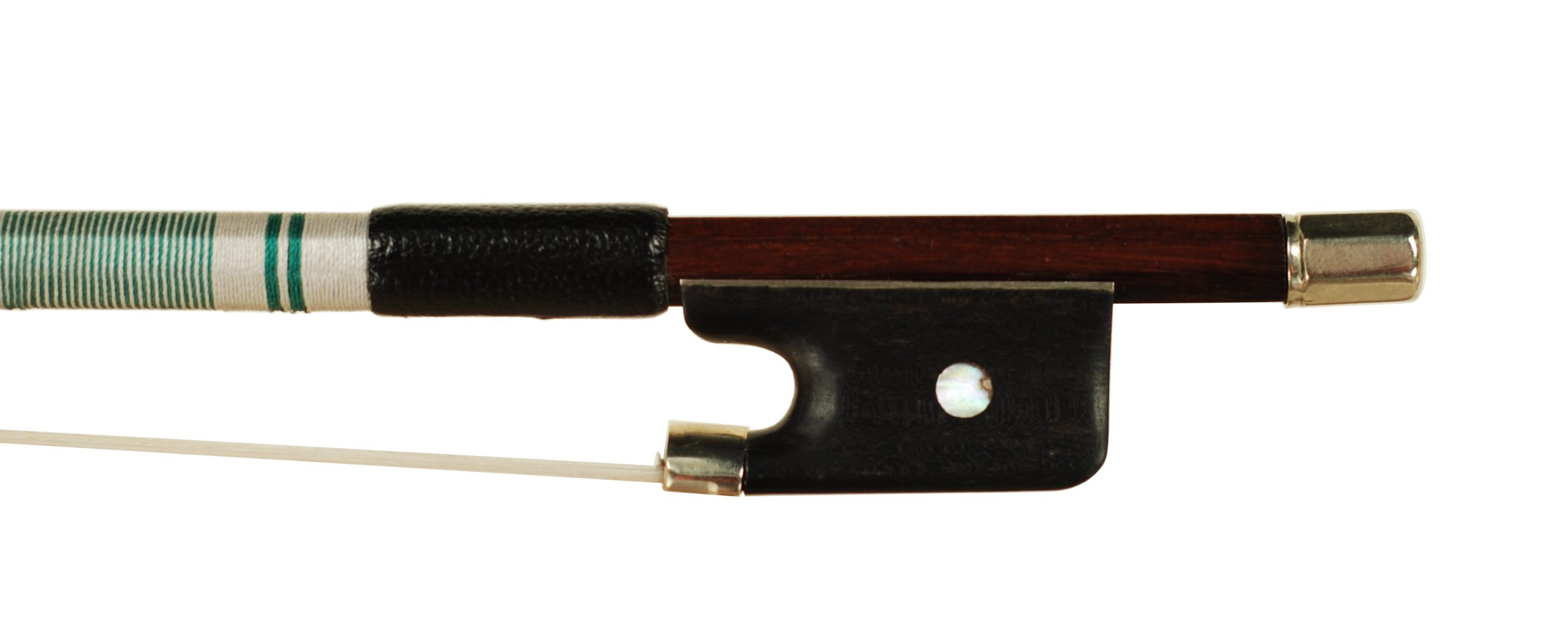
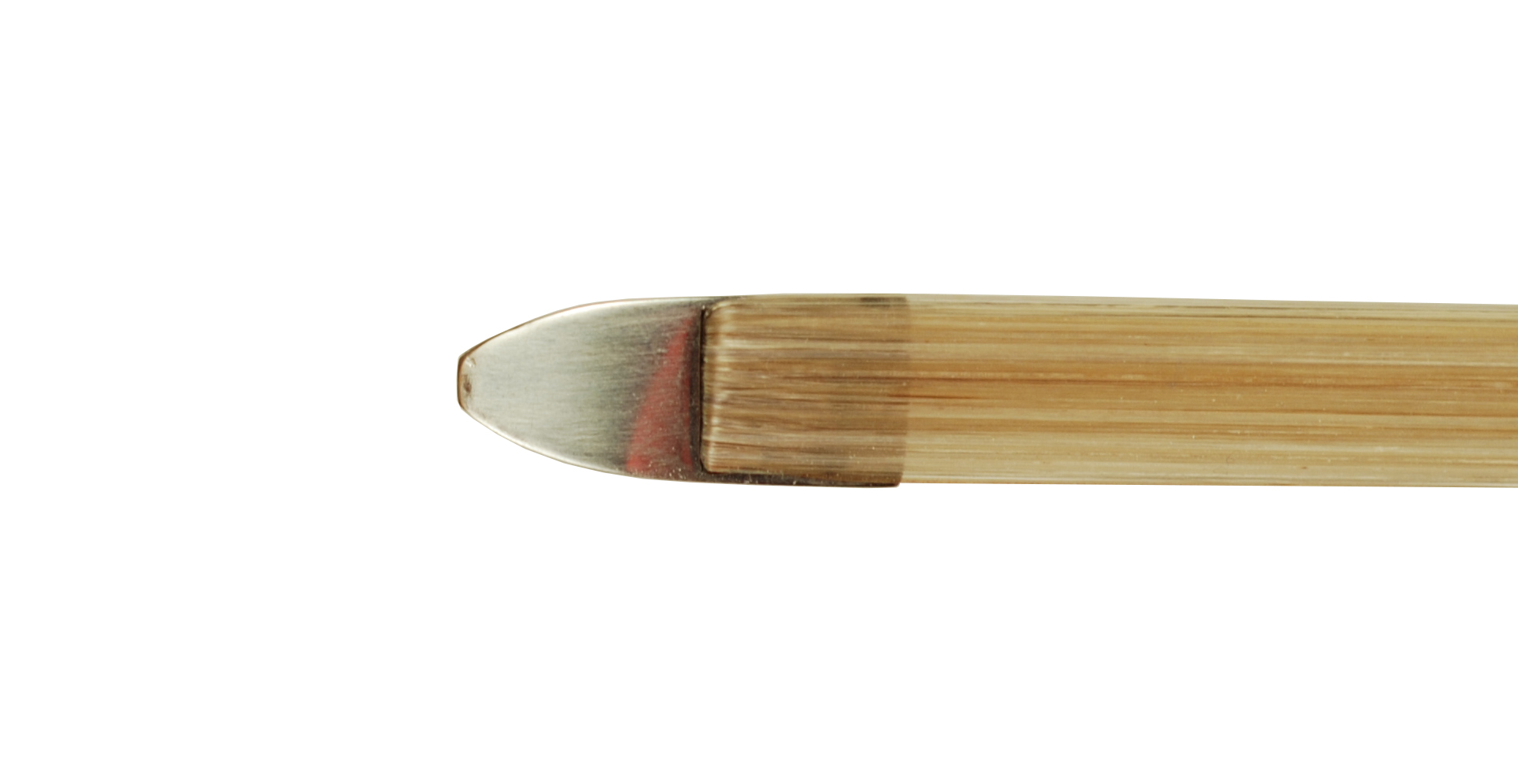
Many hours were spent on this bow, stick, and frog. The ebony frog is smaller, truly different, all handmade with single small 5.0 mm. pearl eyes. The frog is what we call half lined and is mounted in nickel silver. The button is shorter than standard button length that begins in the 20th century. The natural color of the slide will also grab your attention. It is elegant. The bow also has a silver tip, all pinned in place. This is a Wow! I cleaned the stick many times to carefully remove the black grime and dirt from the pernambuco and frog revealing a chocolate color piece of wood and a well-worn frog. The old winding was removed, and the stick was given a lightweight silver tinsel wind with Chinese green silk accents. The winding is finished off at the frog end with a goat leather thumb grip. Players, you will love this bow, it will be a neat addition to your quiver of bows in your case.
Weight fully haired 60.4 grams
Related products
-
Tonk Violin Bow
$1,850.00 Add to cart