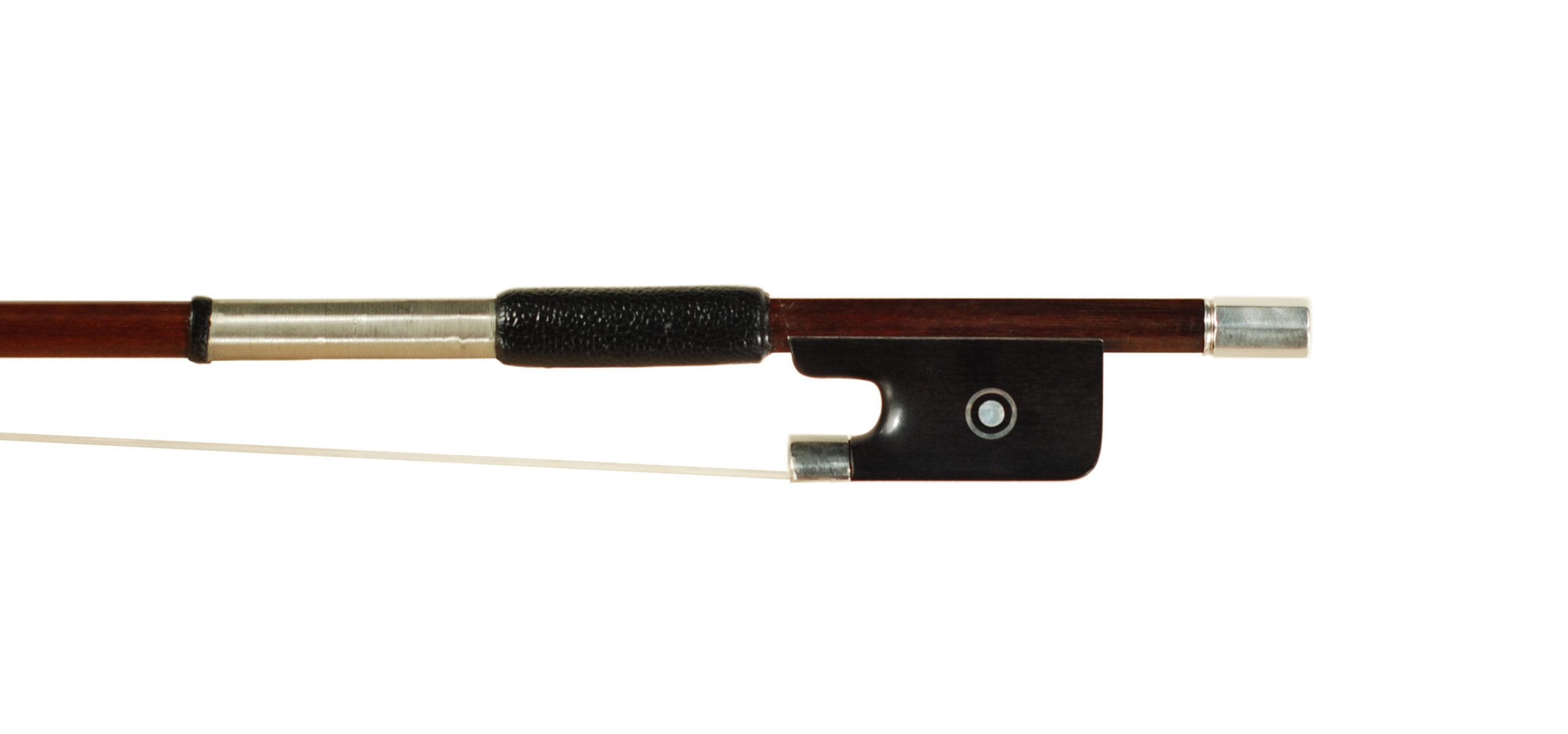
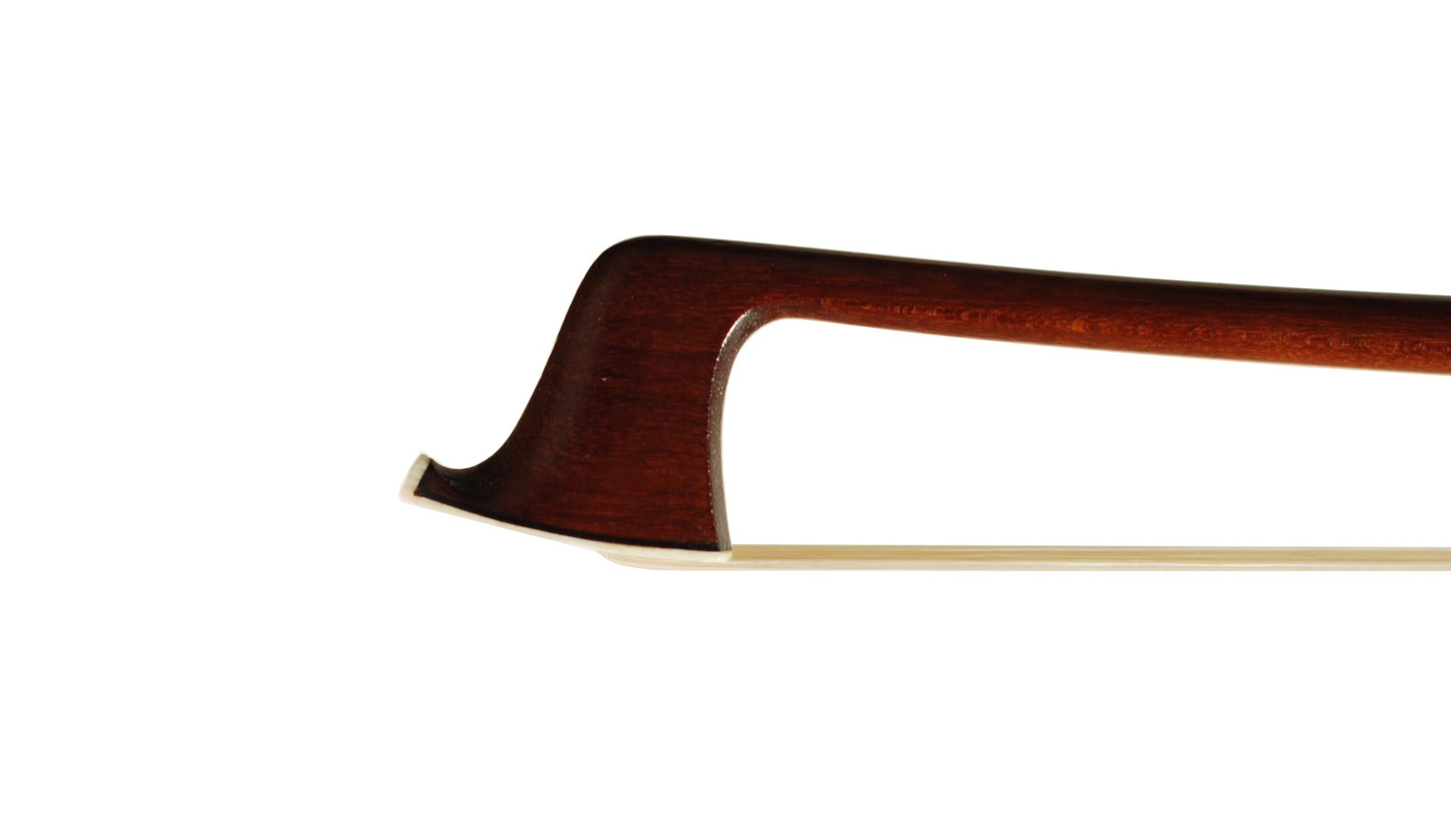
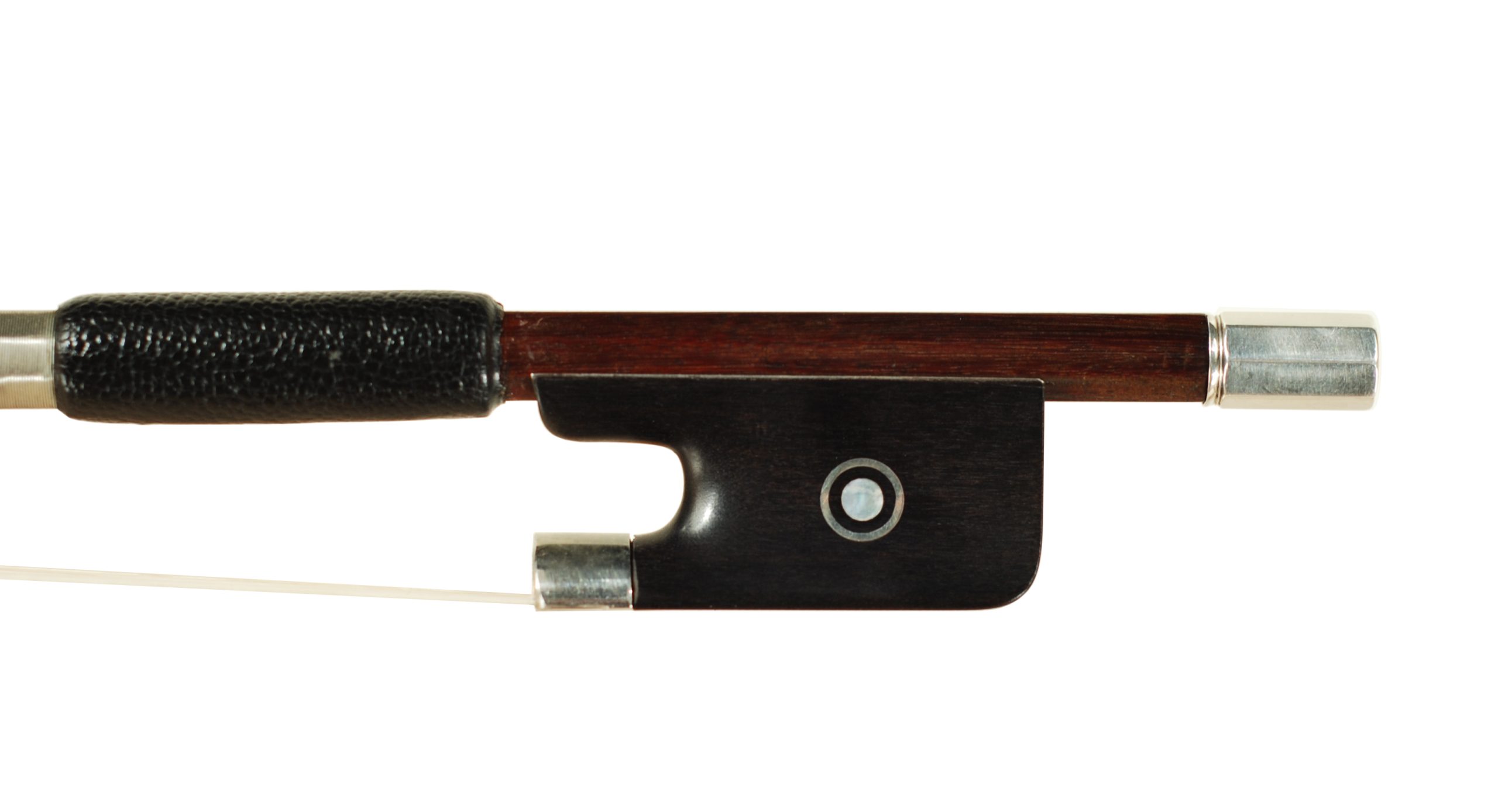
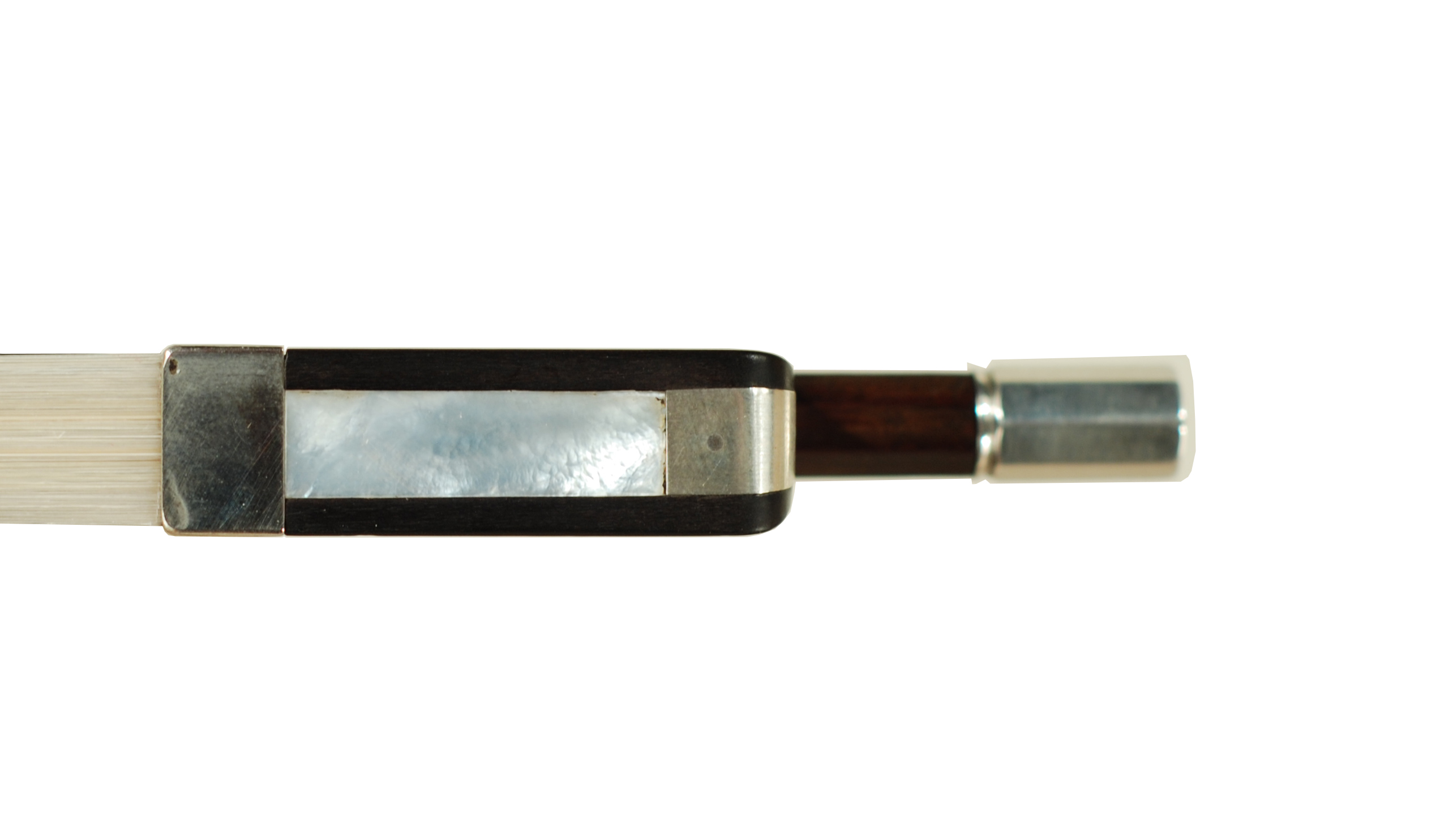
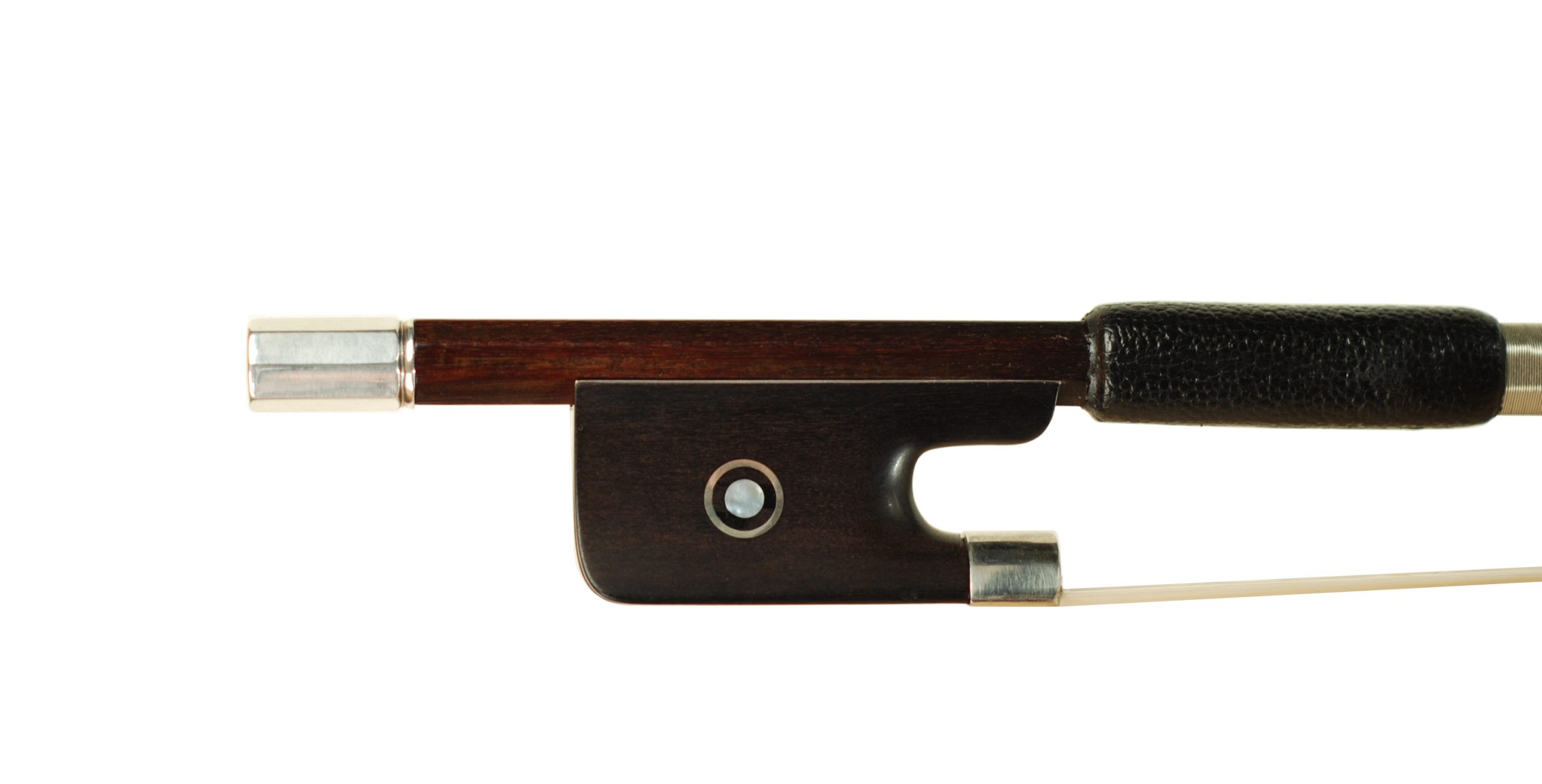
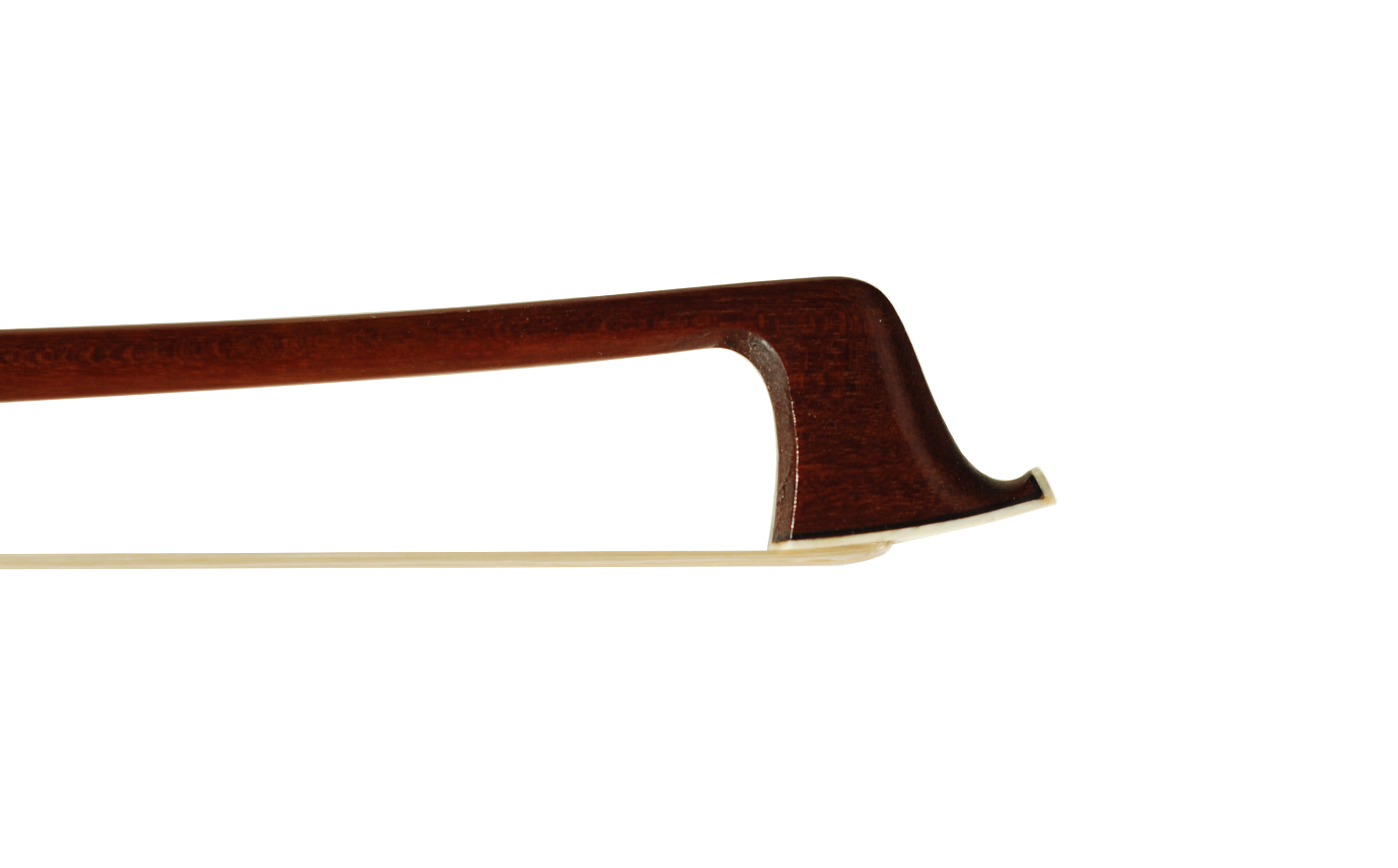
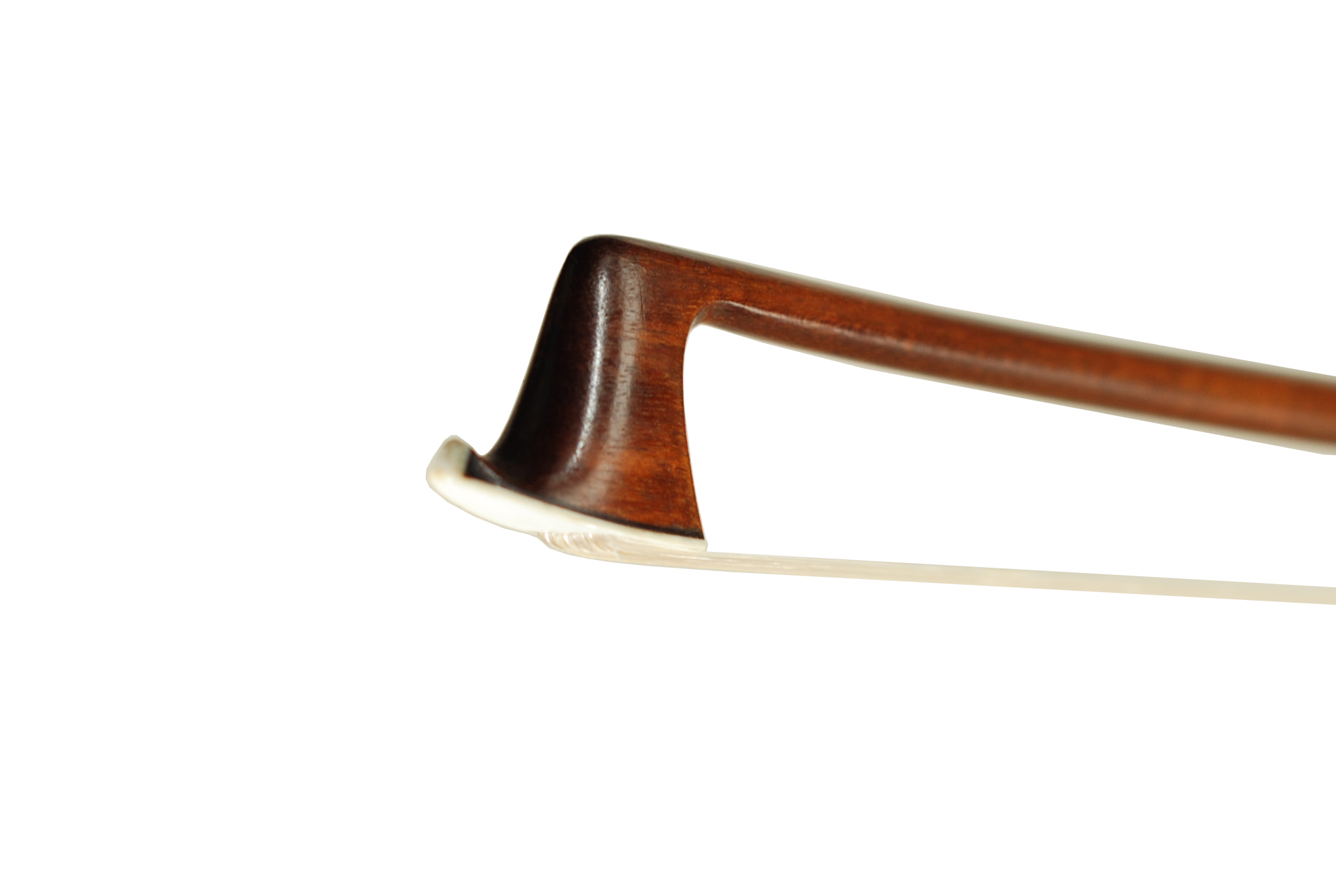
Bausch Workshop Viola Bow Stamped LUPOT – Saxony circa 1910-1920
$1,395.00
click picture to enlarge
Stamped:
GERMANY – on a side flat behind frog
For centuries German luthiers supplied musicians all over the world with not just affordable instruments but also their bows. This viola bow is from the early 20th century. From the late 1700’s through World War II the violin and the piano were the world’s two most popular instruments. To meet the huge demand for instruments, an artisan industry developed in a remote area of eastern German on the Czech border, a region known as Western Bohemia. The center of this instrument making boom was the town of Markneukirchen in the state of Saxony. The Bausch family made bows there for four generations. They were well known for their sticks and marketed unstamped and stamped bows like ours to other shops in Germany, such as the Heinrich Knopf shop, up until 1876. The bows were also at times stamped with famous bow makers’ names too to help market their bows. After 1876 the Bausch shop came under new management of the Paulus family from 1876-1920.
This bow was tagged with an old paper tag dated 6-4-79. About a month or so before I graduated from high school. Yup, I ‘ve had this bow in my collection for many years and now it’s finally completed. I would have found this bow in the New York City / New Jersey area. My dad helped me purchase and collect hundreds of instruments and bows from 1976-1985. This Bausch viola bow was made for the string trade and sold as a stamped LUPOT bow. The bow is pernambuco, sterling silver mounted and in round section. The bow is older pernambuco, orange/brown in color with the frog area of the bow showing darker color because of normal handling. The stick is relatively thin as far as viola bows go. The head area and just beyond the throat of the stick is thin, because of its strength, and well-proportioned throughout the entire length. This tells me it is a firm piece of wood with dense tight grain. Old wood for sure, the ever sought after pernambuco. I’ve gone over the entire stick at least two times. Yes, it has been at my bow bench beginning in the summer of 2025. Other things came up and the two viola bows I was working on got put on hold. Seven months later it is finally completed. It is in great condition, with the tip being original and needing no work. I cleaned up the stick a few times, removing tons of grime and dirt. The bow was then oiled and new goat leather added to the sterling winding. The mother-of-pearl slide on the frog is also new. The frog is mounted in sterling silver and is a Parisian eye model. The rounded heel is mounted with pin work, and the silver lining is secured to the frog with two tiny bronze screws. The end button is a full silver cap with two delicate turns in the collar. I notice the head of this bow broadens back to the frog side. Nice and wide to help accept the hair in the tip. It works well and helps balance the stick. The stick is easy to control, leans to the firm side, and is comfortable in the hand. The bow is like a feather in the hand and the quality and smoothness of the frog you can feel. It’s just something I sense as a player when you pick up a stick that is nice, like closing the door on a Lexus or BMW. It’s just different – closes perfectly and the closer fit is down to the thousandth of an inch – WOW – and it’s so quiet. I’ve test driven these automobiles and love closing and opening the doors. Let’s just say the bones on this bow give the same feeling of quality and the skin on the bow: the tip, jewelry work, mother-of-pearl, and Mongolian hair all add to the performance of the bow. Much hand work went into this bow, good craftsmanship on a stick that will help generate a mature sound on a player’s viola.
Weight fully haired 68.4 grams
Related products
-
T. Pampolin – Brasil
$639.00 Add to cart