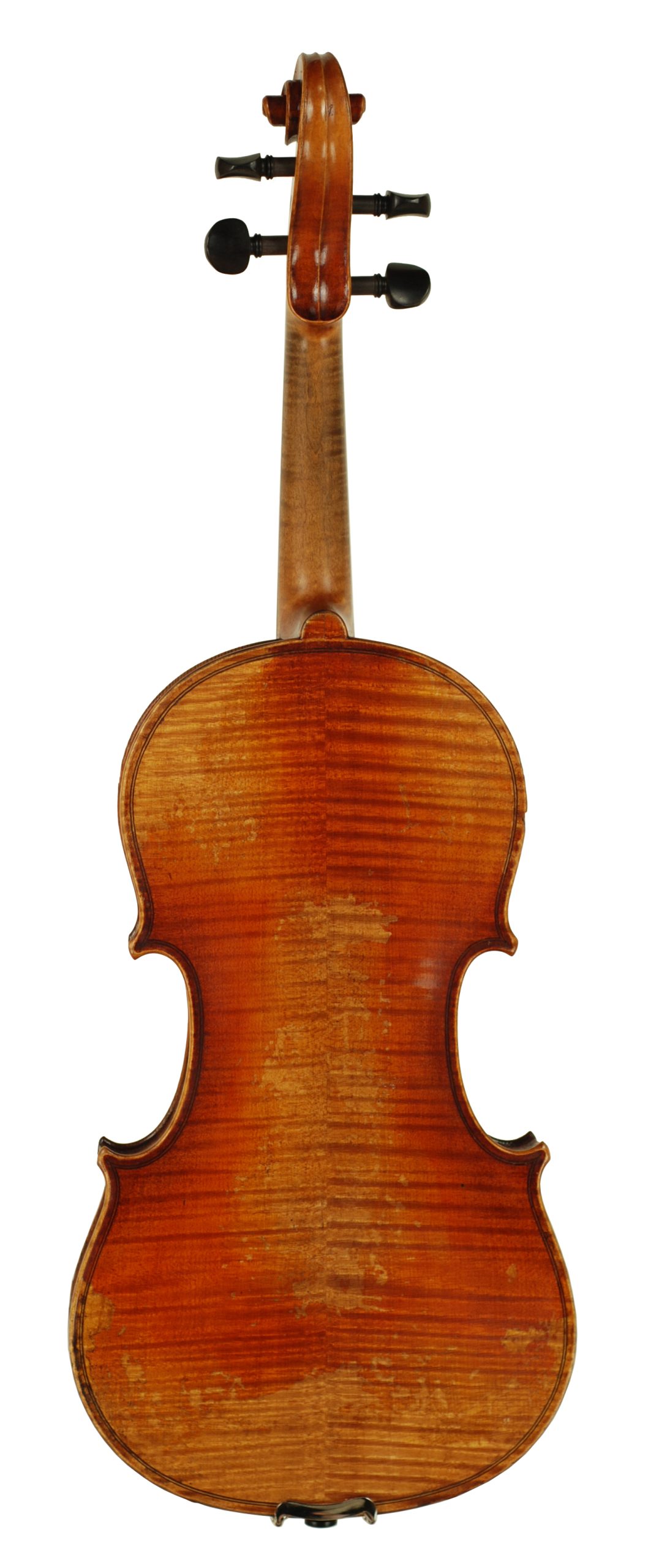
Albert Götz Violin – Markneukirchen circa 1915-1920
$4,375.00
click picture to enlarge
In a small, remote area of eastern Germany in the state of Saxony on the Czech border, more string instruments have been made over the centuries than anywhere else in the world. The numbers are unclear, but it was not in the thousands, we’re talking millions of string instruments were made, exported by rail, and then transported by ship to five continents. By the end of the 1800’s the United States had brought in hundreds of thousands to meet the demand. The violin shops around Markneukirchen boomed. There were hundreds of violin makers and bow makers, many of whom worked out of their homes. Production suffered during World War I and after and really suffered due to the rise of the Nazi Party. This little area of Saxony didn’t see much of the war or the Allied bombings; many of the older makers stayed and probably continued to make instruments because many would not leave their homes where their workshops were because of their ample wood supply. These tonewoods and hardwoods were part of the stacks of wood collected by their fathers, grandfathers, and great grandfathers. It was that important to them. The instruments are all about the wood.
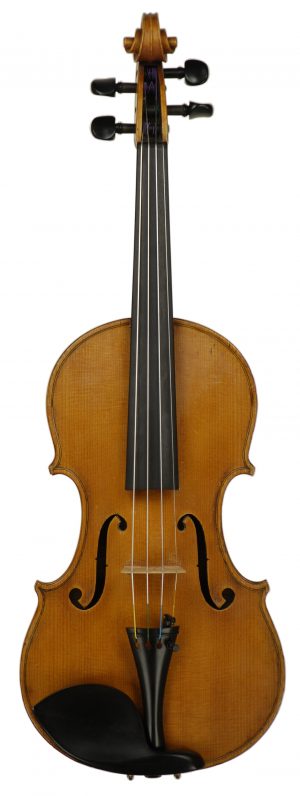
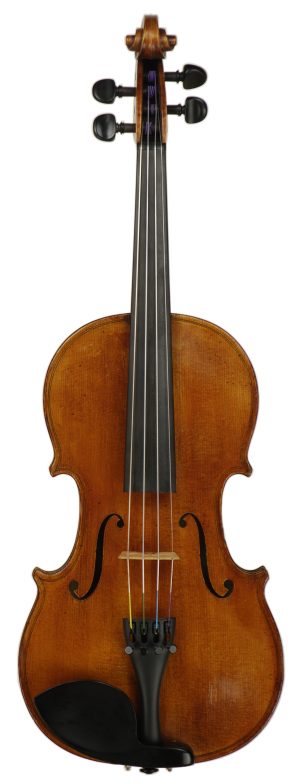
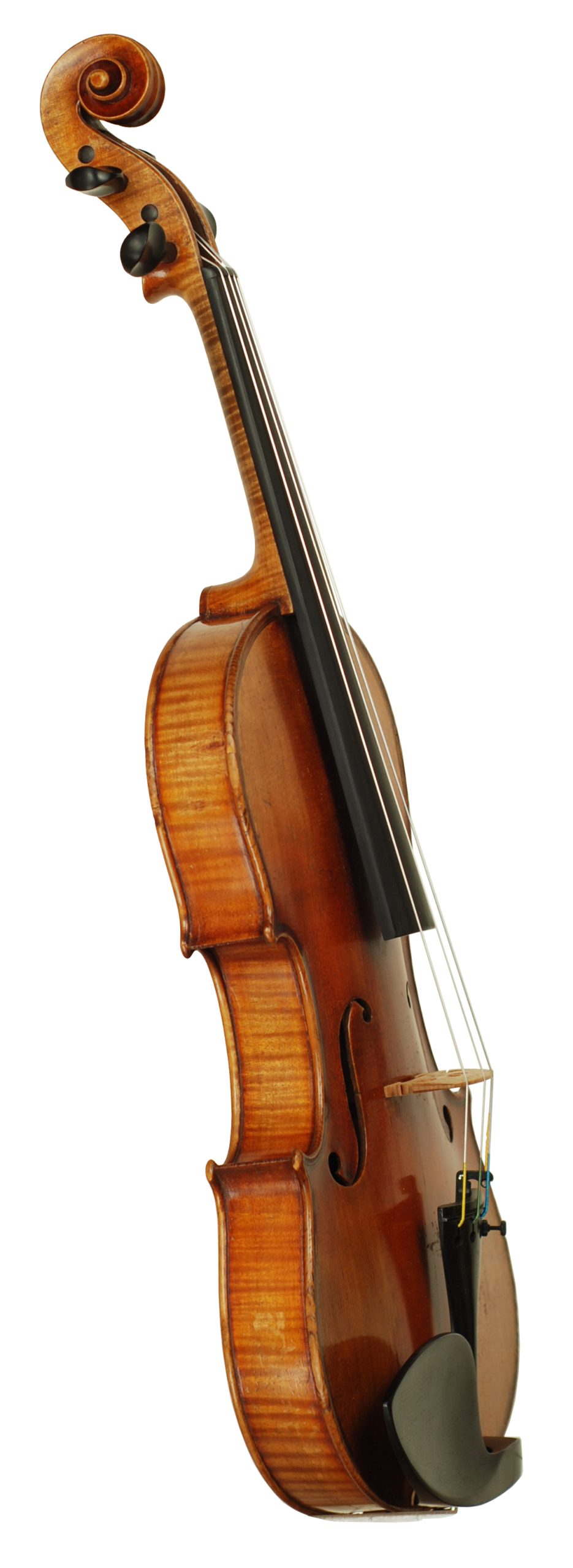
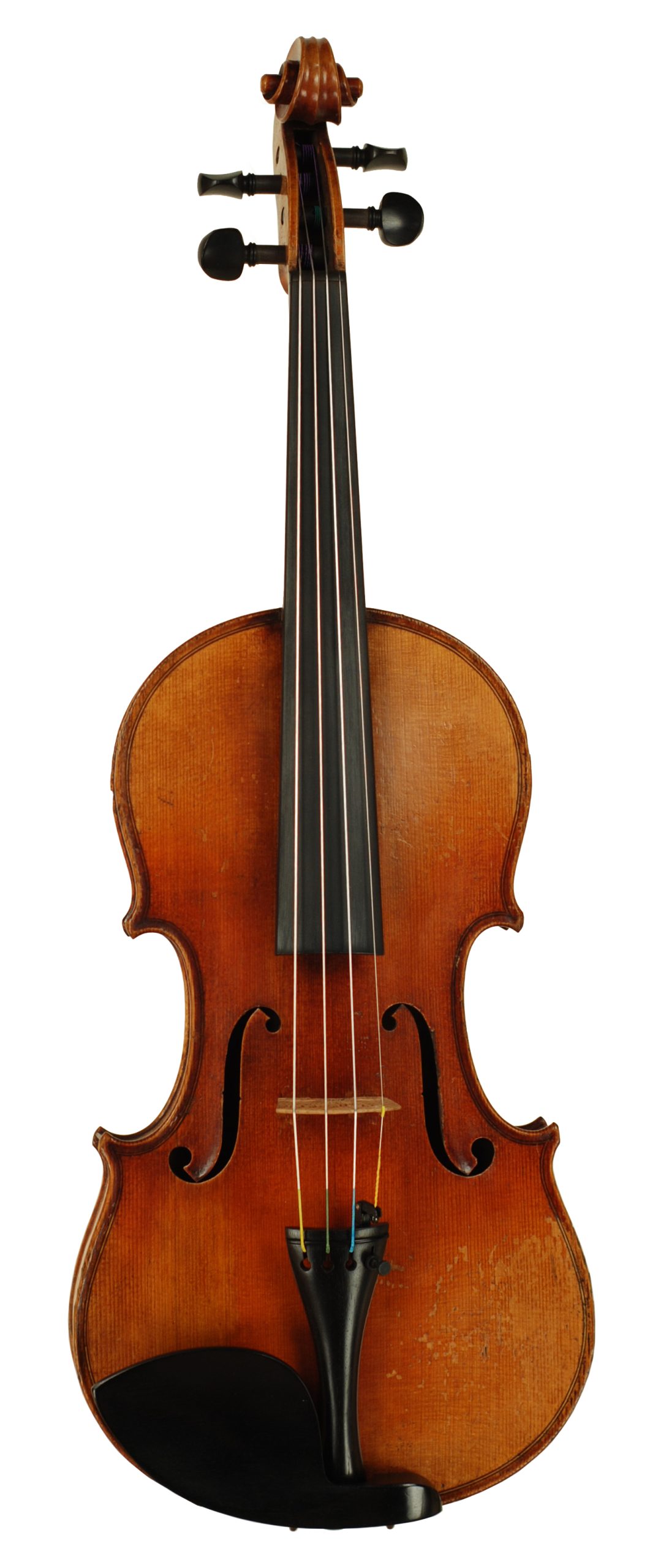
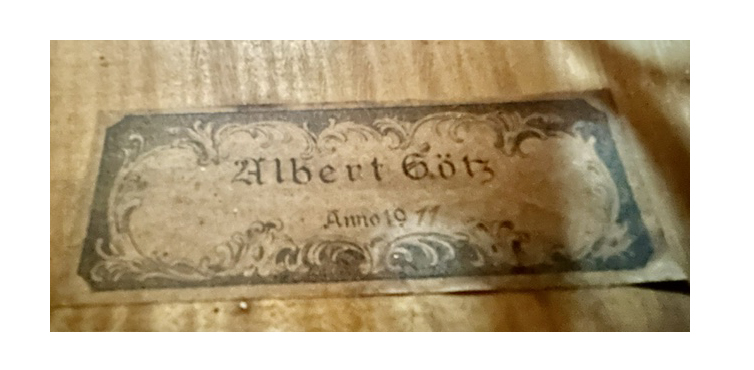
The Götz name has been around since 1887 and has always had family members in the string instrument trade. The most famous of the family C.A. Götz (which is sometimes spelled Goetz) was born in 1874 and began making at in the mid 1880’s. He lived in the Saxony region and later moved his workshop to Markneukirchen. I found another family member named Albert Götz who was born in 1887 but worked as a bow maker in Wohlhausen, Saxony. This violin’s Götz label that was placed in the violin is an older label, and is older than the date written in. This is a post-World War I violin made around the Markneukirchen area and is in very good condition. We gave this Strad model Alfred Götz violin a completely new setup, all handwork carving. New pegs, fingerboard, and nut. A new soundpost, bridge, tailpiece, and chin rest too. The varnish work is in traditional colors. Orange/brown on an amber base. The color is deep and has signs of natural patina and playing wear.
Corpus 358.5mm., Major Width 207.0 mm., Minor Width 165.5 mm., Rib Height 30.0 mm.
The sound is big with an edge. A great bottom end that entertains with a rich mature voice. The overtones are easily felt in the violin and the gutsy edge to the bottom strings help to create overtones. The violin sounds bigger than life; in short, the violin has some power, nothing over the top, but a great amount of strength. The violin has sustain and resonance on all the strings. The instrument has 105-110 years on it and you will not be disappointed. This is a must try if you’re looking for old German workmanship in the $4K – $5K range.
Related products
-
Andreas Eastman Model 405 Violin
$1,625.00 Add to cart -
Scott Studios Violin
$3,295.00 Add to cart