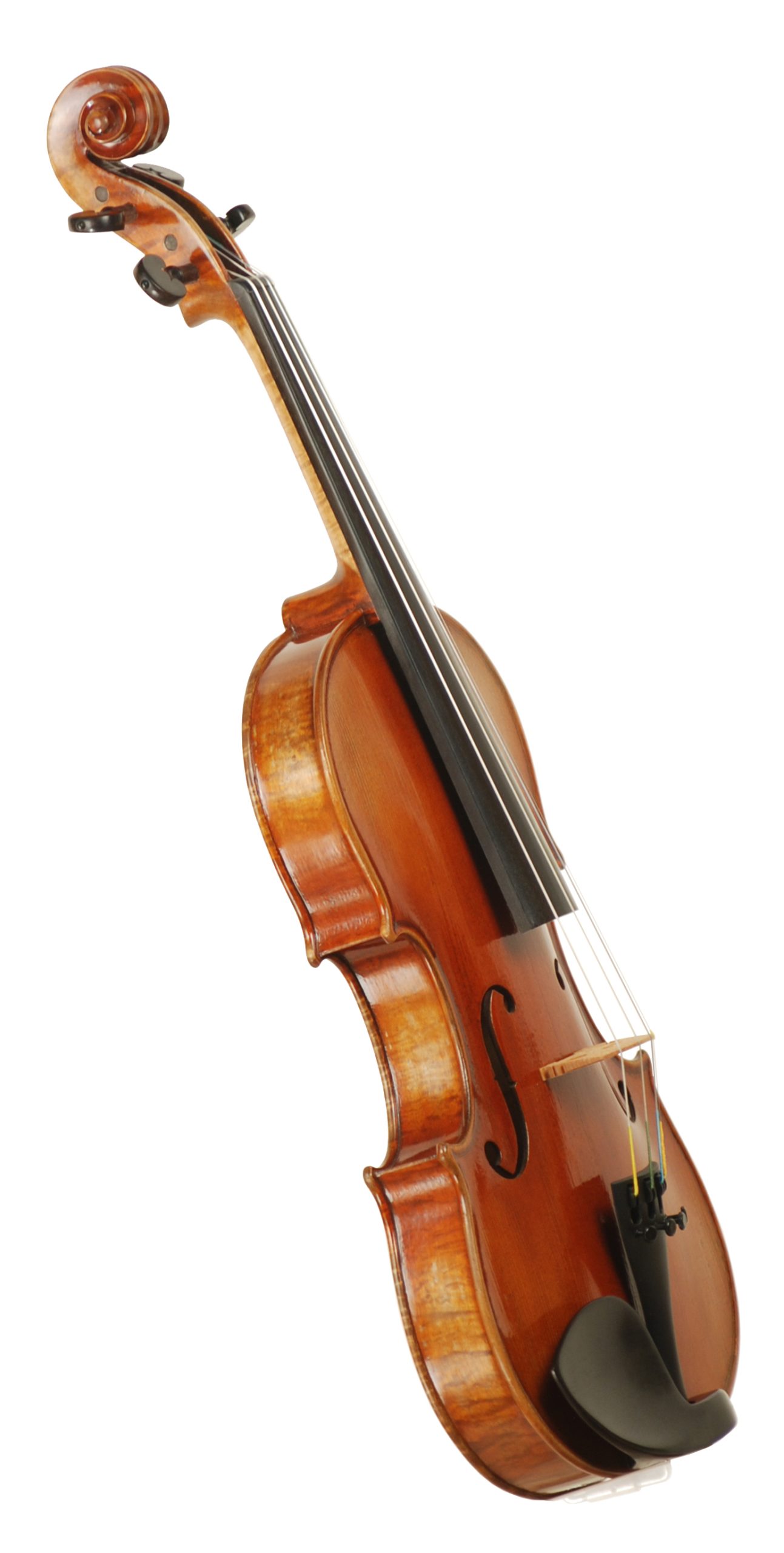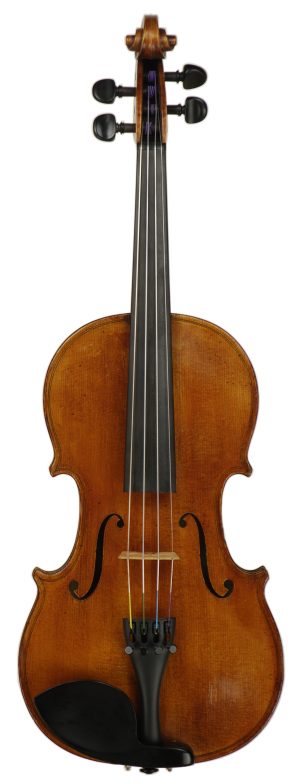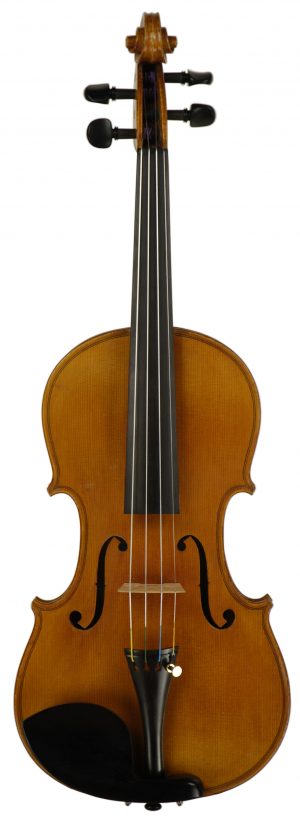
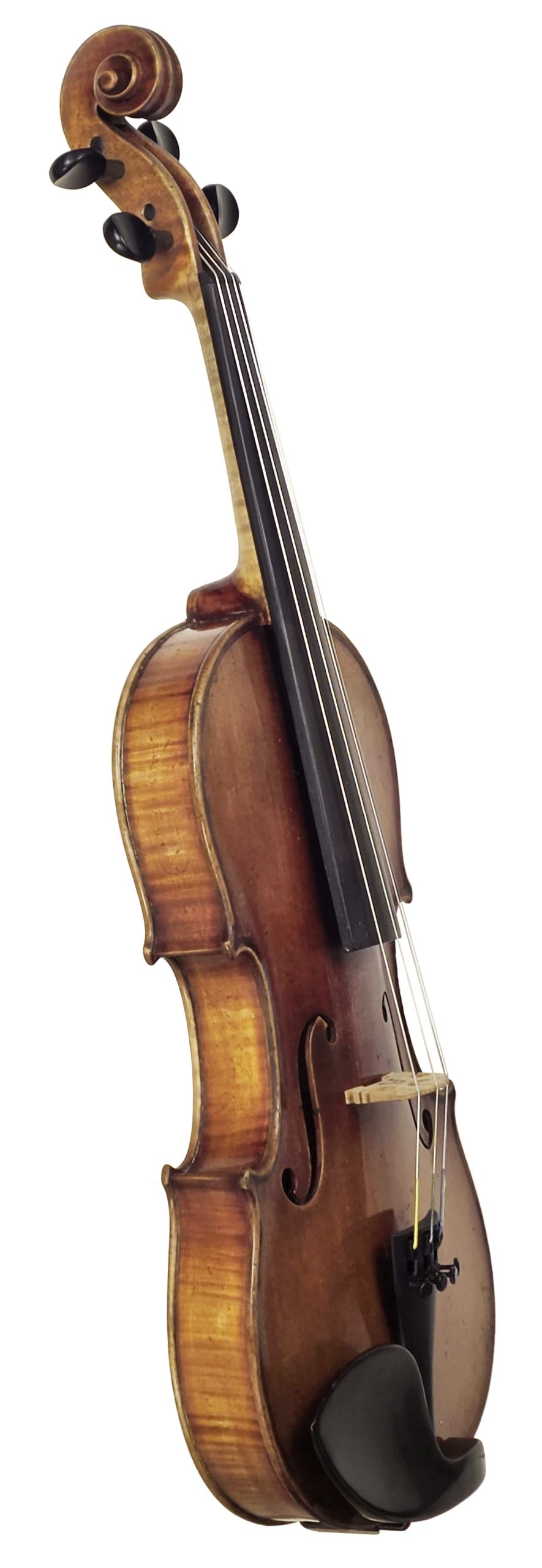
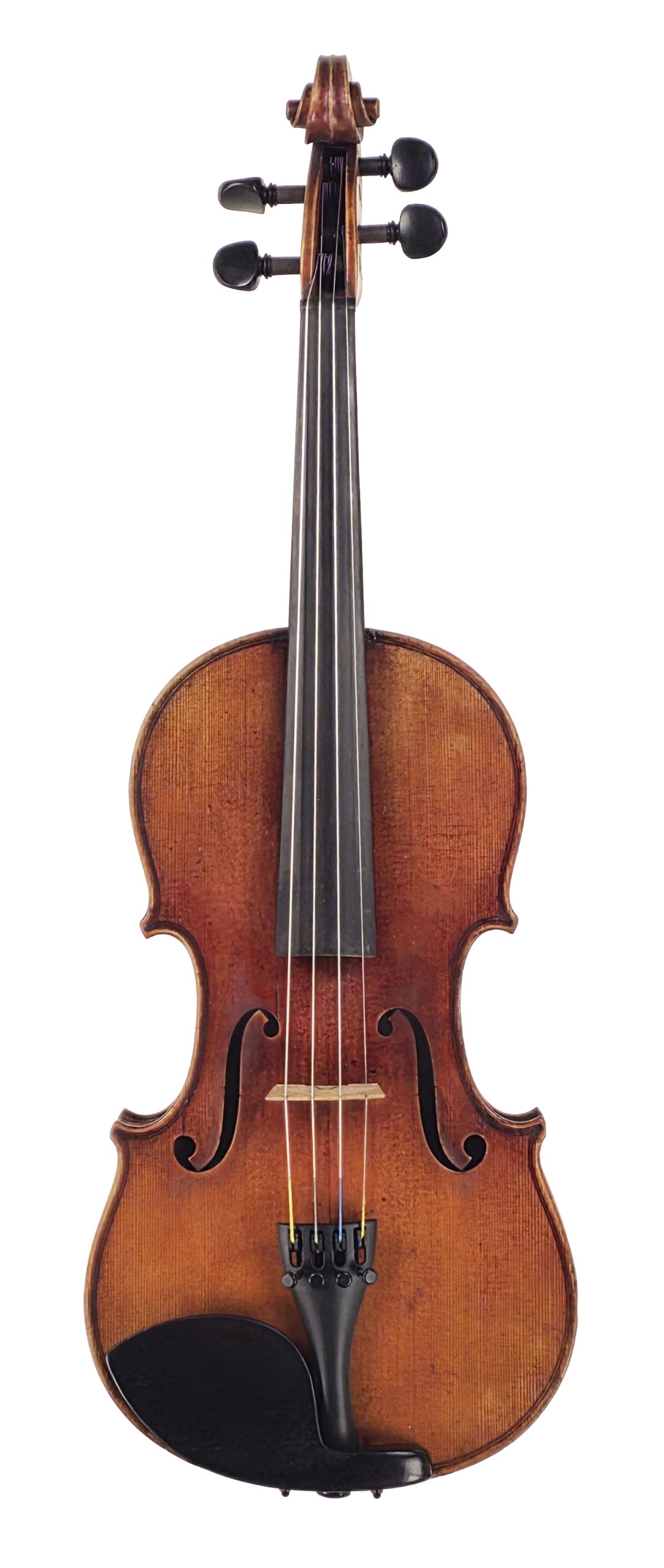
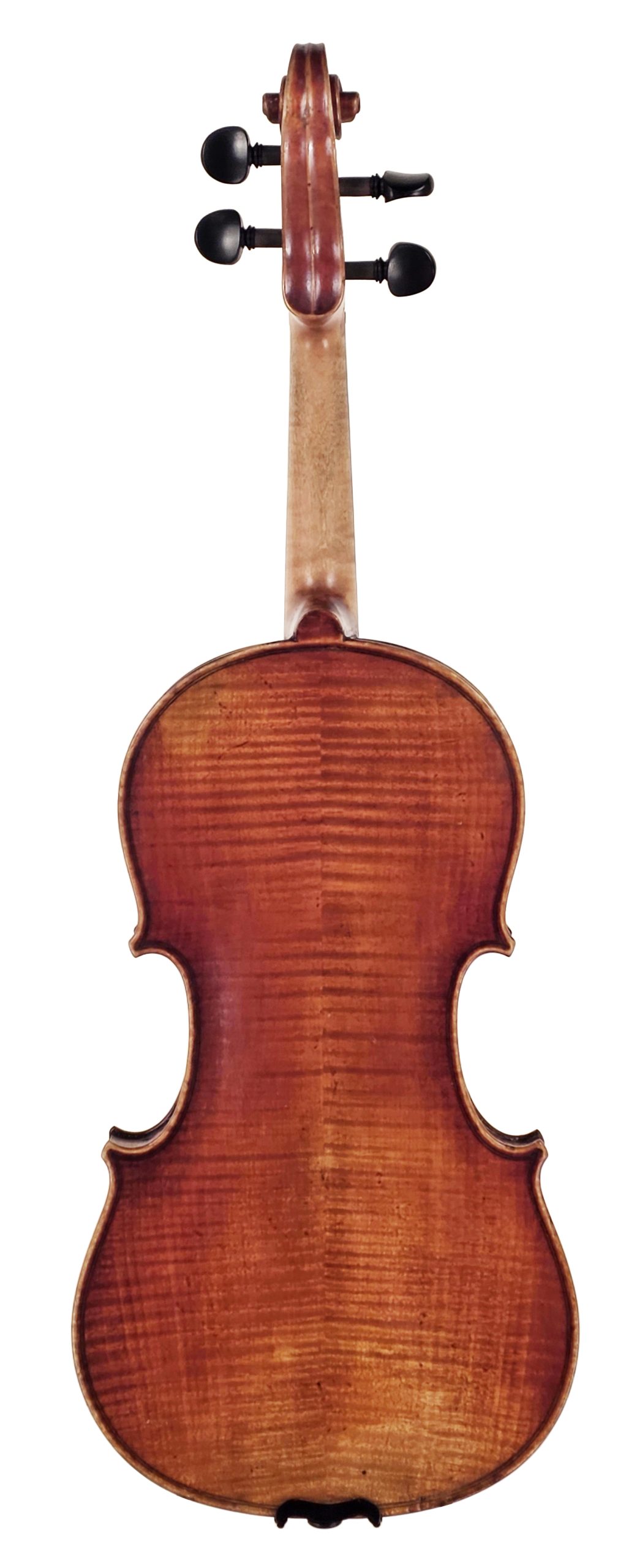
Wonderful Strad Model Markneukirchen Violin circa 1920-1925
$3,000.00
click picture to enlarge
Markneukirchen is the instrument making town known for centuries as a violin and bow making hub in Germany. This violin is from that area and is steeped in the smell, woodworking, and varnish look from the 1920’s. The area had the raw product and hardworking dedicated immigrants from nearby Bohemia, Czechoslovakia. Since the 17th century arrival of Protestants fleeing religious persecution in Bohemia, many of them made instruments and all things made of wood. They and their families settled in this new district called Saxony in the town of Markneukirchen close to the Czech border. This area of Germany is high in the mountains, tucked away from main highly ventured routes. It is a scenic area full of trees and scenic mountains. The industry somehow survived two World Wars and by the late 1800’s and up to World War II, 80 percent of the world’s musical instruments and bows were made in this small town.
Our violin is a grade above most non-branded fine workshop instruments. The Strad numbers are slightly long in the corpus. Maybe an experiment by the maker, but wow! does it work. The instrument simply responds. The woods are choice and the workmanship on the violin didn’t come from a mere 1st or 2nd year apprentice. There is no brand, no markings at all. Mr. Judd believes this instrument was made some time after the first World War in a very good Markneukirchen workshop. This practice of not labeling or stamping an instrument was quite common in many workshops. During the period 1840-1940 the towns of Markneukirchen and Bad Brambach were at the pinnacle of German violin making.
We have meticulously gone over the entire violin, giving the peg box a new set of Swiss ebony pegs, cambered the fingerboard, re-worked the nut, and cut a new B grade Despiau bridge. I chose to put a German Wittner tailpiece on the violin with a Guarneri chin rest. The oil varnish is an orange/red/brown on a golden amber ground. The violin is antiqued to the period and is in fantastic condition. The patina and feel of the violin shows just natural wear. The neck is in perfect condition and the scroll/pegbox has no issues. This is an instrument that is easily 90 years old in great condition. I love the choice of woods. The maple back is two-piece highly flamed, flawless. The flame or curl is medium width and is consistent, and descends slightly from the center seam. The ribs, neck, and scroll all match in degree of the flame. The maker’s wood choices for this instrument are a knockout! The spruce top has a table of 1.0 mm. medium width, straight grain. I have cleated one small split by the bass bar north of the bass side f hole. It doesn’t distract from the violin, nor does it inhibit the sound of the violin.
Corpus 359.0 mm., Major Width 207.0 mm., Minor Width 167.0 mm., Rib Height 28.0 mm – 30.0 mm.
Vibrating String Length 326.0
The violin has a warm mature voice, nice sustain, and a gentle presence. I would rate this violin on the higher side of my own tonal spectrum. The instrument has no makers name but it does have a fantastic tonal core. The violin speaks and is quick to respond. The bottom end is like red velvet cake; darker and moister than you think before you cut a slice and take a portion. The sound is soothing, and the treble side can jump as well with a good bow stroke that is laid into the strings. The E string is brilliant; I would not call it bright like you may find coming off a newer violin. The A and E speak very well – the sound is clean, and the entire instrument will not disappoint even the most critical of players. A beautiful violin, no maker’s name but it has a great sound. It’s always about the sound.
Related products
-
Johann Christian Schlosser Violin
$8,000.00 Add to cart