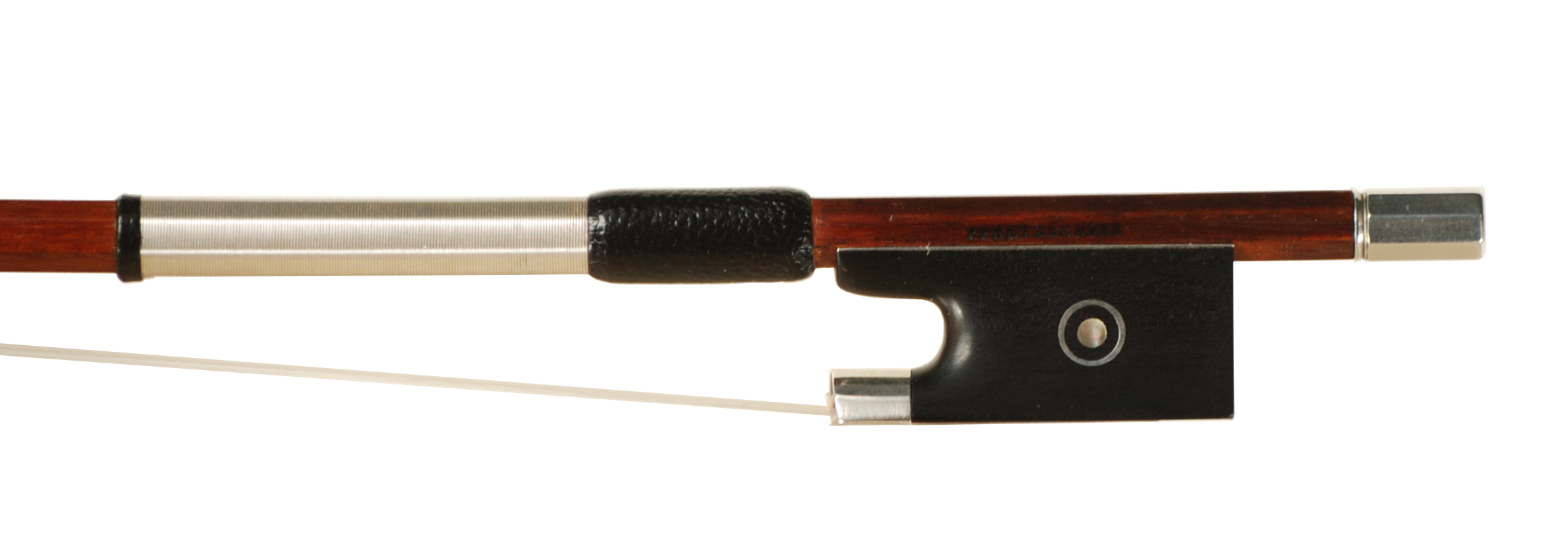
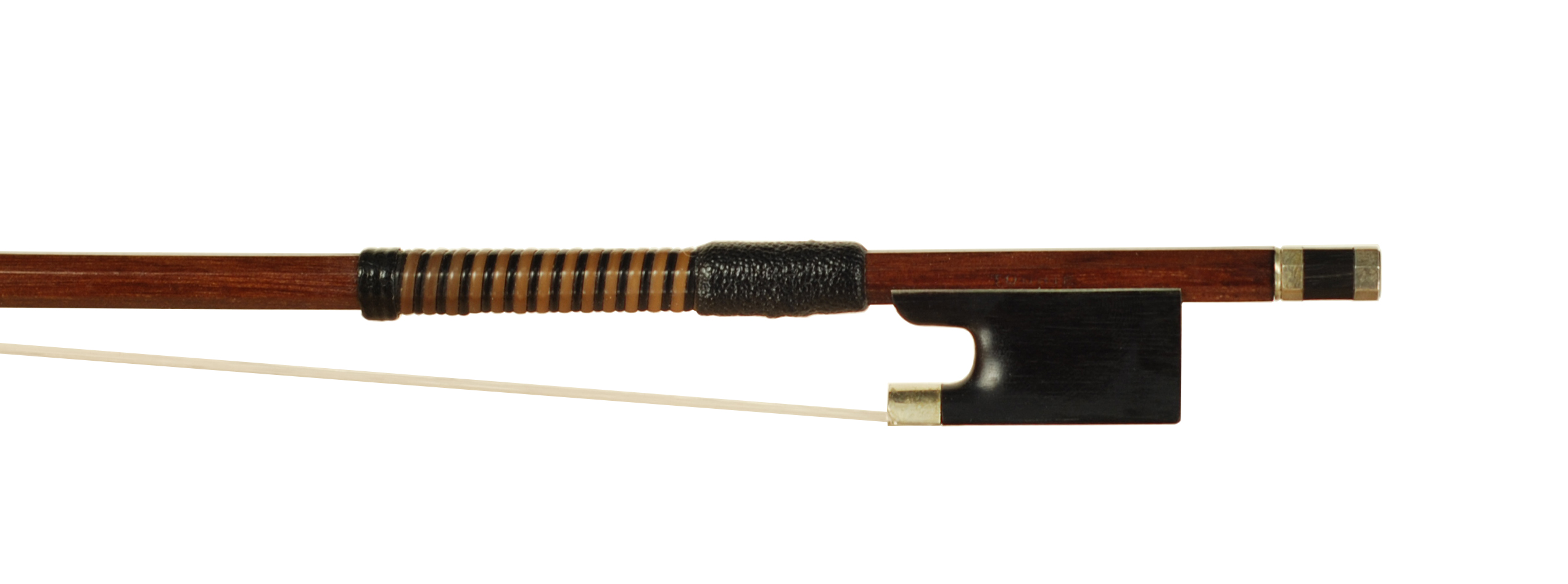
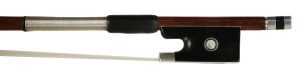
Workshop Violin Bow Stamped TOURTE – Markneukirchen circa 1920
$995.00
click picture to enlarge
Stamped:
GERMANY – on the butt
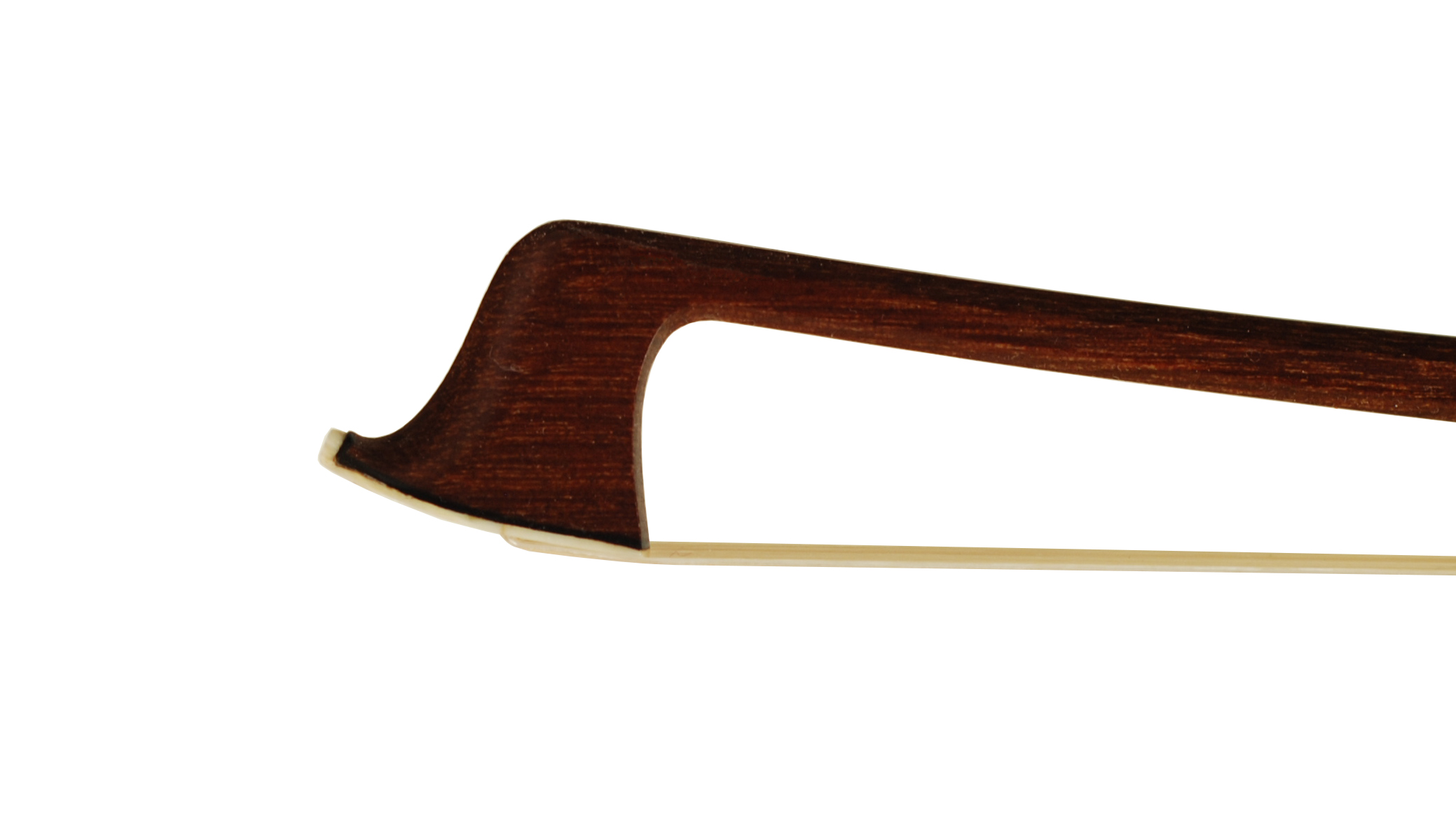
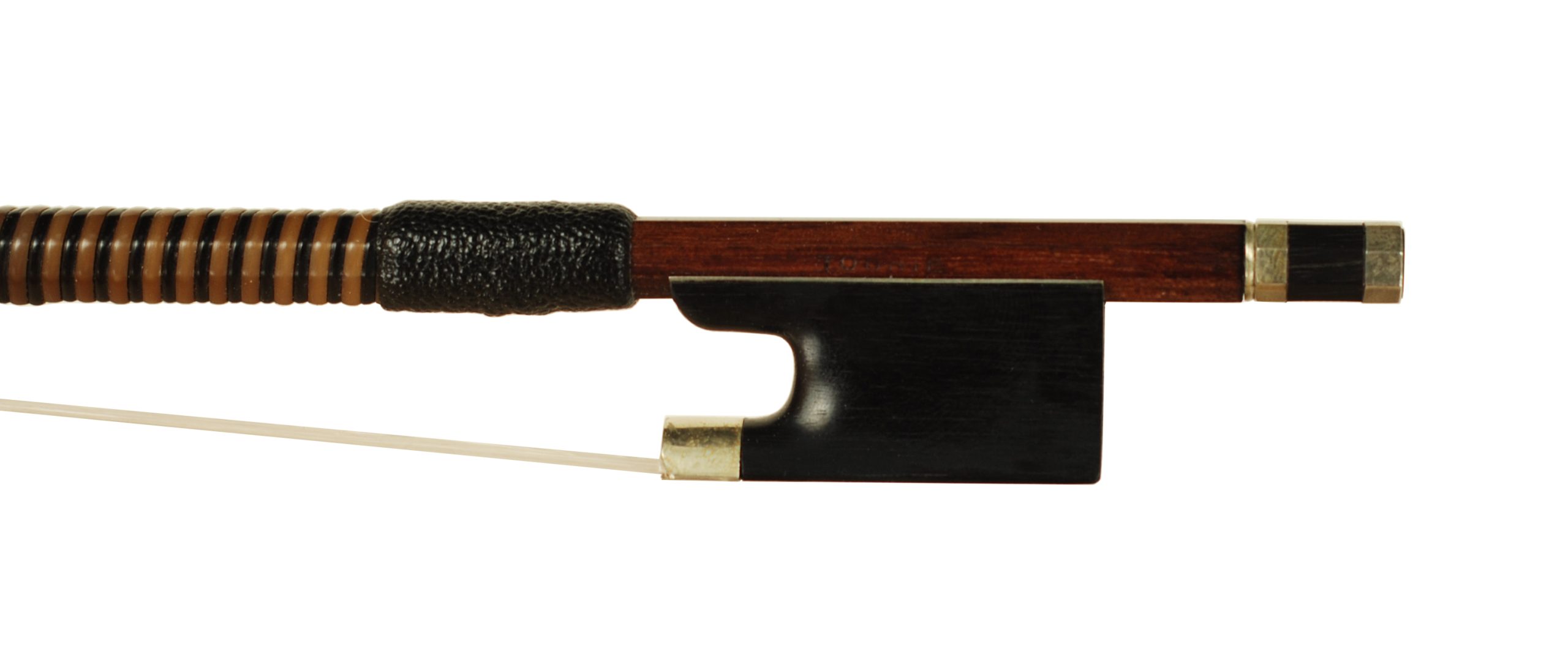
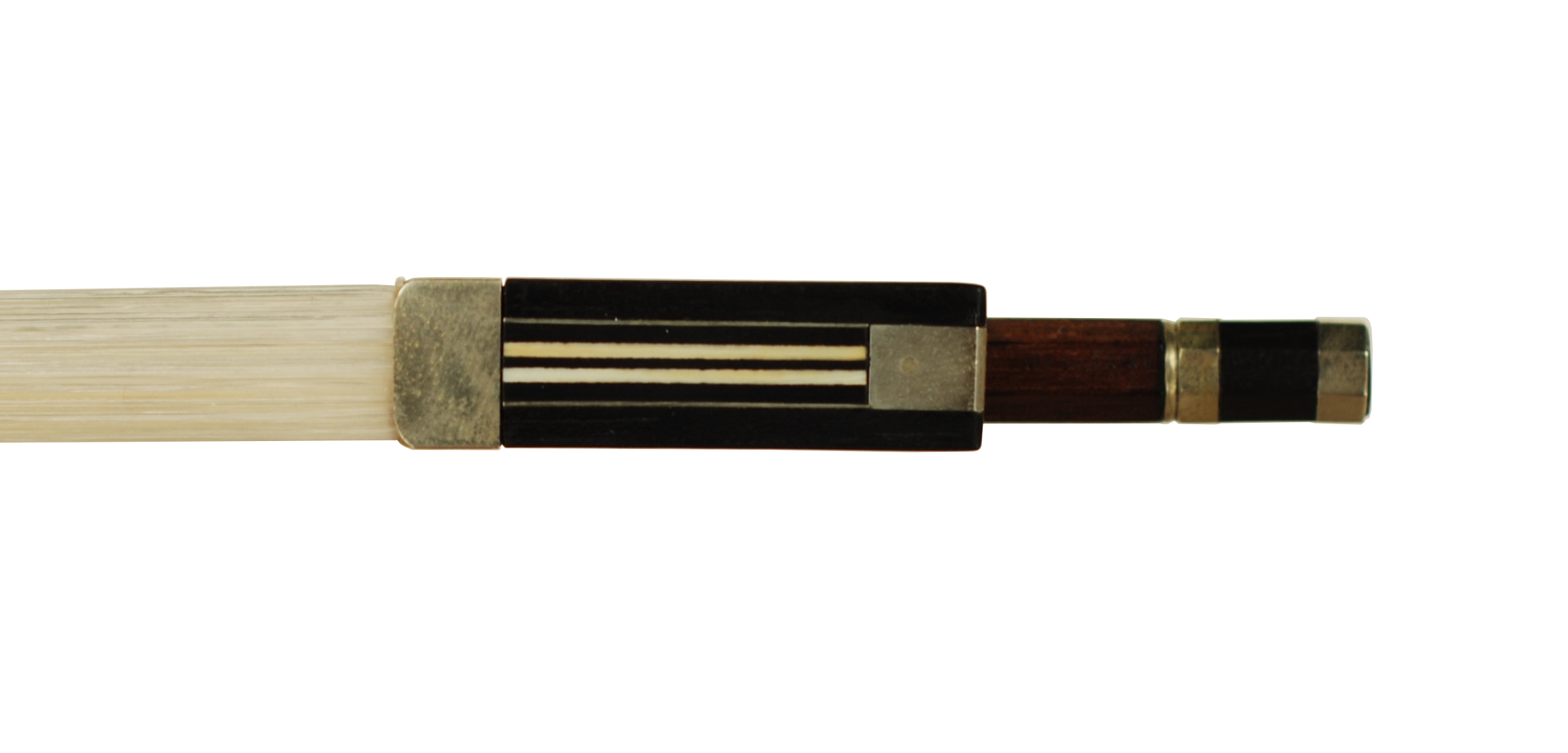
Tourte was a very famous French bow maker. This bow is not French; it is truly German marketing of the early 20th century. I purchased it from my friend of over 20 years, Abraham. What struck me about the bow were three things: first, the pernambuco wood itself was firm, older dark wood, well cut, and thin. Second, the winding was missing, with just a vestige of bone winding under the disintegrating leather thumb grip. Evidence of better workmanship. The third thing that caught my eye was the frog’s slide. It was not mother-of-pearl but a mixture of nickel, bone inlay, and ebony inlay. The slide reminded me of something indicative of good bow making skills. I purchased the bow. After working with the stick, the bow did not disappoint. I’ve had it in the shop since June of 2010 and finally getting it completed for sale.
My dad and I used to go out on weekends and collect old violins and bows. We would purchase instruments at estate sales, auctions, and a few times I would end up with an entire collection at someone’s home. I grew up in the New York/New Jersey area with upwards of 8 million people. I’m writing about this because I’m not out purchasing or collecting anymore. Here at the violin shop I have a few people who do that for me on a regular basis. They stop in with their quarterly finds. These violin hunters go as far as the Mississippi River and to Florida. Some items they find are great and I purchase them, others I pass on.
As I said, the bow is German with a famous French name, TOURTE stamped on the bow. German violin and bow makers did this for marketing reasons, especially after World War I. No one in the Western world in 1918 was knowingly purchasing items coming out of Germany. The initial brand on the bow in the prominent area sounds and is French, so the bow still made its way to North America. The artisan work is impressive throughout this stick.
The wood in the bow is pernambuco, cut in octagonal section, and the bow is mounted in nickel silver. It’s always about the quality of the wood. The pernambuco tree, after growing for 80-120 years, would have been harvested in Brazil in the late 1800’s, transported to Northern Germany by ship, then by rail it made its way to the Markneukirchen region. The wood would have dried naturally for 15-20 years and then just after WW I this piece of wood was selected by a maker to create a violin bow. Yes, the stick is old, beautiful dark brown color, strong and firm. There is no excess wood on the stick. The blind eye ebony frog looks like it jumped out of a Markneukirchen workshop, especially with the three-piece end screw and the center ebony piece longer than most – almost Nürnberger-ish. Yup, I love the bow. The heel is one-piece and has pins to fasten it to the frog. The lining is the same way, pinned. The head tip area of the bow is original, and I replaced the winding with imitation whale bone and a new leather thumb grip. The bind eye ebony frog is original and so is the three-piece button. The bow was worth the time and the effort it took to bring it back to playing condition. It is in very good condition. There are no issues.
Weight fully haired 58.7 grams
Related products
-
R. Arnold Stoess Violin Bow
$2,000.00 Add to cart -
Arthur Vernier Violin Bow
$1,650.00 Add to cart