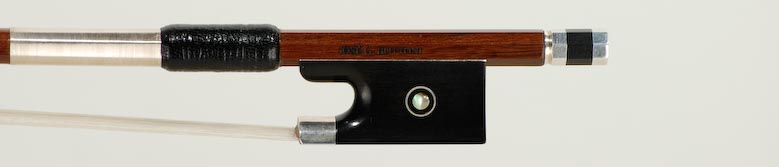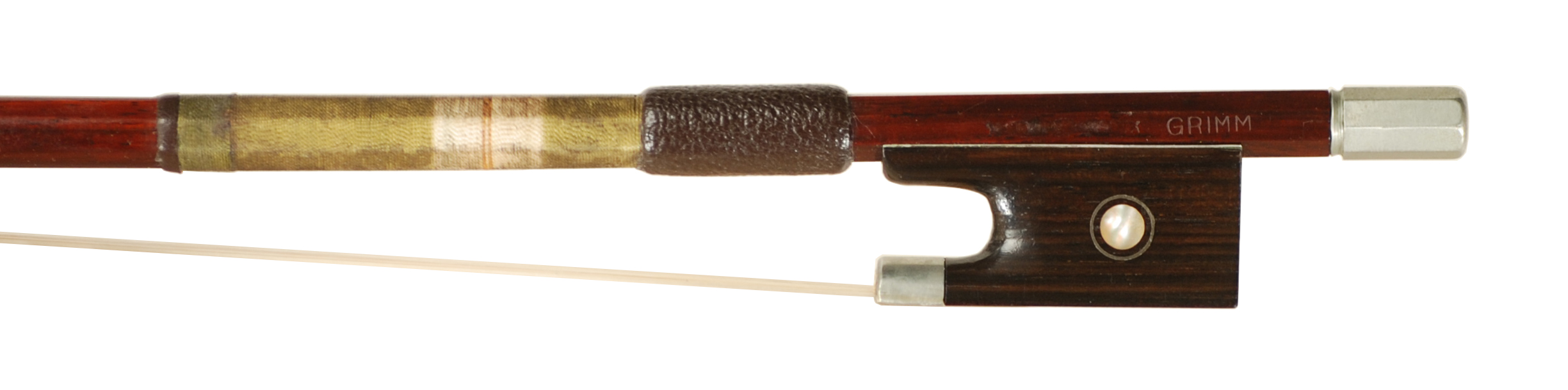
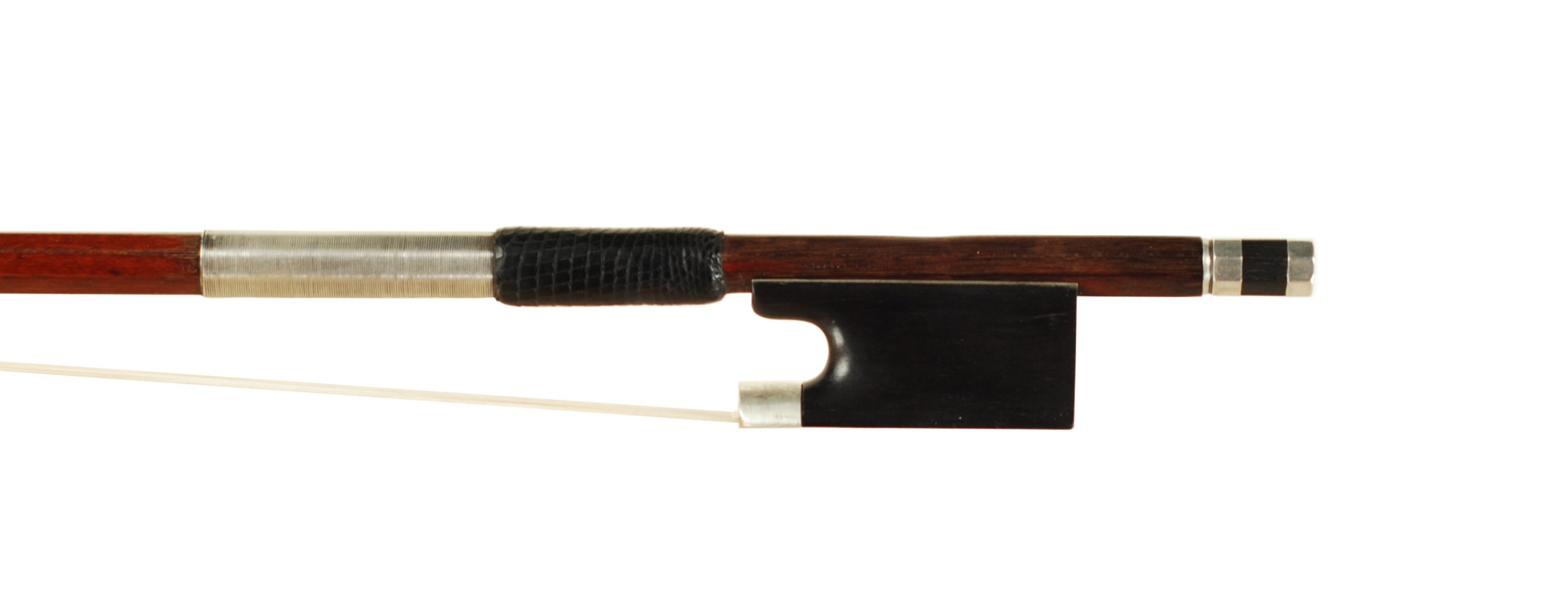
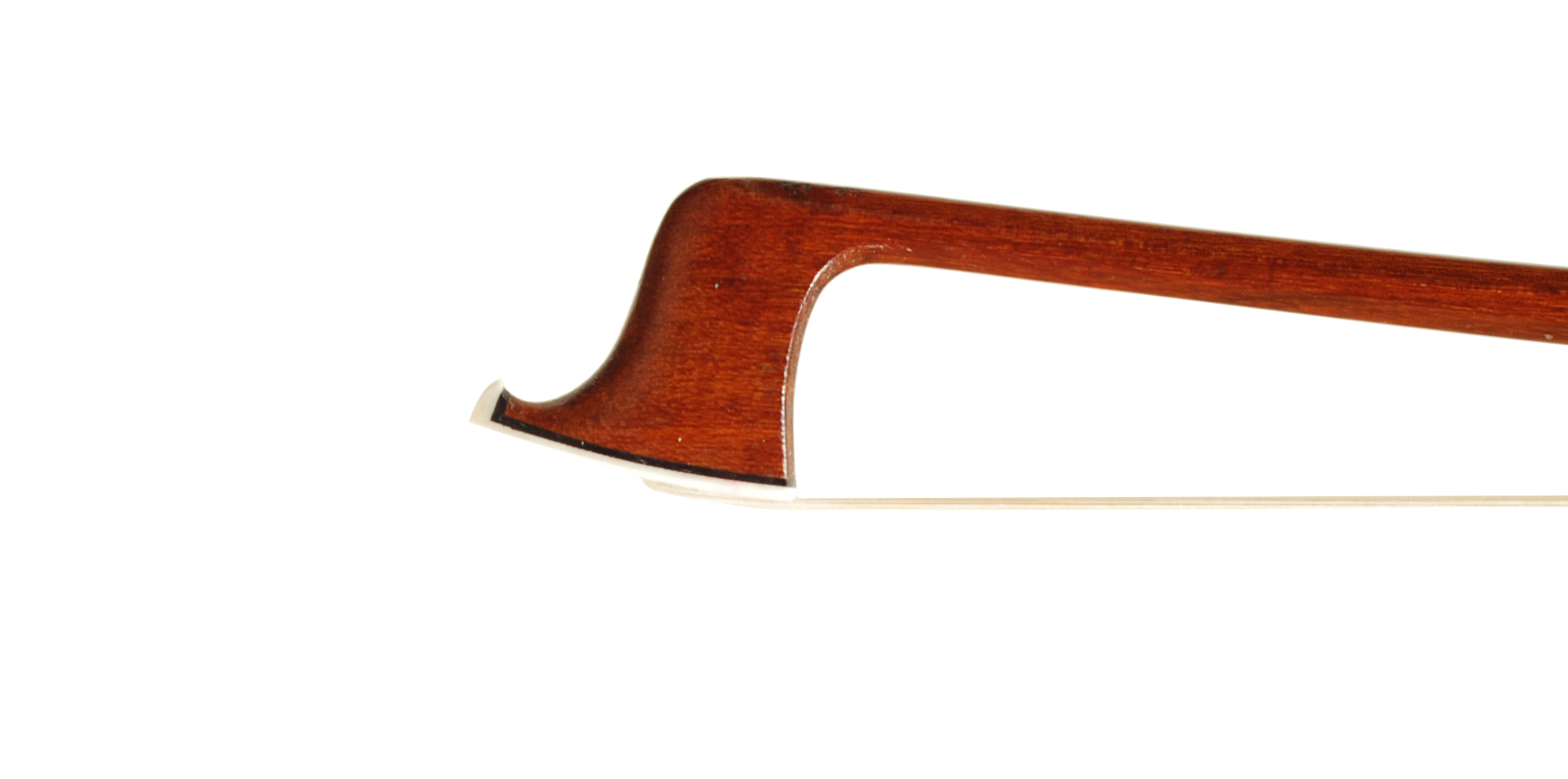
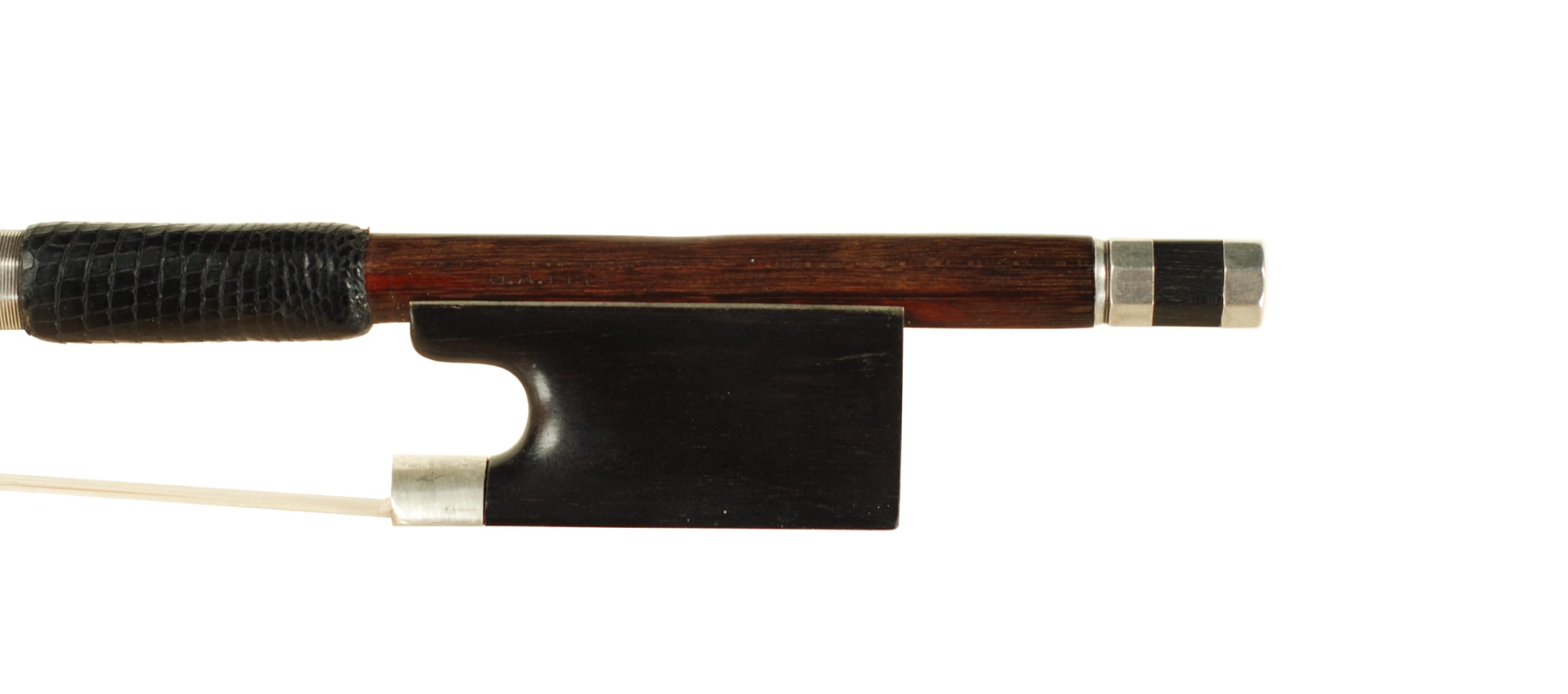
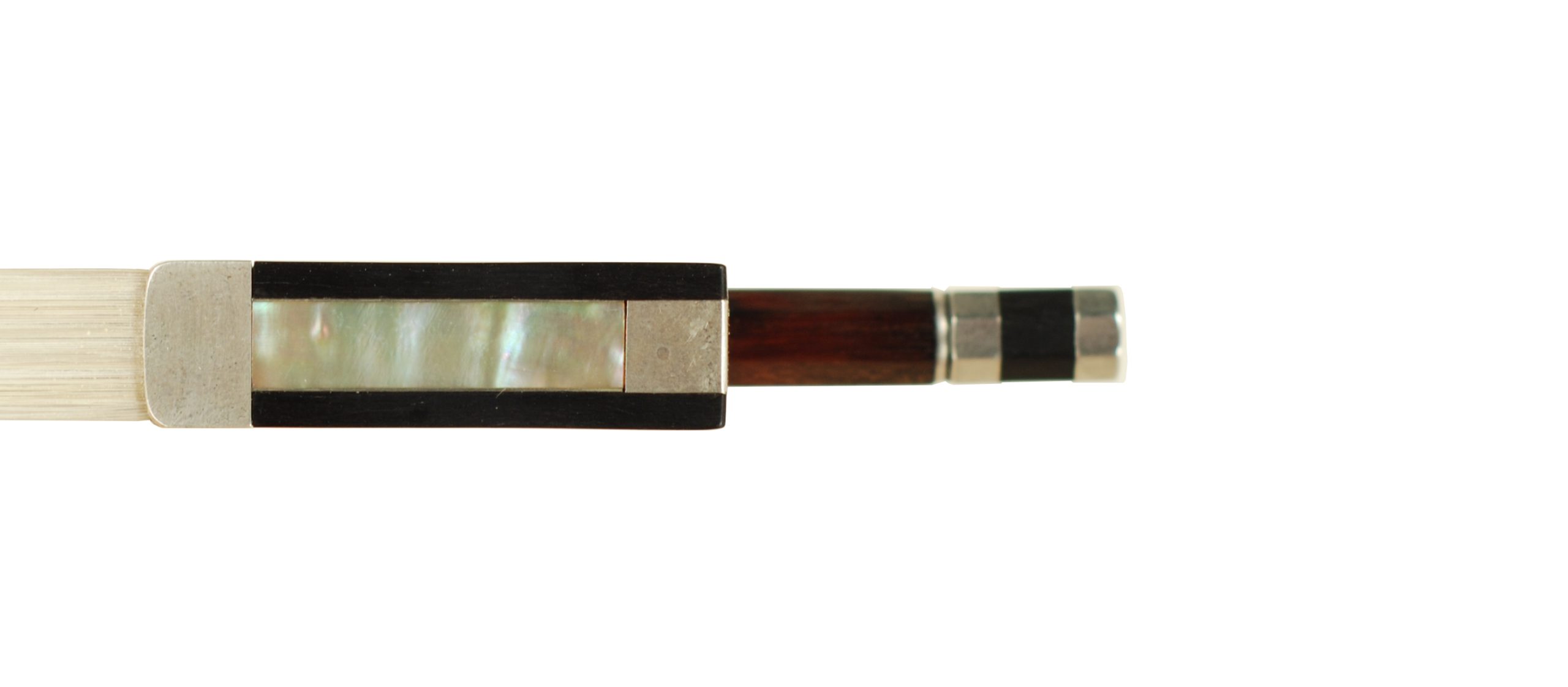
A Fine G. A. Pfretzschner Workshop Sterling Violin Bow Markneukirchen circa 1900-1915
$1,695.00
click picture to enlarge
Stamped:
GERMANY – on the butt of the stick
Pernambuco bows are in high demand at our shop. They sound fantastic on instruments and help make your instruments create beautiful sound. Subtle differences in the wood are so important in a bow because they affect the playing qualities of a finished bow. Making a bow that will create the best sound off an instrument requires skill and craftsmanship at a very high level. Bow making is one of the few remaining artistic crafts that have not been replaced with machinery. Each piece of pernambuco has its own unique attributes, including strength, density, and tonal quality that the maker (artist) must consider as they shape a bow. The wood must be able to bend in the presence of heat and then retain its shape when cool. Pernambuco ‘s strength and flexibility result in excellent memory. Musicians are looking for a balance of stability, connection with the strings, and a responsiveness that allows the bow to feel like and extension of their arm. The bow must also articulate complex bowing passages with ease. That is why the bow is so important to the player.
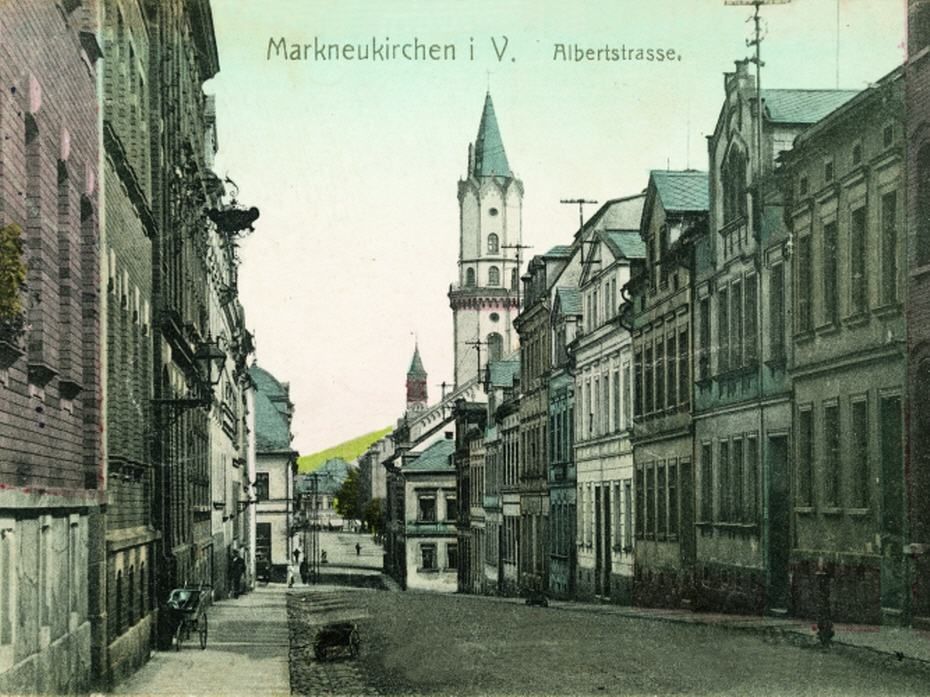
The Pfretzschner family were legendary Saxon string instrument and bow makers. The family dates to the mid 1600’s and brought many of the finest craftsmen of the region together to produce bows and stringed instruments for international distribution. They worked out of Markneukirchen and some of the more famous members of the family were Carl Friedrich, Johann Gottlob, Johann Carl, Elias, Carl Gustave Adolph, and Hermann Richard, the most famous bow making part of the family. The Pfretzschner family continued in the violin industry, especially in bow making, until the 1930’s. Carl Gustave Adolf Pfretzschner founded the G.A. Pfretzschner Company in 1834. His first-born, Gustav Adolf, continued the company with great skill. The business traded musical instruments and bows in Gothenburg, Paris, London, Tokyo, Zurich, Philadelphia, and New York. The G.A. Pfretzschner family was also known for leading the way in trading and sourcing horsehair by the ton and strings made from the intestine of sheep casings for the string business throughout the world in the 19th and early 20th centuries. In 1876 they participated in the Centennial International Expedition in Philadelphia. This one event brought to the firm 195 new customers purchasing 20,000 frets of strings, 8,000 violins, 16,800 bows, 6,500 accordions, 5,400 concertinas, 2000 guitars, 1500 flutes, and 100,000 harmonicas. Business boomed after the 1876 Exhibition. The G. A. Pfretzschner firm became one of the larger musical instrument businesses at the turn of the 19th century.
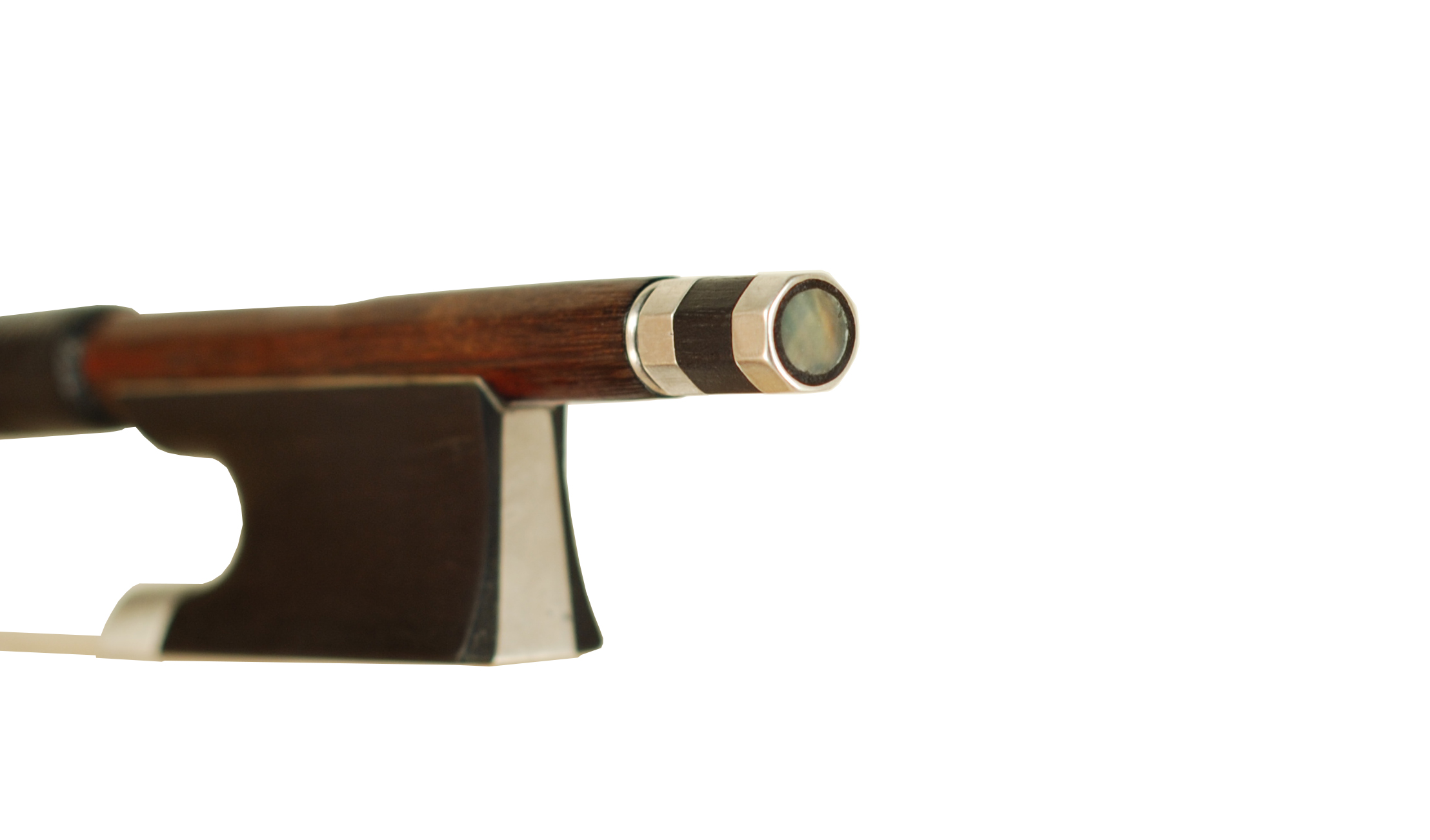
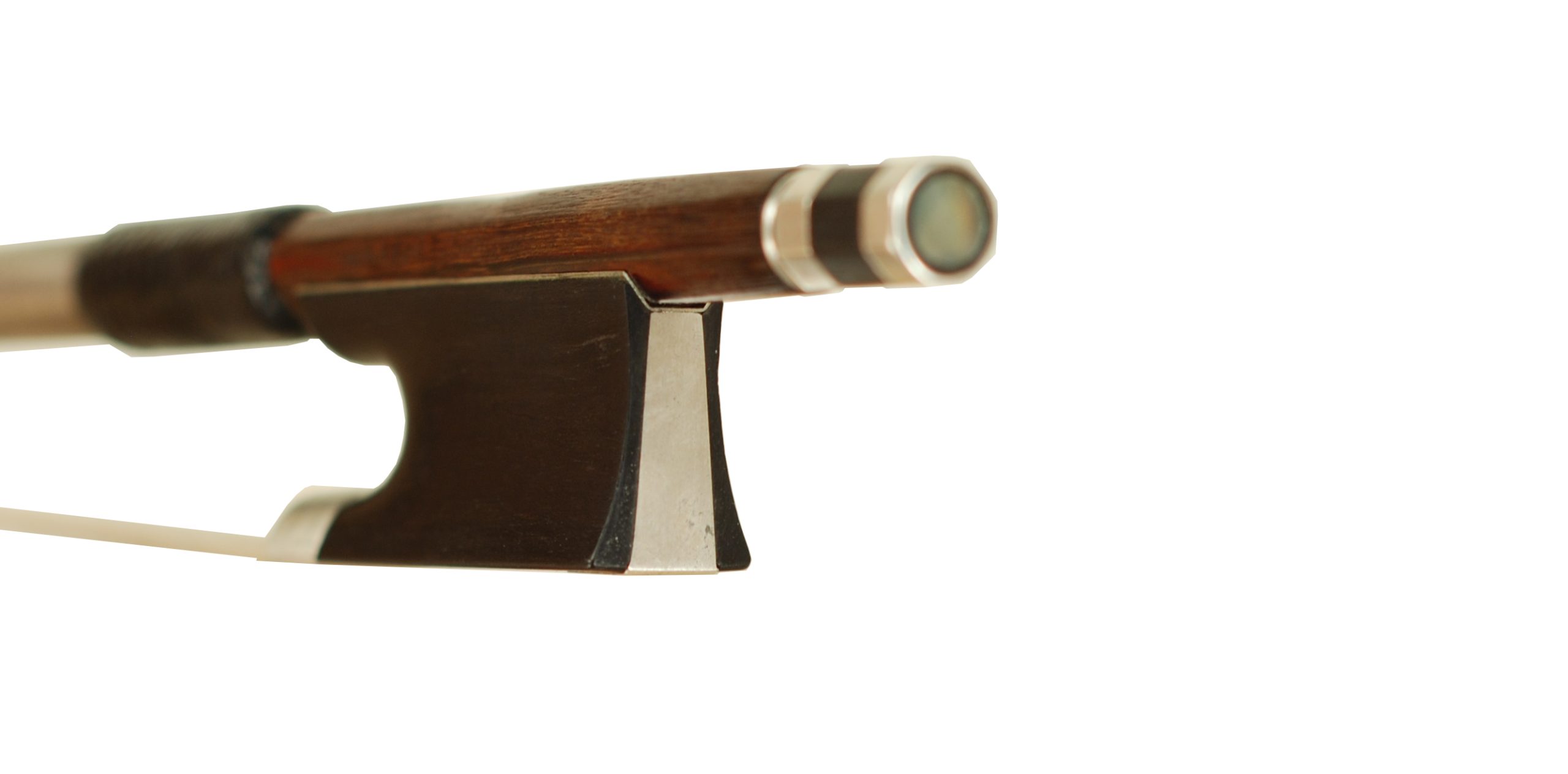
The skill of workmanship is evident in this bow that is octagonal in section and pernambuco. This was no second-year maker who made this bow; it was an experienced maker. The wood is choice, and the red/brown color is consistent throughout the entire bow. The stick is thin with no excess girth. It has masterful small block plane and calibration work. The stick is firm with the camber starting 4.0 cm from the tip. I gave the head of the stick a new tip done in tip armor. The winding and leather were still very good on the stick. I just cleaned the silver and oiled the lizard grip many times. The ebony frog is mounted in sterling silver, and the rounded heel is one-piece. The frog is classic blind eye. I love the frog’s elegance and simplicity, not only to the eye but also the functional balance for the bow. The lining is attached by two fine silver screws while the other silver work is attached by pins. The bow is finished with a three-piece silver and ebony button with a pearl eye on the end. The bow is fantastic condition and is a very good representation of fine Markneukirchen work.
Weight fully haired 59.2 grams