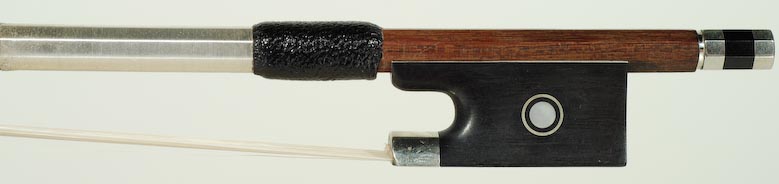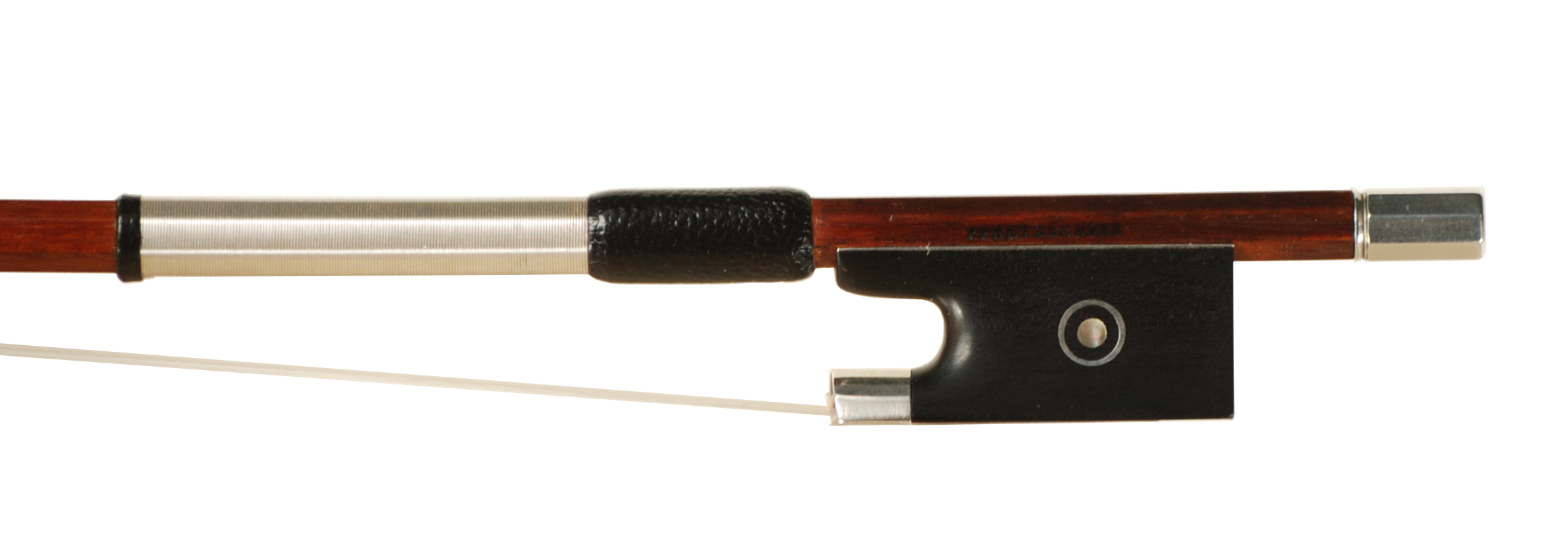
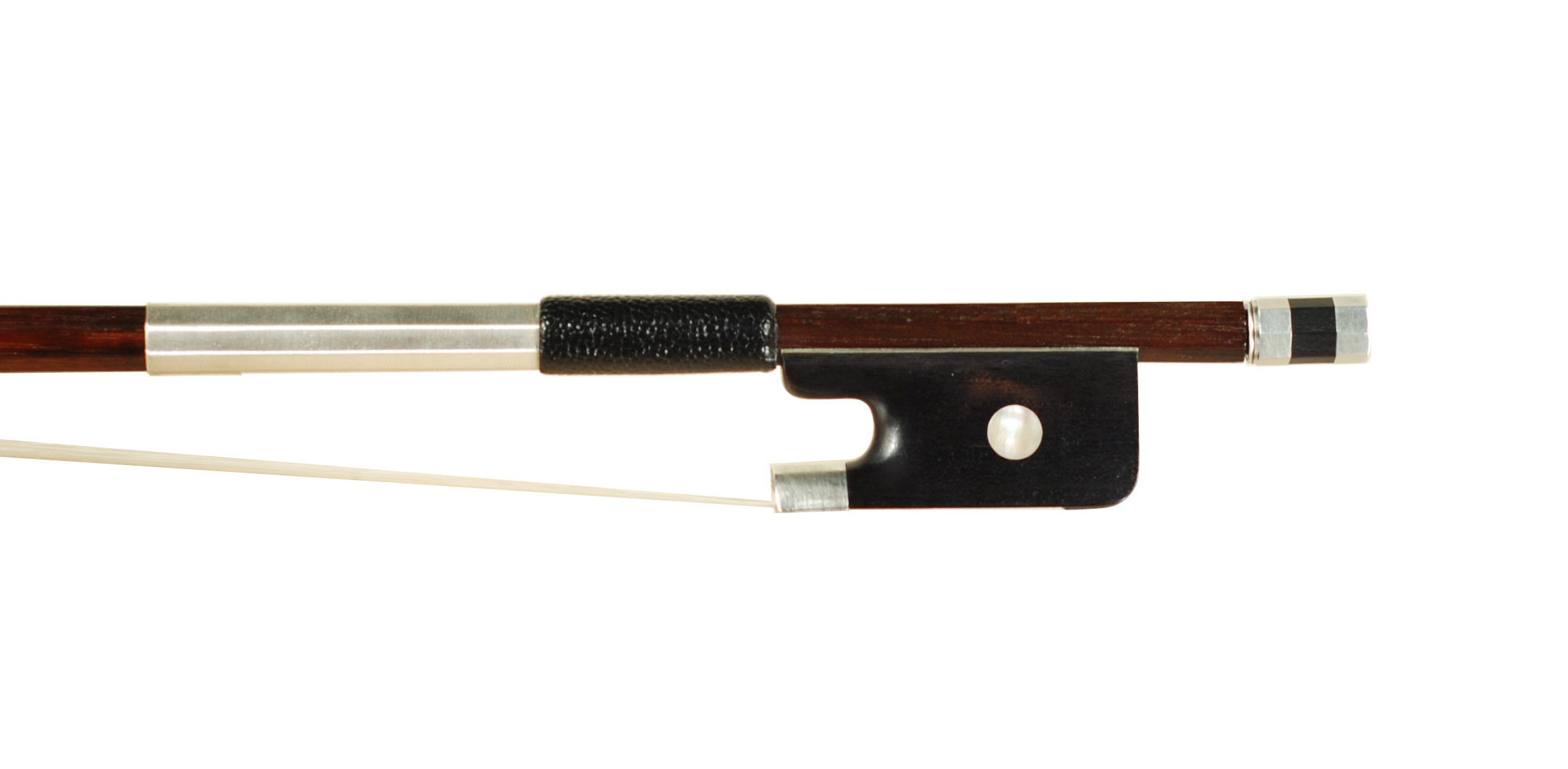
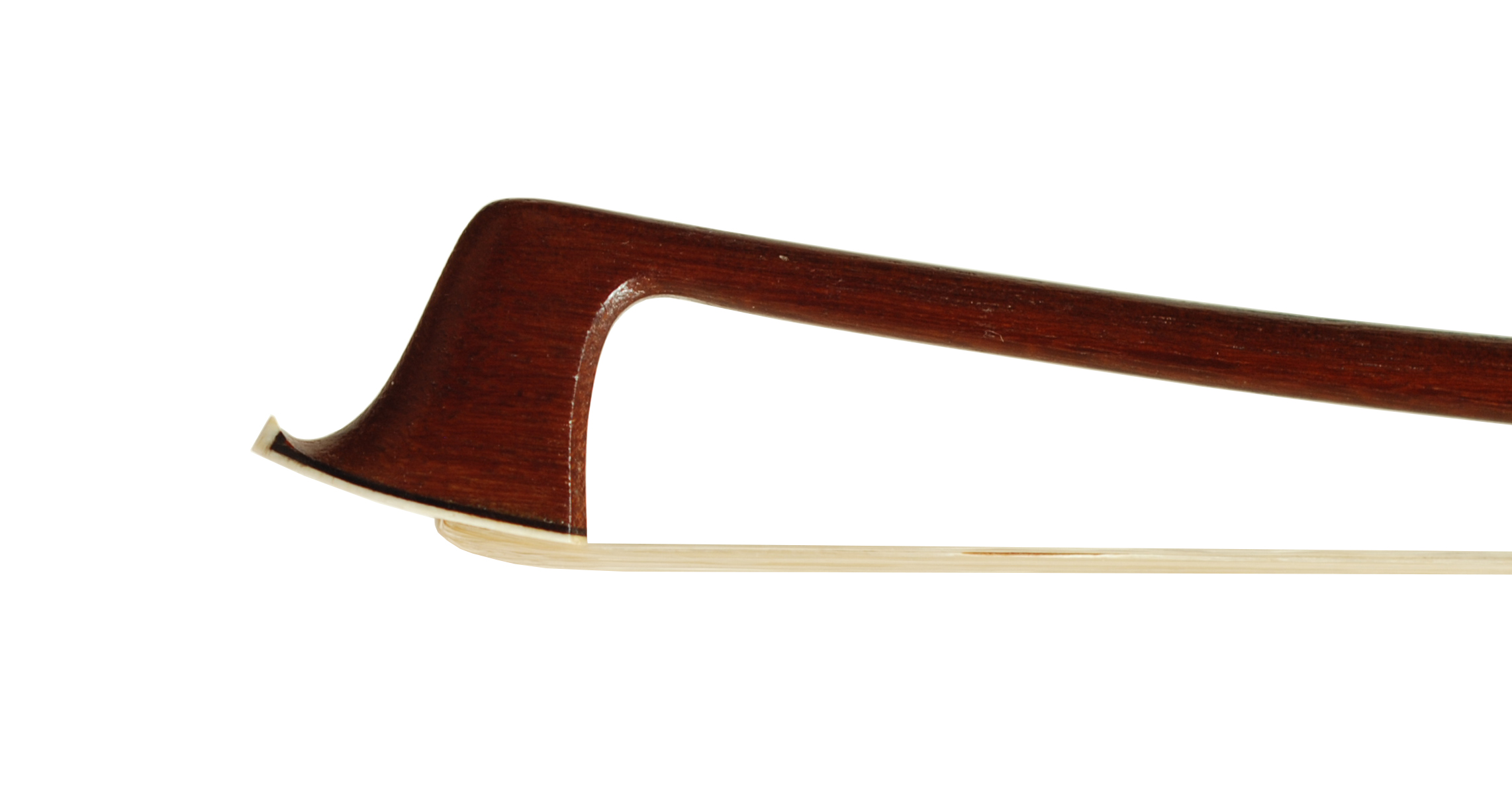
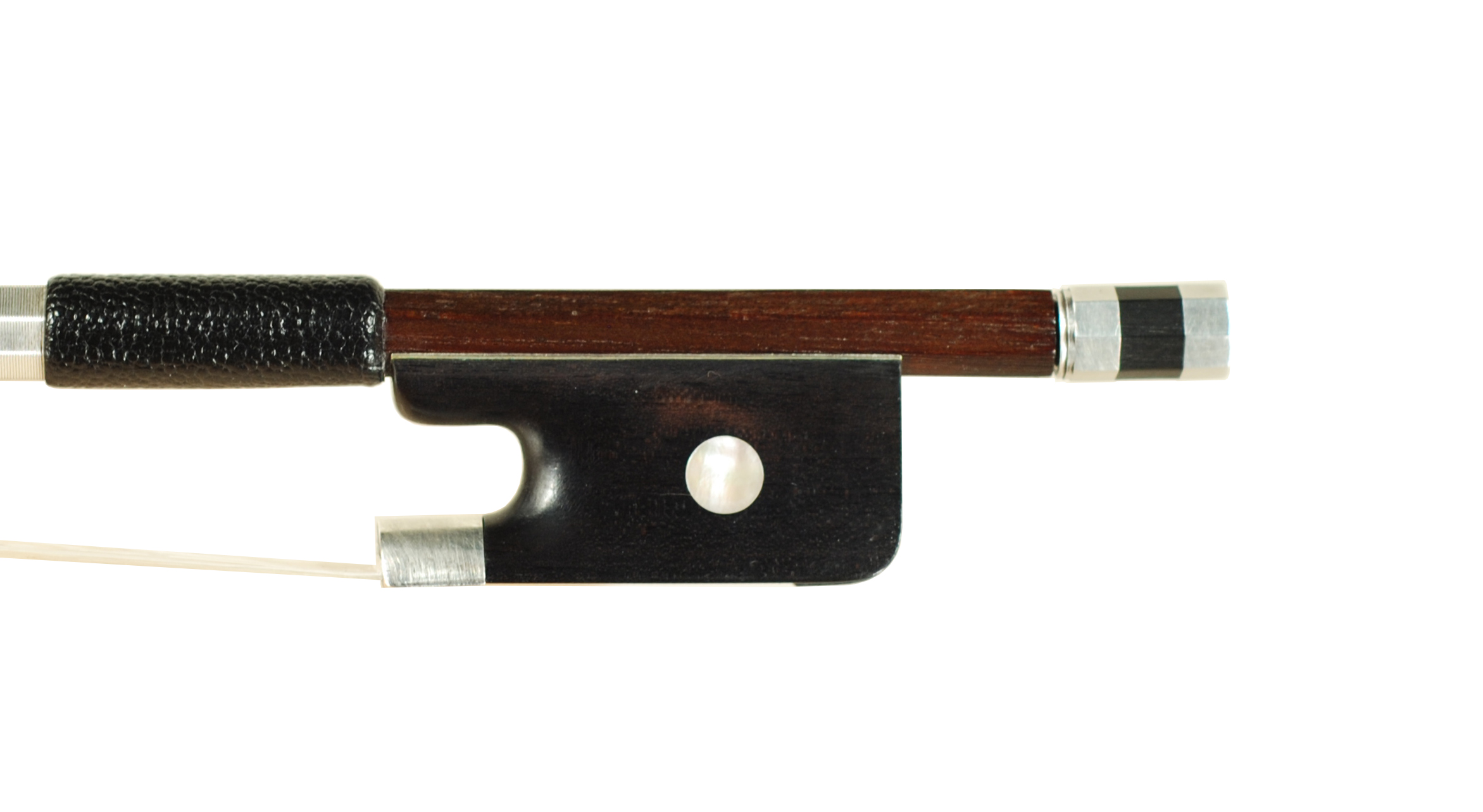
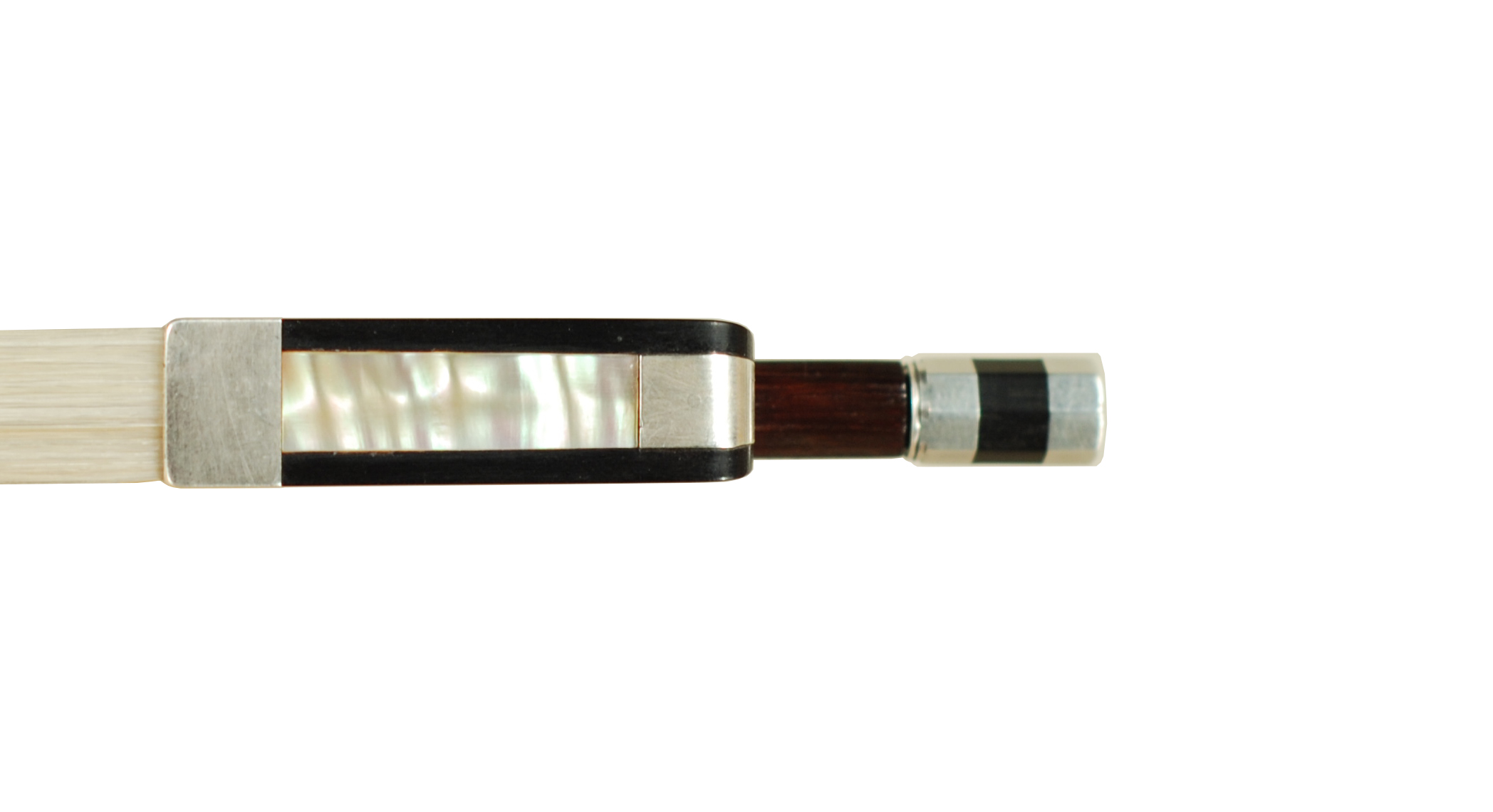
Non-Stamped Sterling Silver Pernambuco Violin Bow– Markneukirchen circa 1900-1910
$1,495.00
click picture to enlarge
Germany produced many instrument and bow makers from immigrant families who came from the outer rim region of the Czech Republic bordering Germany. They were known as the German speaking people of Bohemia. They came and crossed into the Saxony region of Germany to escape religious persecution, economic hardships, and the many wars that happened. They started coming into Germany as early as the 11th century, into the northern region called Saxony, in and around and just north of the town of Markneukirchen. These families brought with them their culture along with fine woodworking skills. They were meticulous in their woodworking, and they saw the economic advantage of putting their skills to use into the growing demand for musical instruments during the 18th and 19th centuries. The Bohemian immigrants also made lutes, the famous cuckoo clocks, recorders, harmonicas, accordions, and other folk instruments.
They became fully aware that the string instrument world was calling for more instruments and higher quality bows. In the mid 1800’s guilds were formed to help raise quality and provide standards. Families devoted themselves to the making of either instruments or the bows for those instruments. Many of the bows made in family workshops had no name placed on the bow and or country of origin. This is one of those bows. The makers simply made bows for other local instrument shops to be placed with a violin outfit. This was not an uncommon practice in the late 1800’s and in the early 20th century.
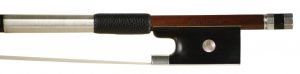
The stick and frog, the entire bow, is in very good condition. The bow is round in section and made in older dark chocolate color pernambuco wood. The maker chose the wood and decided the quality of pernambuco deserved to be mounted in sterling silver.
I have meticulously gone over the bow and gave it a new facial in tip armor and a new silver winding with a leather thumb in goat. The old winding and leather were totally deteriorating and peeling off, while the facial ivory tip had a crack in the left side. They had to be restored. The wind was redone in sterling silver wire to bring the gram weight of the bow up a few grams and the tip was restored using tip armor. The round frog is in great condition, and the pearl slide and single eyes contains pink and green hues. Yes, the frog is rounded, (it’s not a viola bow) with the heel being one piece. The lining and the heel are held in place by small silver pins. This is always neat to see in an old bow. The ferrule is slightly flat in its profile but has width to allow the hair to have a nice ribbon. The silver workmanship, the head and the stick increment carving in the round egg shape are testimony to the fine bow work that was being done at many shops in the Markneukirchen area. The ebony frog has beautiful playing wear, smooth but well taken care of. The three-piece sterling button has a double turn (lathe work) in the collar and single pins. The pin work is visible in each part of the two silver button pieces. I feel this bow is a sleeper in our inventory. A great playing bow, awesome workmanship- well deserving to have earned the maker’s name.
Weight fully haired 57.3 grams
Related products
-
A.N. Sachsen Violin Bow
$1,500.00 Add to cart