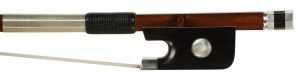
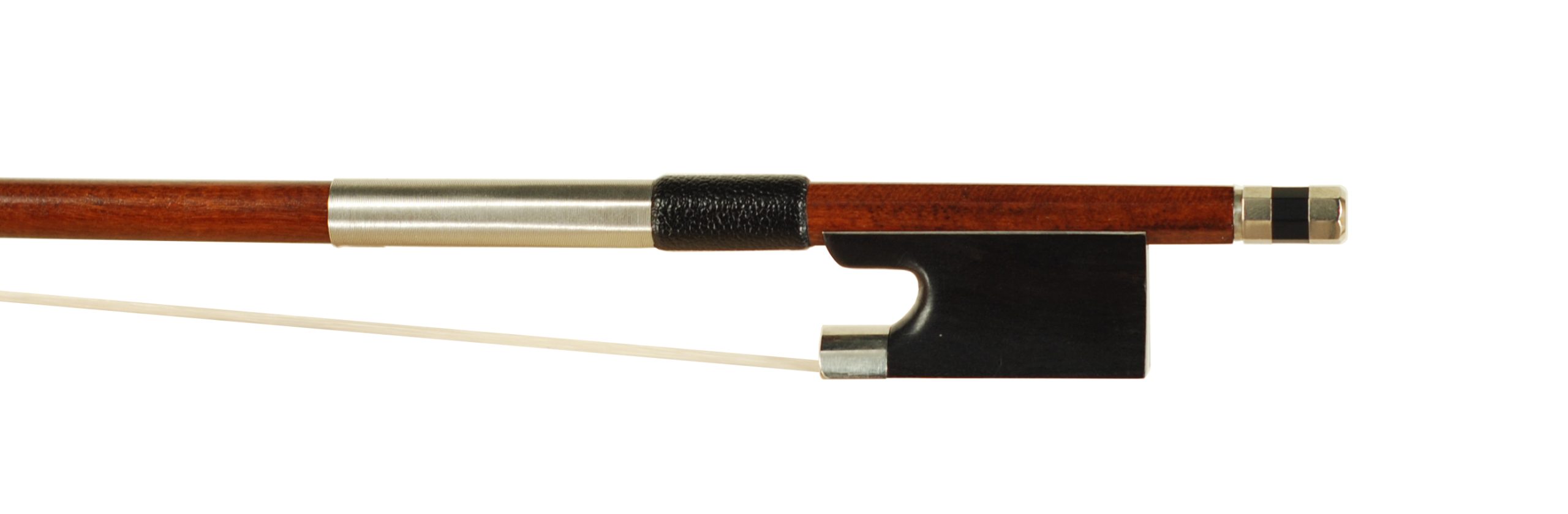
Non-Stamped Nickel Mounted Cello Bow – German circa 1975-1985
$695.00
click picture to enlarge
Origin Stamp:
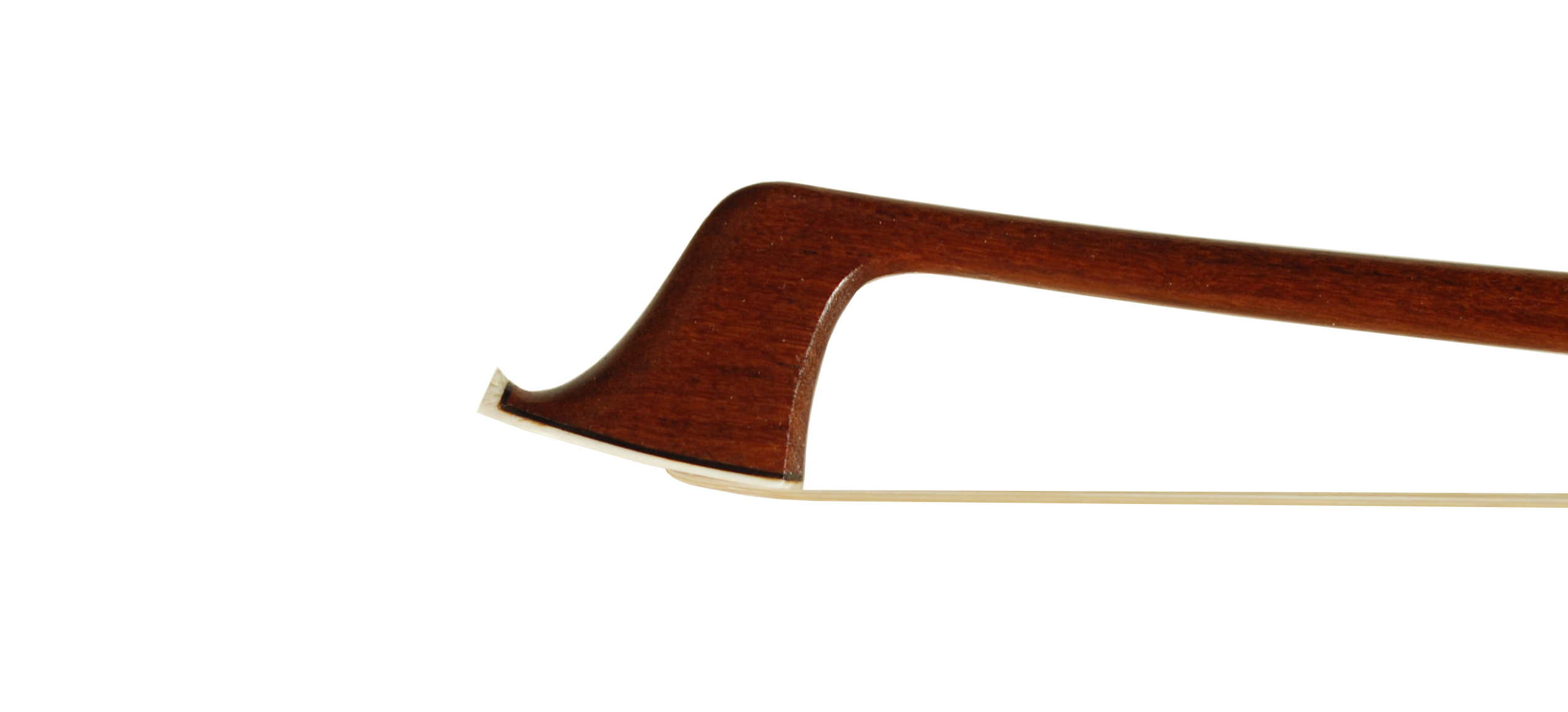
I found this older German cello bow some years ago at a flea market in Lewisburg, Pennsylvania, a college town about 35 miles south of our shop in Williamsport. It was a neat find, but the stick needed everything: cleaning, polishing, removal of the old messed up winding and leather, a new tip facial, a new nickel silver wire winding, and hair of course. If I didn’t purchase the bow, I felt the stick would just end up as a tomato plant vine holder stuck in a garden, tip first in the ground or in a large potted planet holder for a pepper plant to grow and latch onto. Yup, I’ve seen too much of this. I’ve even had a few families send me photos of their garden full of old bows as stakes in the ground.
I bought the stick!
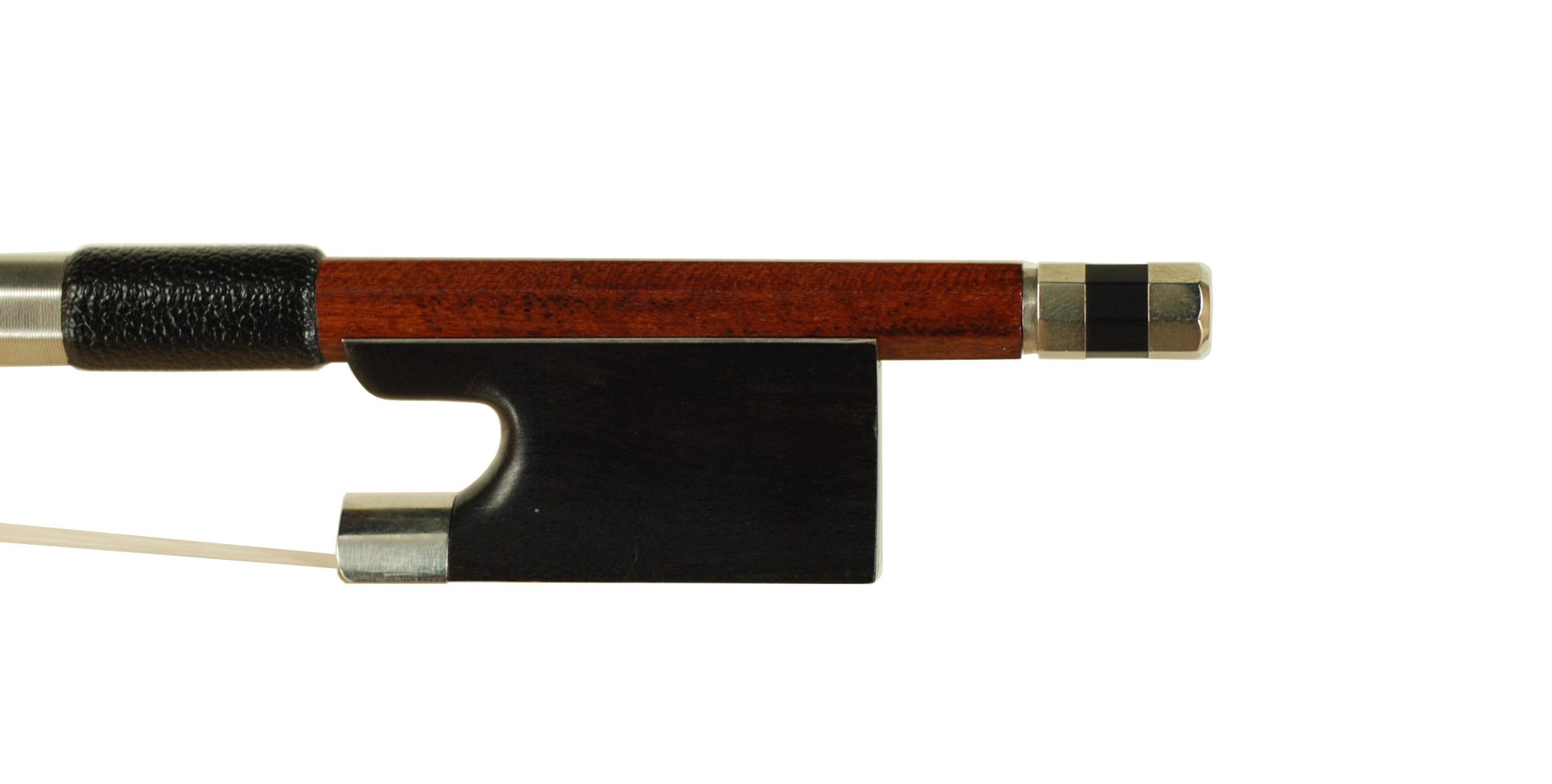
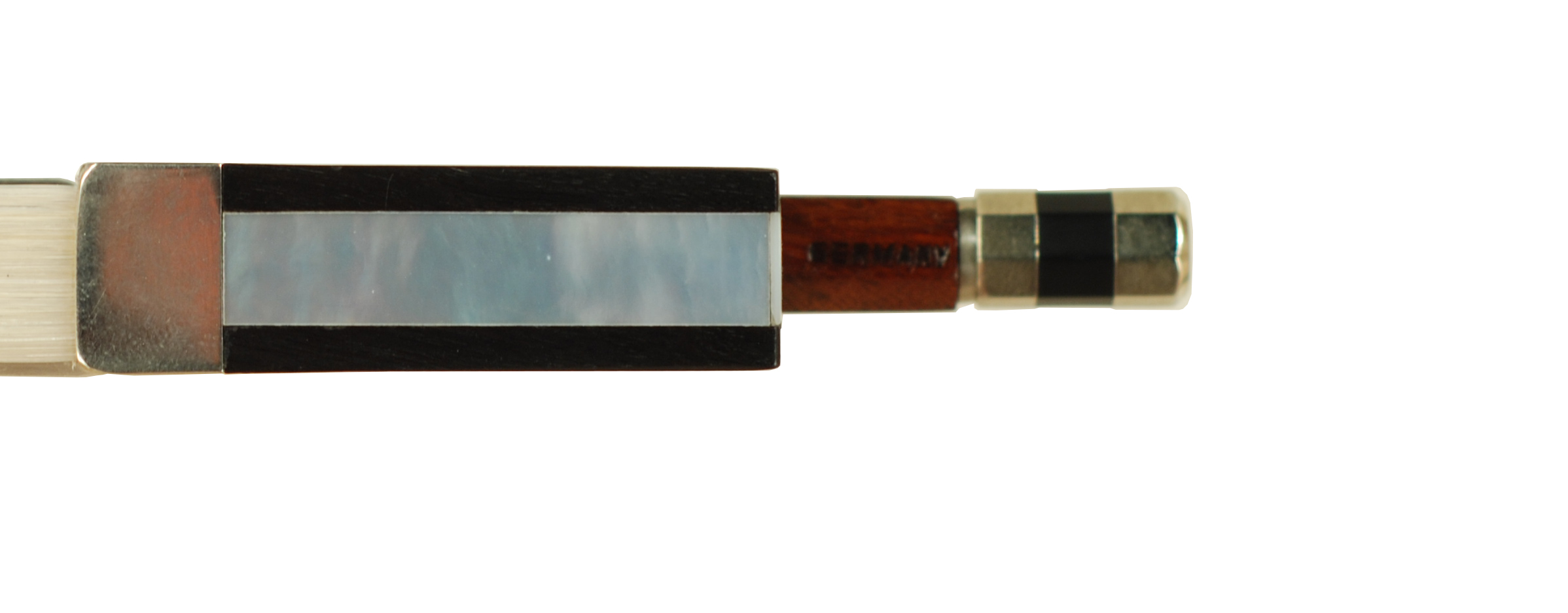
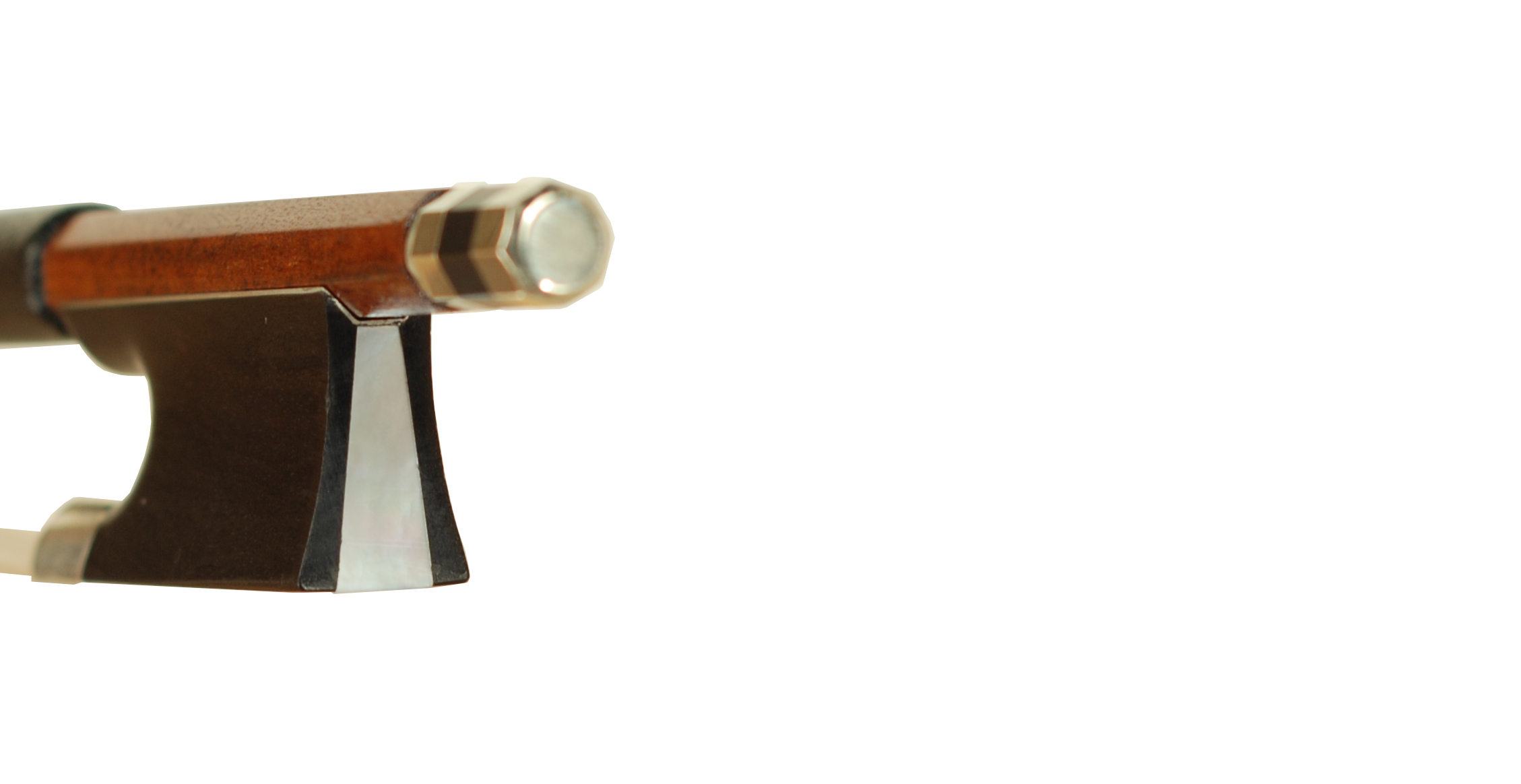
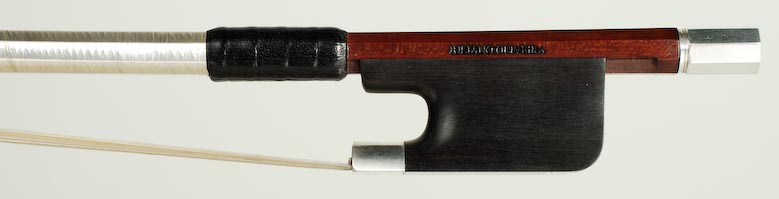
I know I put as much financially into the bow with the restoration work to almost break even. But there are three things that stood out on the bow. The bow has a stamp of origin on the butt of the bow – GERMANY- good thing to see. Also, the wood itself is pernambuco, and what caught my eye about this stick was the frog. Yes, a trade workshop bow with no maker’s name, but the frog stood out as something more special for a student bow. The ebony blind eye frog is unique. Its workmanship in the tolerance specs on the nickel ferrule and lining matched up well. It has a mother of pearl slide that is the full length of the frog. This is not always seen. The slide does not end at what most bows have, a silver heel. The pearl slide butts up to the back heel, also pearl, and is very well done in an almost seamless way. For a workshop trade bow, I’m impressed with the higher-level frog work that I usually might see on a $1500 cello bow.
The bow is in good condition. It is pernambuco, round section, and mounted in nickel silver, sometimes called German silver. I gave the stick a new tip in casein material and a new nickel winding with a leather thumb grip. I cleaned the stick two or three times, removing layers of grime and dirt before the new winding was completed and the silver on the frog polished. I like the stick and I’m glad it is saved, ready for a player to enjoy. The bow has a semi-firm fight. The bow is lighter in its makeup than the average cello bow. The normal gram weight for a cello bow since the 1930’s is 80.0 – 82.5 grams. Our German bow clocks in at 76.3 grams. If you’re looking for a lighter stick, this could be the one. The bow has good bones and is easy to hold in the right hand, a possible sleeper of a stick (not much money for a decent pernambuco stick). If it had a maker’s name on the bow, maybe the stick would go $300 higher. You as a player will have to strike your stings to determine if the sound generated is what you are looking for.
Weight fully haired 76.3 grams
Related products
-
Juliano Oliveira Cello Bow
$1,500.00 Add to cart