Non-Stamped Nickel Mount Pernambuco Violin Bow Klingenthal/Saxony circa 1900
$865.00
click picture to enlarge
Germany produced an amazing number of instrument and bows from immigrant families who came from the outer rim region of the country of Czechoslovakia bordering Germany. They were known as the German speaking people of Bohemia. They came and crossed into the Saxony Region of Germany to escape religious persecution, economic hardships and the many wars that were happening. They started coming into Germany as early as the Eleventh century into the norther region called Saxony in and around and just north of the town of Markneukirchen. They brought with them their culture along with fine woodworking skills and a tremendous work ethic. They were meticulous in their woodworking skills, and they saw the economic advantage of putting their skills to use into the growing need for musical instruments during the 18th and 19th centuries. The Bohemian immigrants also made, lutes, the famous Cuckoo Clocks, recorders, harmonicas, accordions and other folk instruments. Others focused on supplying the wood and procuring gut for strings, the pernambuco for bows from Brazil and the ebony for pegs and fingerboards from Africa and regions of southern India. These hard-working very creative people became fully aware that the string instrument world was calling for more instruments and higher quality bows. In the mid 1800’s guilds were formed to help raise quality and raise standards. Families devoted themselves to the making of either instruments or bows. Many of the bows made in family workshops had no name placed on the bow and or country of origin. This is one of those bows. The makers did not seek recognition or stamp where the bow was made. The makers simply made bows for other local instrument makers to be placed with a violin outfit. This was not an uncommon practice in the late 1800’s and in the early 20th century.
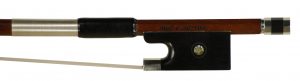
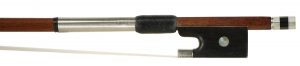
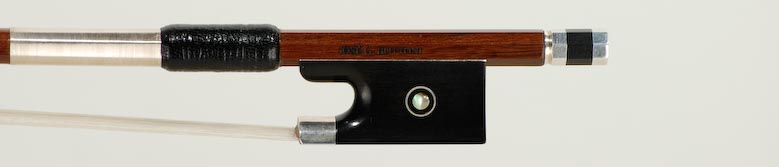
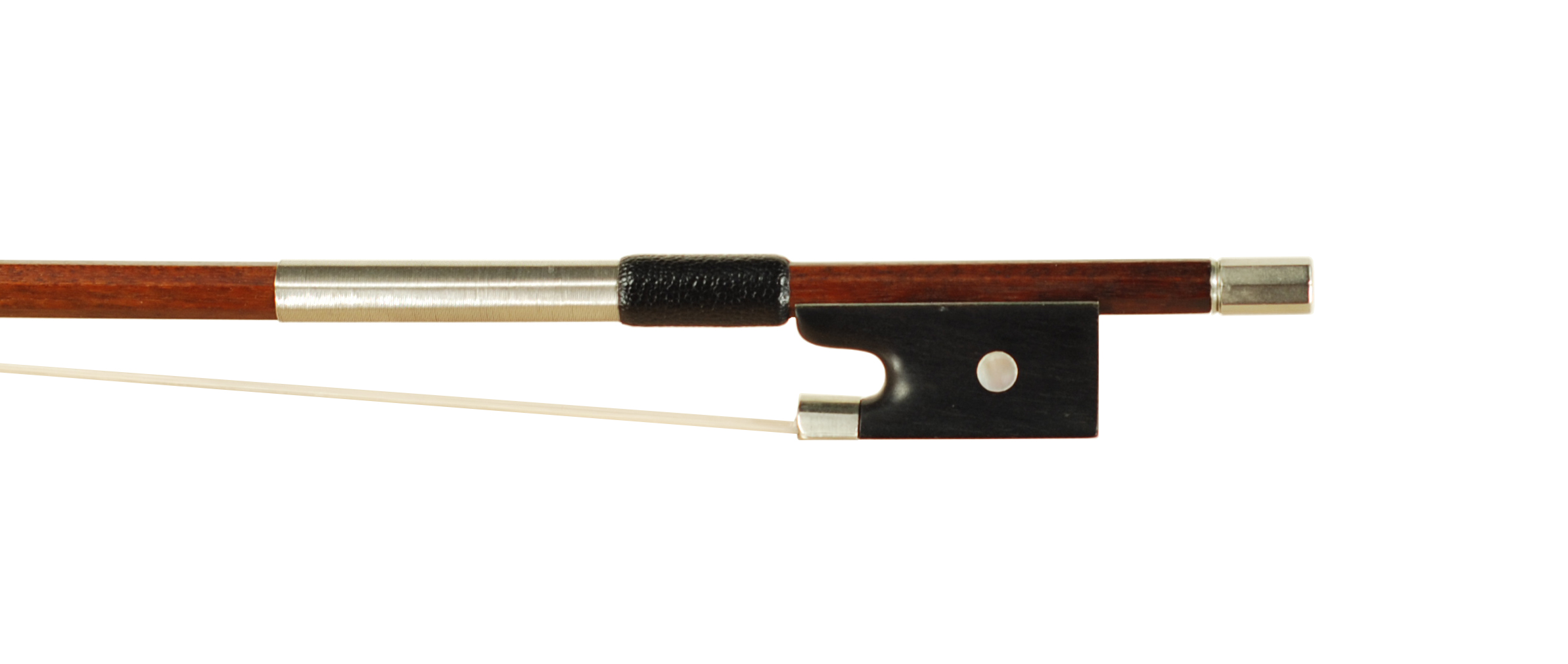
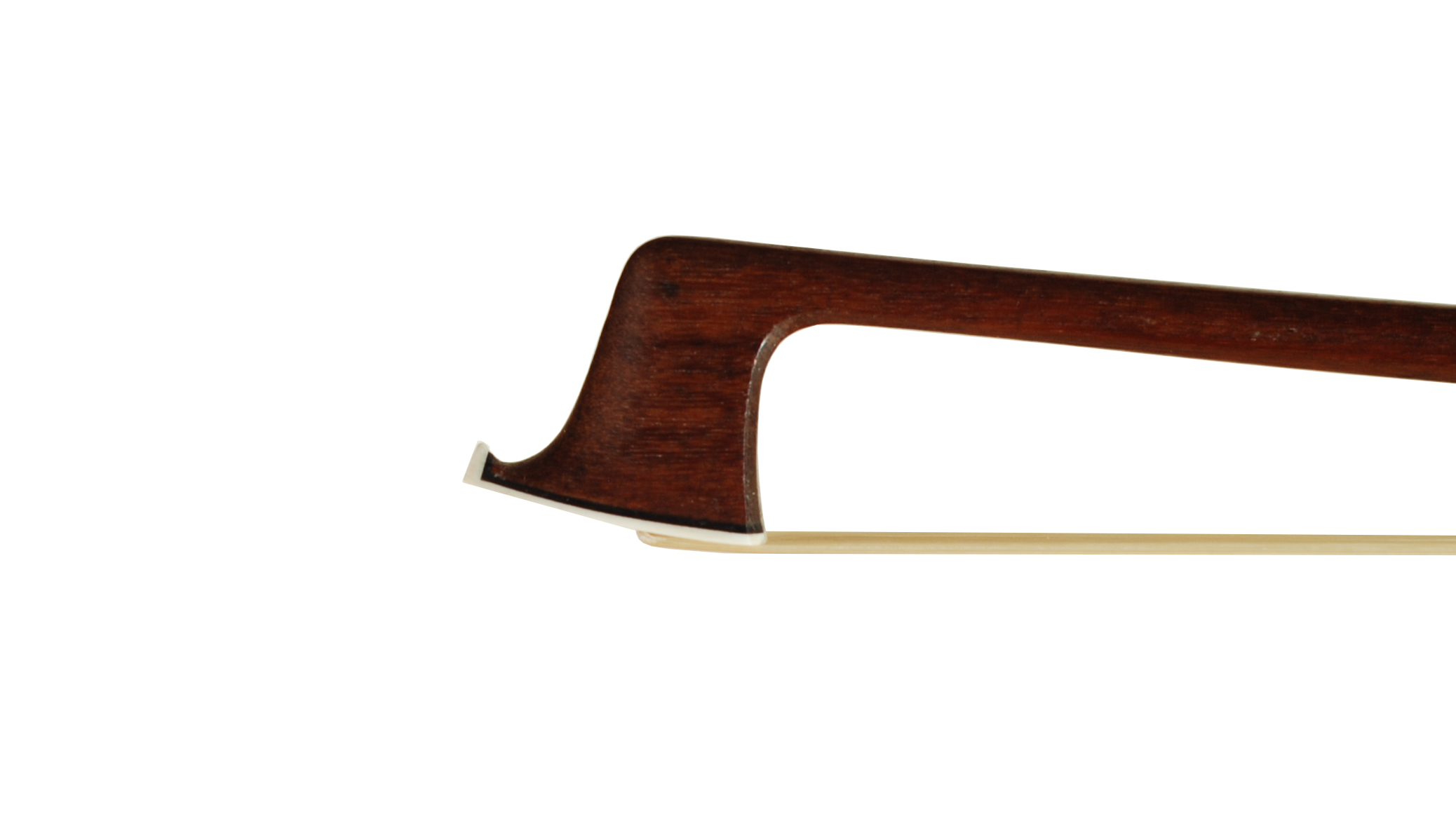
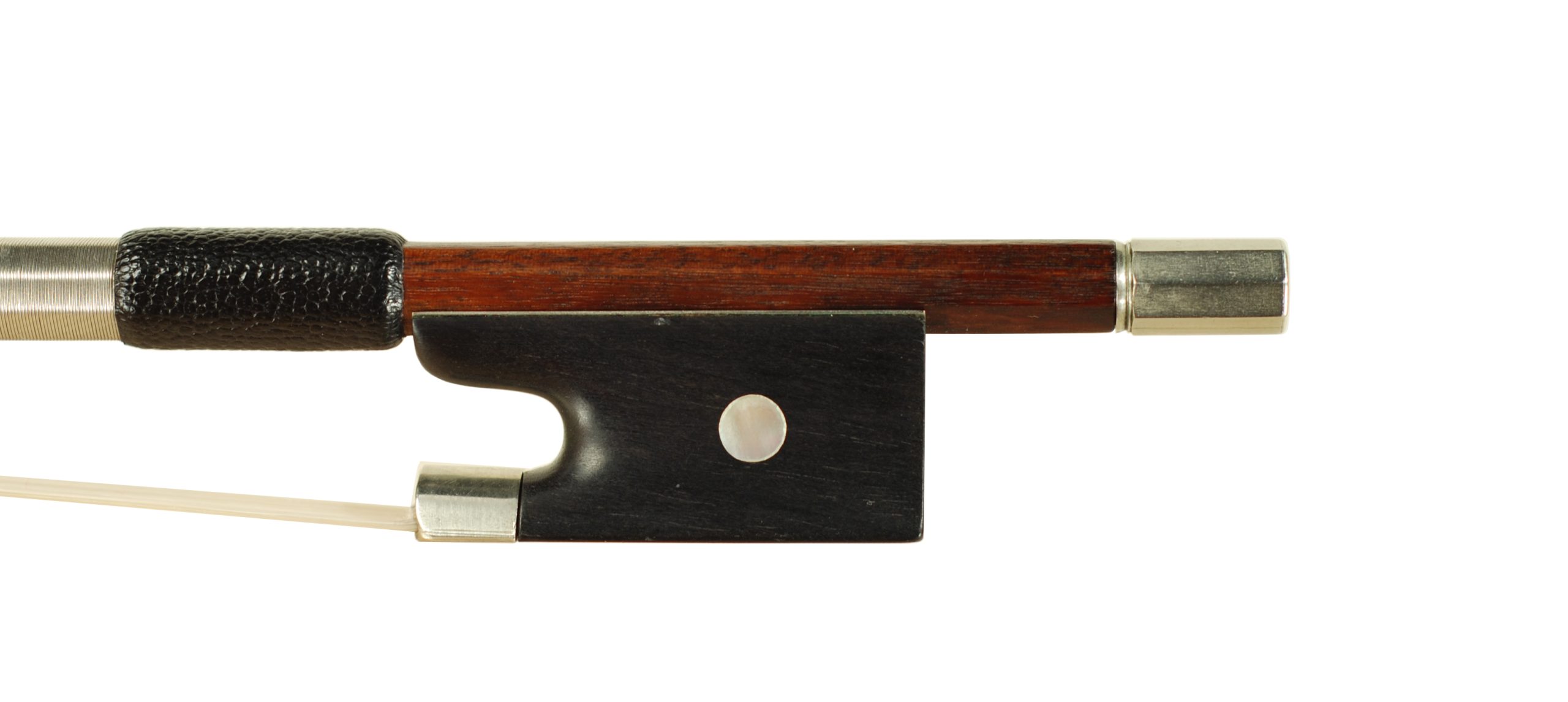
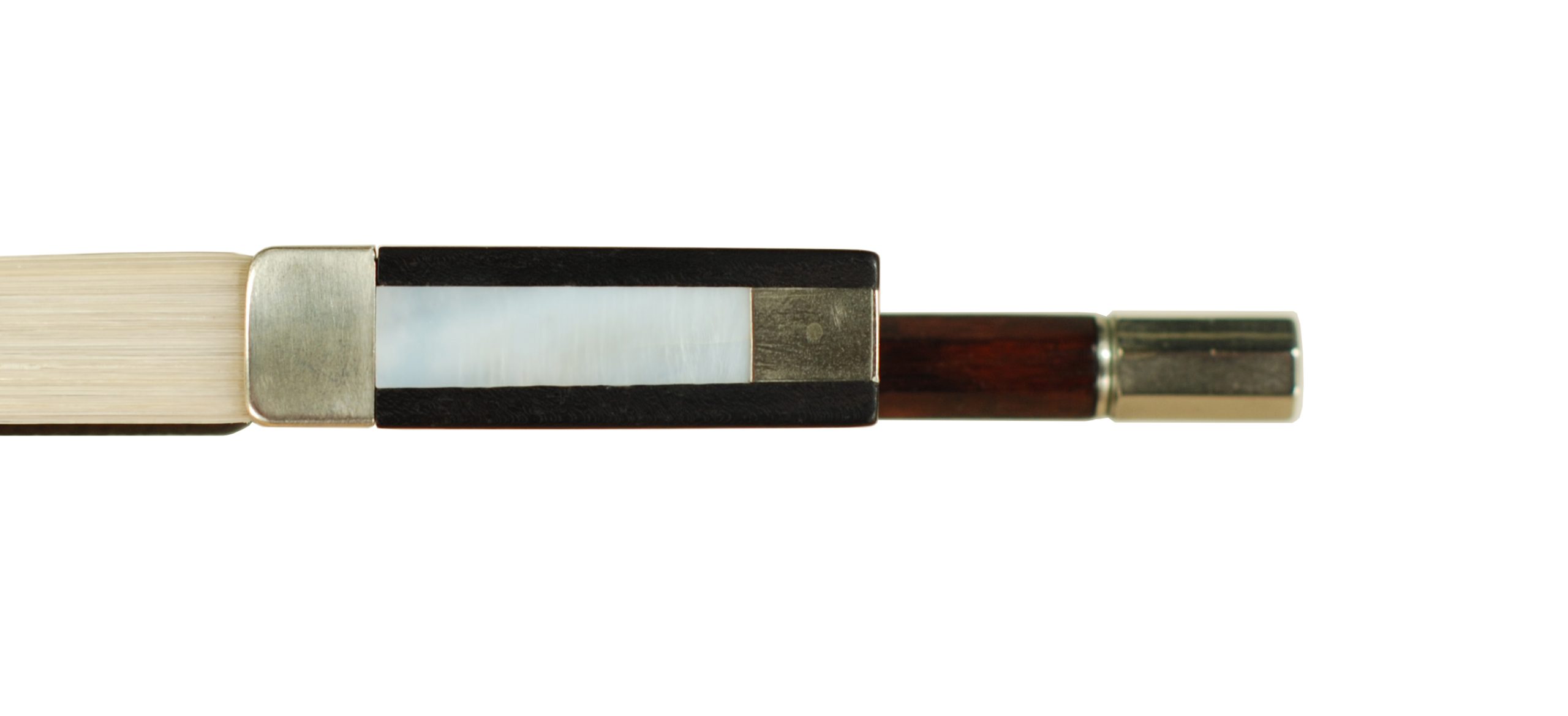
The stick is orange/brown in color, is beautiful, and is a slightly darker color at the playing end above the frog from natural handling. It is in octagonal section and made from the much sought after pernambuco wood. The head of the bow stands erect right from the nose. The camber starts quickly after the head, about 5.0 cm, and then remains gradual until the middle of the bow where it starts to return. The frog has single mother-of-pearl eyes and the eyes and the slide are simply white abalone, with no significant color. Very traditional, nothing flashy. The slide narrows slightly at the heel, a sign of older handmade bow work. It is thinner at the heel and wider at the ferrule. The bow has a one-piece heel and is typical of the older bow work of northern makers in the Klingenthal/Markneukirchen area. The heel and the silver lining contain pin work, no screws. I have gone over the bow and gave the tip a new facial in tip armor and a new nickel silver winding with a leather thumb grip. The bow was cleaned many times to remove dirt to reveal the orange/brown natural color of the bow. I then simply oiled the stick to bring back the natural shine. The frog, endscrew, and button are original. The button cap show good lathe work in the double turn of the collar. The bow is in very good condition and ready to get matched to another violin. If I knew the exact maker’s name and could pinpoint it down to a family of makers the bow would retail at a higher price. Nice stick, German workmanship and yes, pernambuco.
Weight fully haired 58.1 grams
Related products
-
A.N. Sachsen Violin Bow
$1,500.00 Add to cart