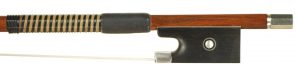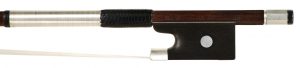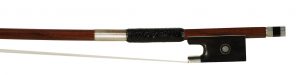
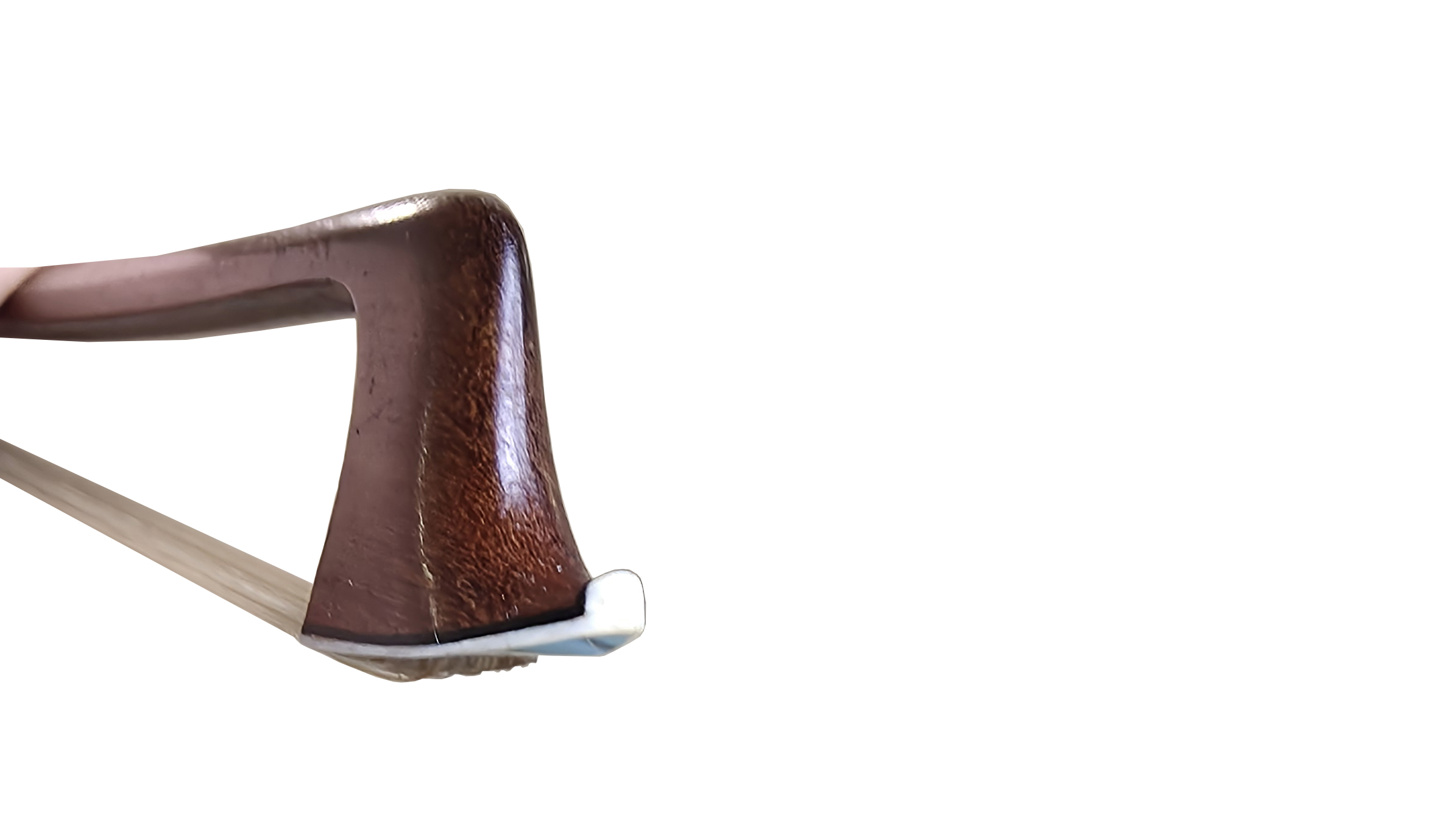
Non-Stamped BAUSCH Violin Bow- Saxony/Markneukirchen circa 1880-1890
$1,895.00
click picture to enlarge
For over three centuries, German luthiers have supplied musicians not only with serviceable and affordable instruments but also their bows. This bow is from the late 19th century. From the late 1700’s through 1945 the violin was the most popular form of musical entertainment, next to the piano. To meet the demand, a thriving industry developed in a remote area of eastern Germany near the Czech border, a region known as Western Bohemia. The center of this instrument making industry was the town of Markneukirchen in the state of Saxony. The Bausch family made bows north of this town for four generations, beginning with Ludwig Christian August Bausch in 1820’s. The Bausch family made superb bows sold as their own and marketed unstamped bows to other shops in Germany, such as the Heinrich Knopf workshop. Bow making is four crafts in one: wood working, jewelry work, leather work, and hair dressing. It is a very exacting art that few people really excel in. I believe our bow is one of those non-stamped bows. This is another bow from my collection of over 45 years, living and growing up in the New York/New Jersey metropolitan area. As a teenager my father would take me to many estate sales and auctions. We would purchase dozens of old violins/violas/cellos and their bows. My grandmother, a professional violinist in the city, set me on the right course to look for nice older German stuff. Sometimes I purchased bunches of old bows all tied up for sale. We have about 500 bows to go as I’m on a one or two bow per week pace to restore each stick in the next decade.
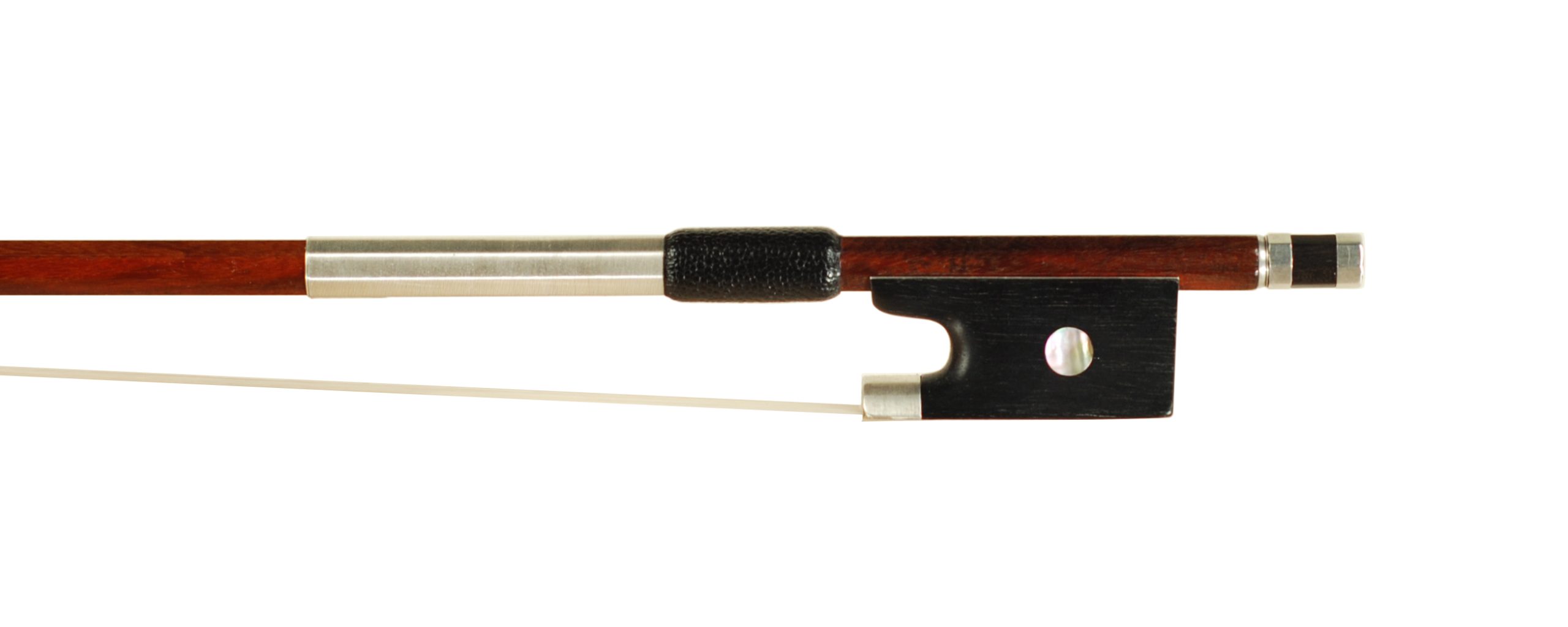
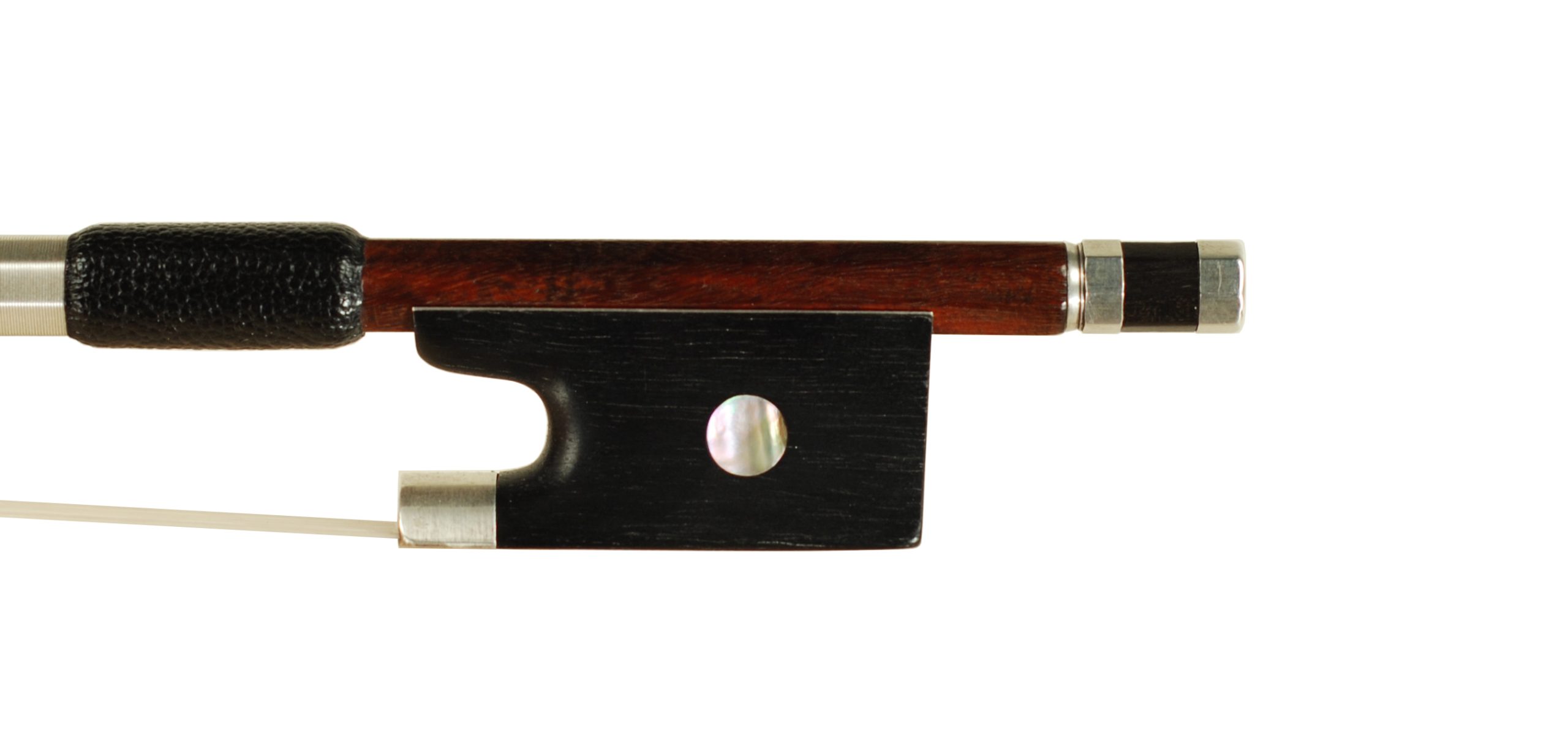
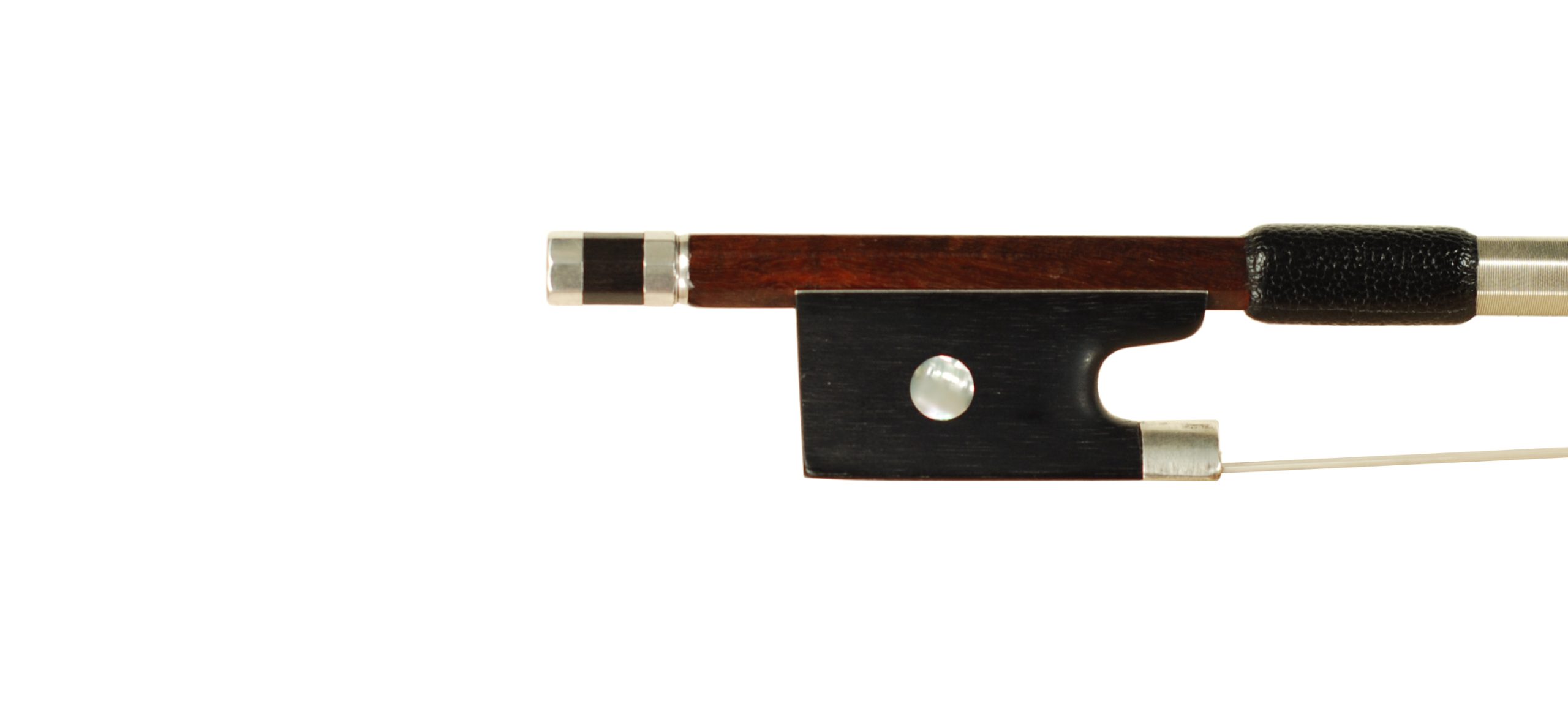
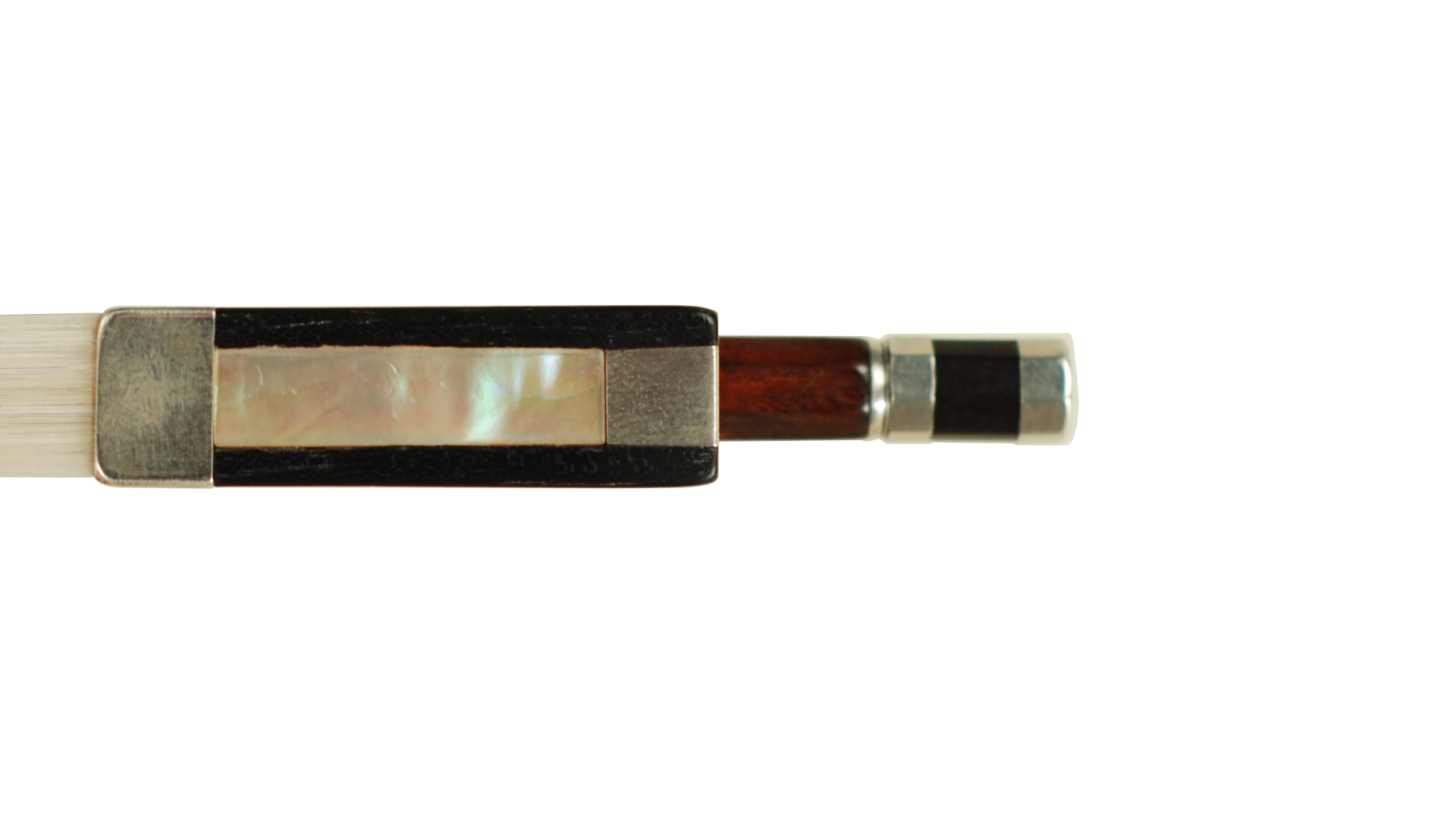
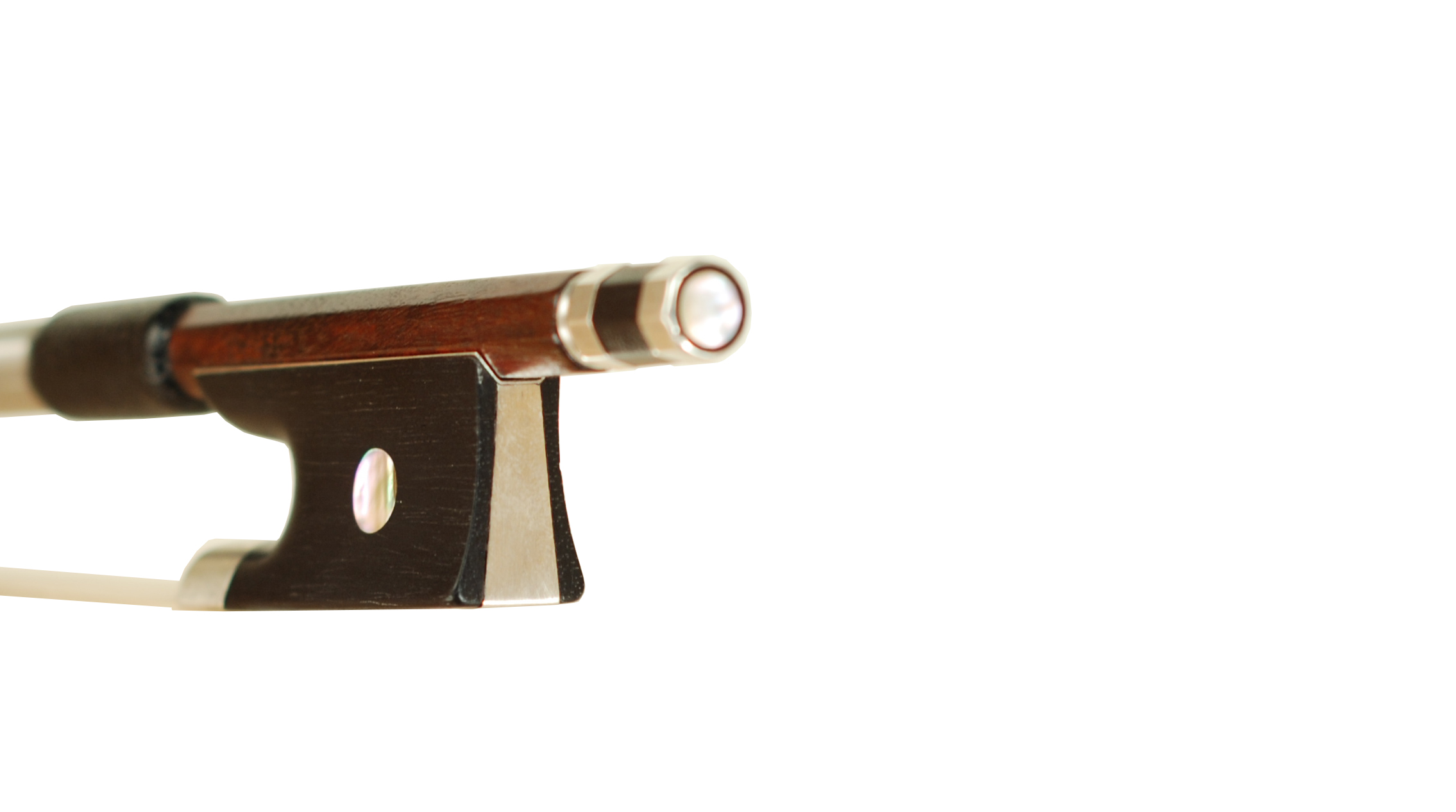
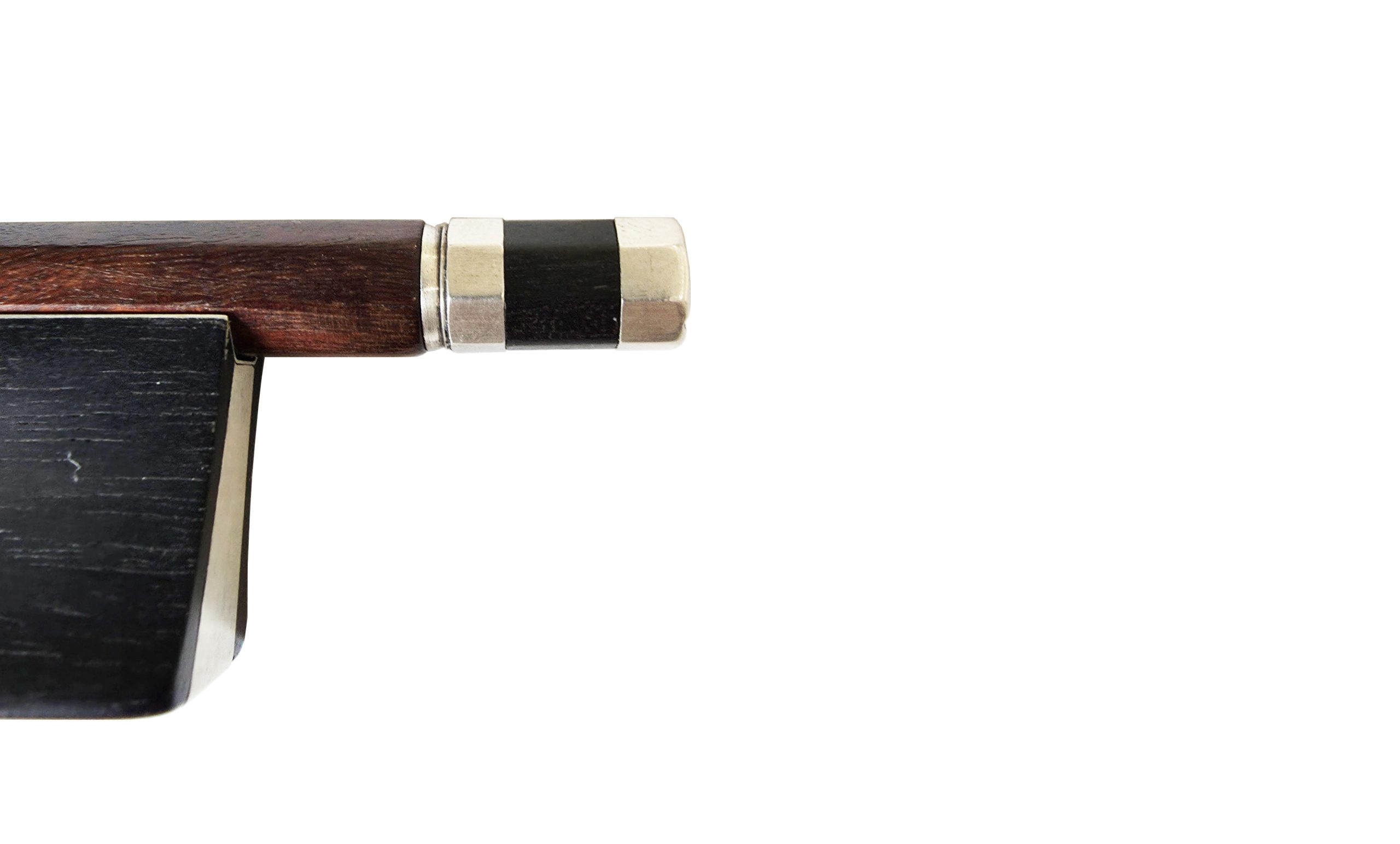
Our Bausch sterling silver pernambuco bow is a non-stamped violin bow and made with excellent workmanship. The grain in this stick is tight without flaws, and the color is amber/orange/brown, very consistent with superb clarity. The frog area of the stick is slightly discolored darker from the rest of the stick from the decades of playing. This normal wear is a good sign that the stick was just oiled in its original form and not varnished. The bow is firm, and the camber starts quickly after the head. It is finished in sterling mounts and the sterling silver three-piece endscrew has the typical Bausch double rings in the collar of the end cap, which is another sign of their French making influence. The ebony frog has single mother-of-pearl eyes with no silver rings. The silver heel of the frog is all one-piece, also indicative of Bausch design. The frog and endscrew are original to the bow.
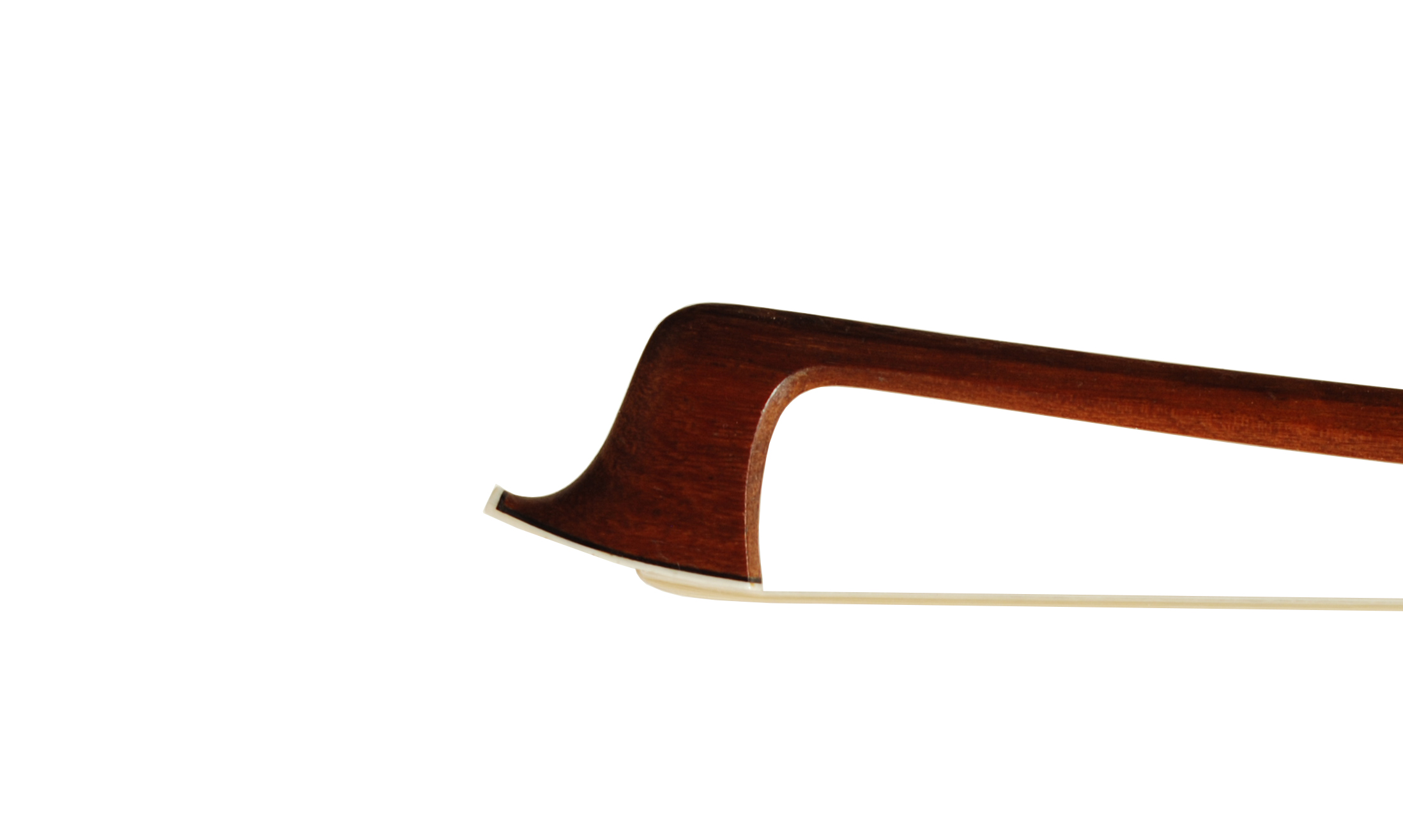
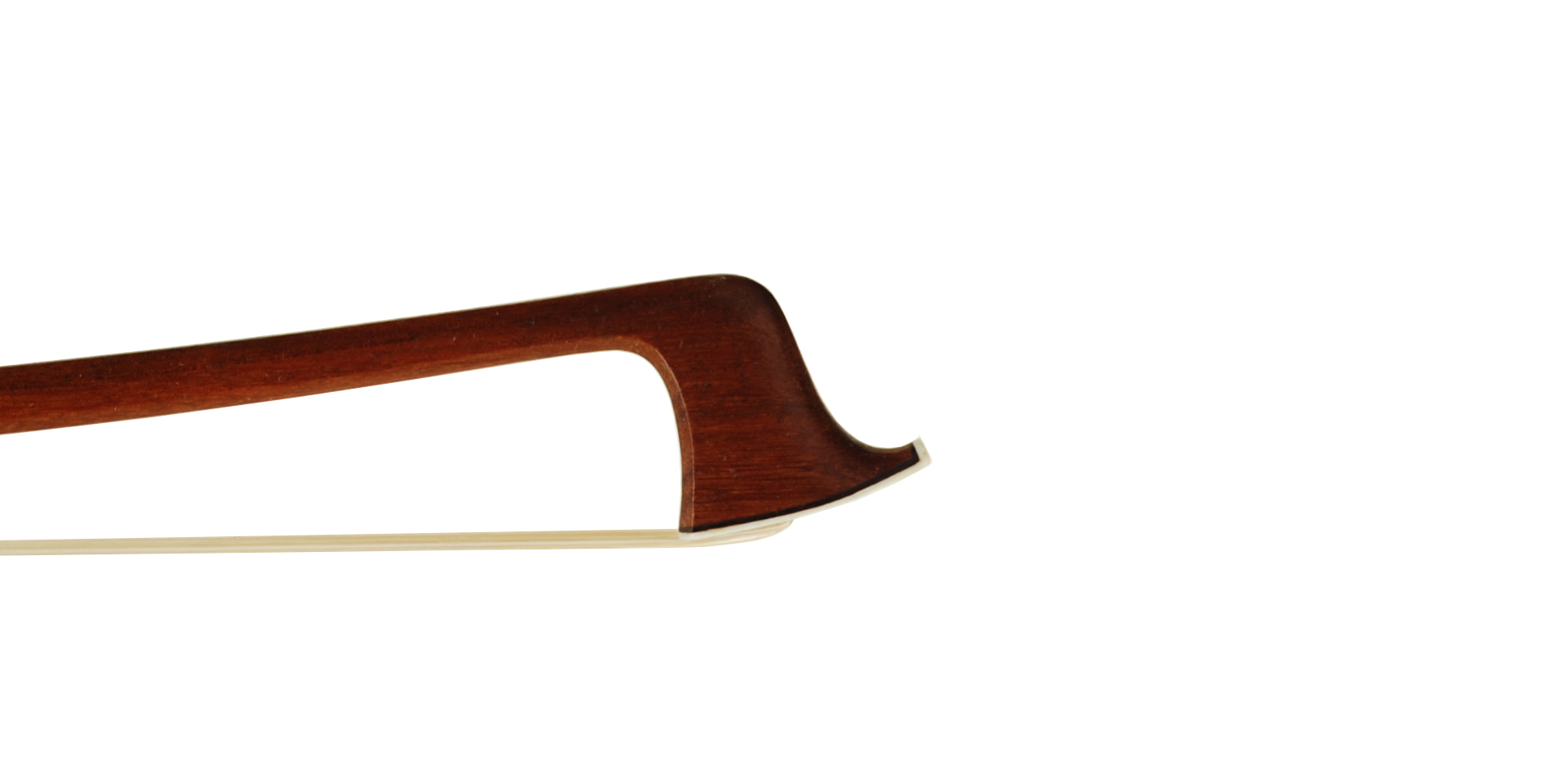
I meticulously went over the entire bow, replacing the deteriorated winding and leather thumb, and I replaced the bone tip because there was a crack in the facial. This bow plays smoothly and is light in the arm at 59.3 grams. It handles with no problem complex off the string articulations. The bow rivals violin sticks in the 3K-4K range. This is a beautiful bow that deserved to have a maker’s name. It is an awesome German stick that deserves many accolades. The stick is beautiful, octagonal in section, and sterling silver mounted. It is firm and full of life. Each increment of the bow is made with exacting detail. The maker knew his stuff. Players over the years loved this stick and took great care of the bow. There is no sign of concert applause- tapping on the stand on the tip area of the bow. I’ve had this gem of a bow sitting in dust and in a pile of other German bows. Now it is finally completed and ready for another professional player.
Weight fully haired 59.3
Related products
-
Tonk Violin Bow
$1,850.00 Add to cart