H. L. Garnes – Chicago Viola Bow – Germany circa 1950
$895.00
click picture to enlarge
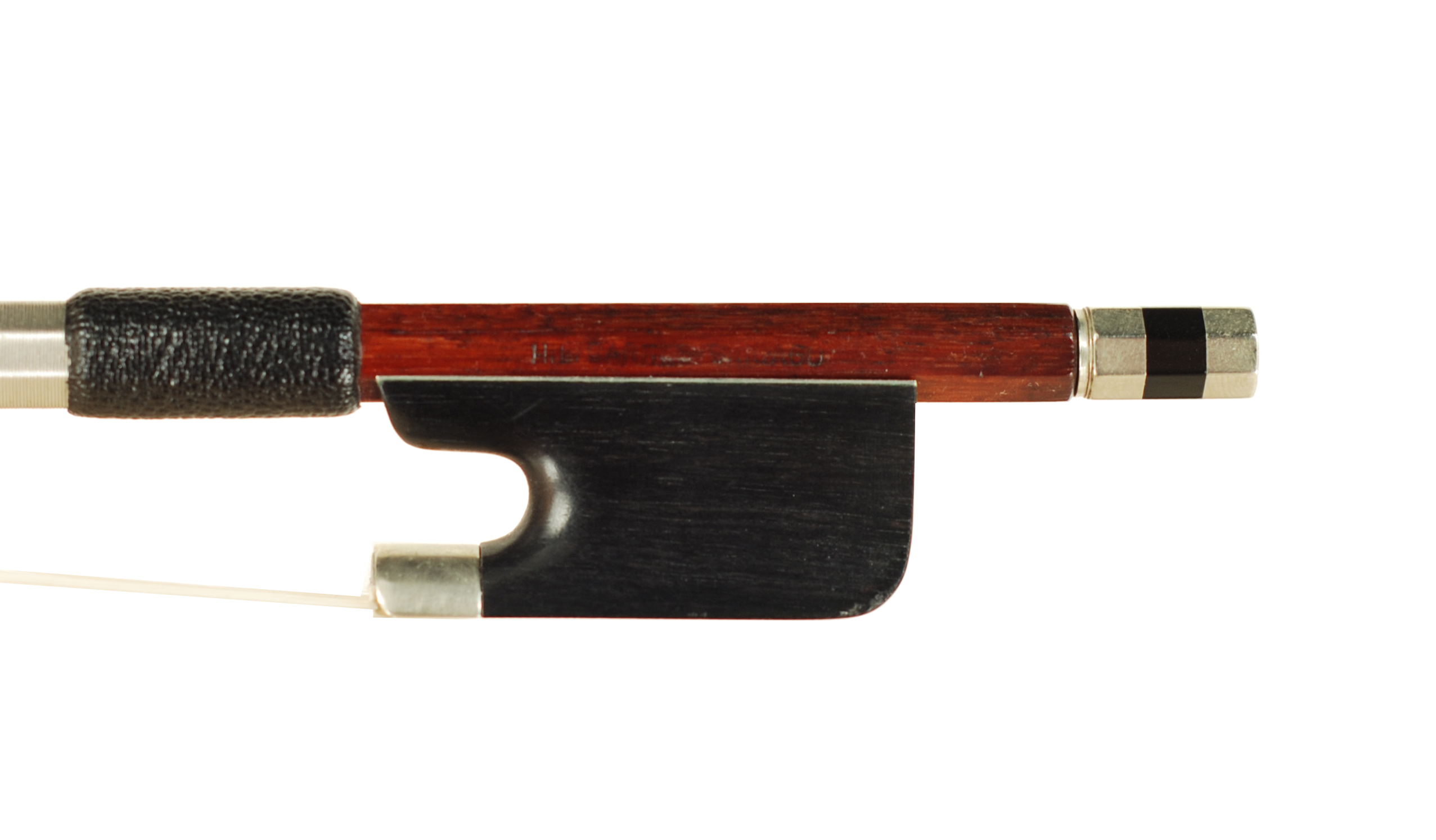
Stamped:
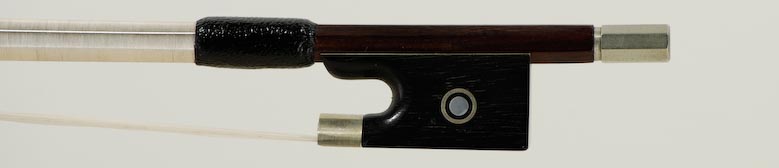
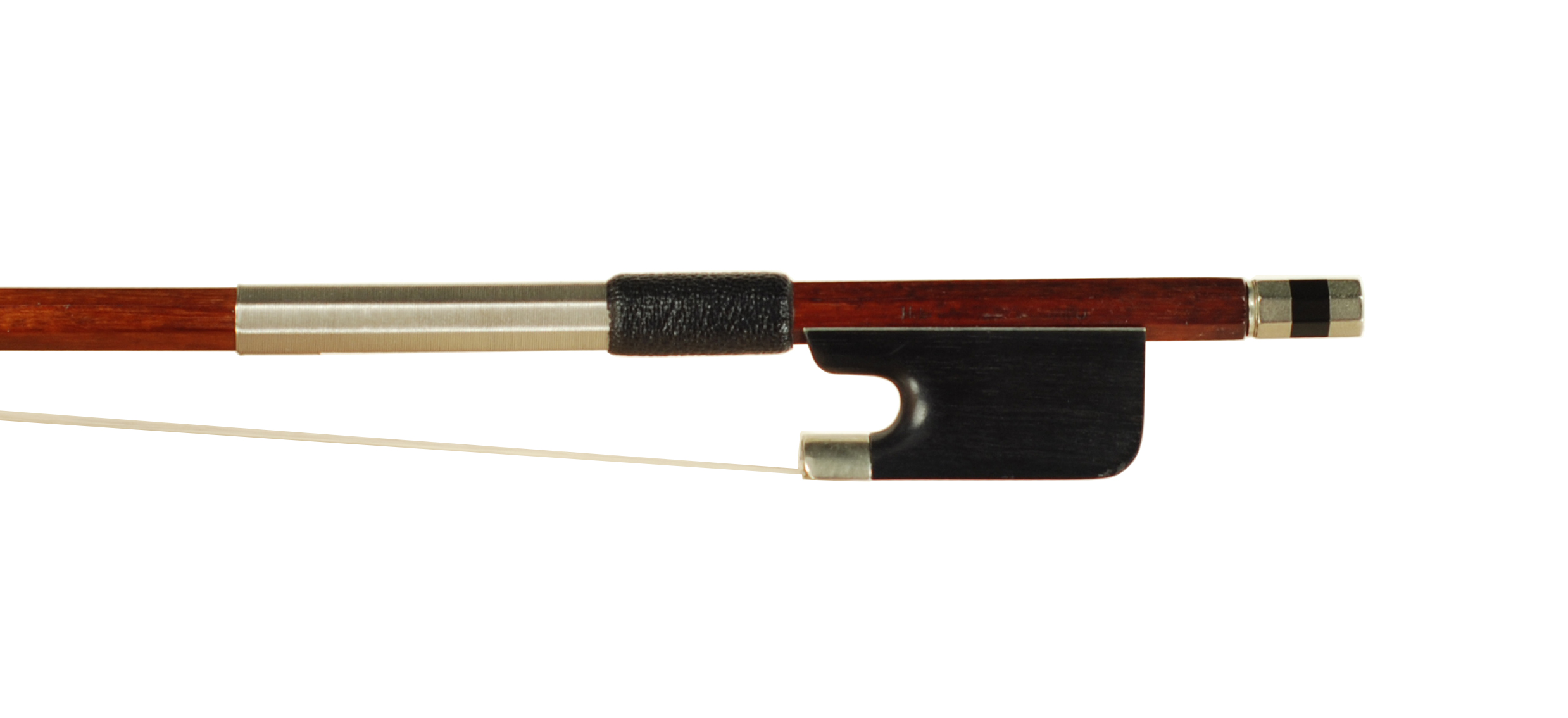
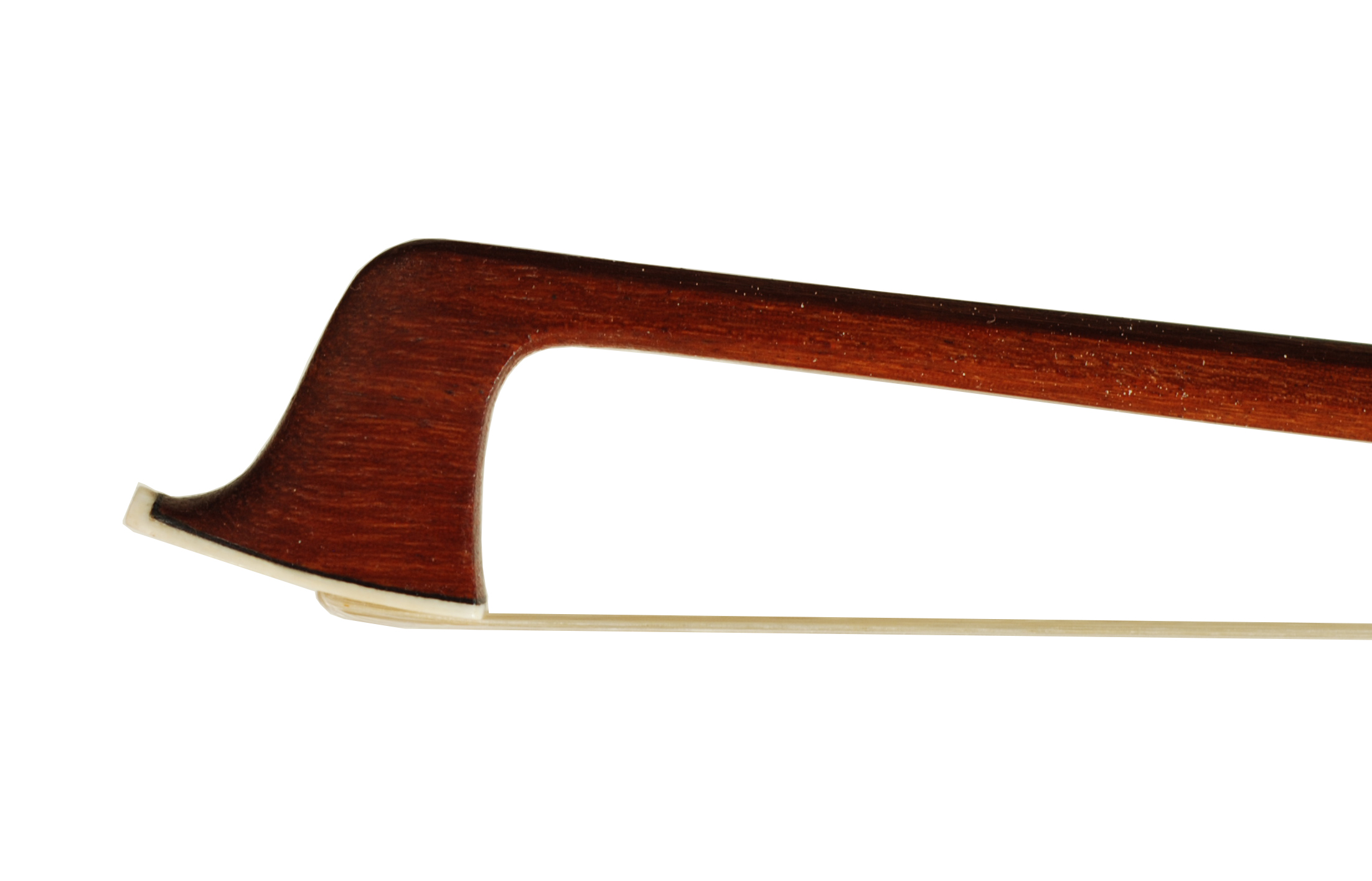
A European viola bow, made in Germany circa 1950. If you’re looking for a stick with some age and nice detail in the makeup of the stick- this could be your next bow. There is no maker’s name on the bow, only the music firm in Chicago, Illinois that purchased the bow and brought it to the States. This bow was made in a German workshop where many apprentices and journeymen were probably involved. Each person had a part in the bow. Someone would choose the wood, another carved the stick and shaped the head as well as added the facets. The octagonal shape is tapered well and continues in a very slight accumulation of girth starting thin and increasing in girth by a few thousands of an inch every two centimeters. I’m impressed by this detail and fuss. It increases in size until the end of the bow at the button.
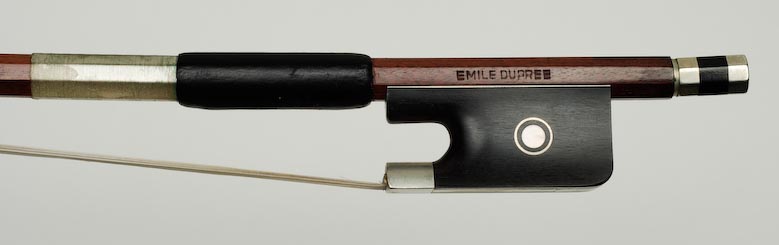
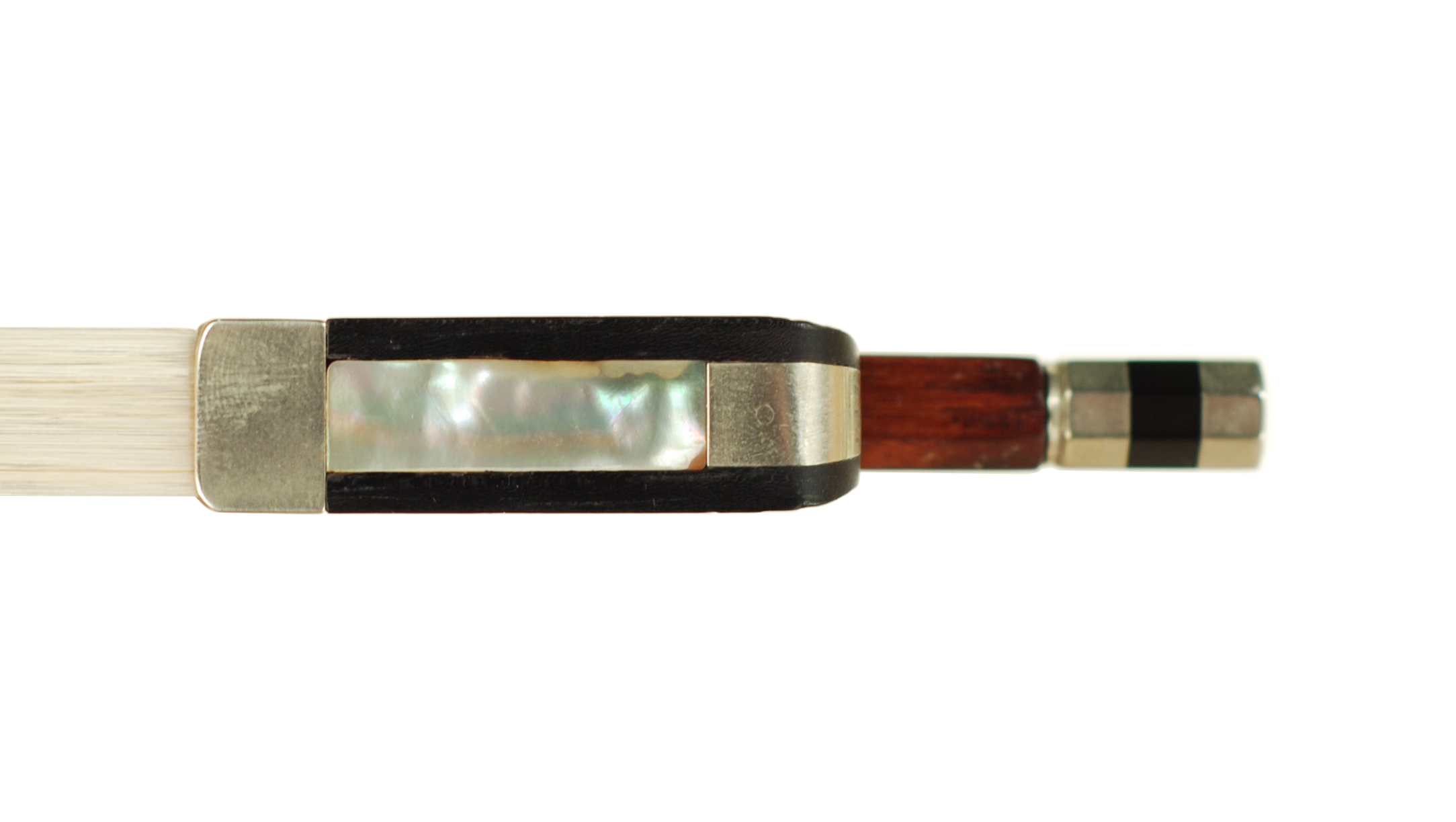
The wood selected is strong, semi-firm pernambuco, octagonal in section, and fitted in nickel silver fittings. Pernambuco is the wood of choice for bow making. This bow is in very good condition and the pernambuco color is an orange/brown but at the frog area, because of a player handling the bow, the stick has darkened. Still all good The head was made of bone and in this industry for a trade bow the frog and the jewelry work was probably made in the rough as parts at a different bench by a different lad. All of the components would have then come together by one individual whose hand fitted the frog and cut the mortises in the tip and frog area. The bow has no flaws and shows German workmanship at a high level. The frog has fine pin work in the round heel, and the lining is held to the frog by two tiny bronze screws. I love the blind eye frog for this viola bow. Yes, a classic look indeed with only pearl work in the slide. Everything on the bow is original except for the leather thumb. Many times, a trade bow in a workshop was a team effort and I believe this is one of those bows destined for the States after World War II. There is no mark of origin on the stick, done on purpose, and the stamp was added after the bow made it to the store. These bows at the time would have been purchased in a box of 12 bows. Germany was the hub of many gifted immigrant makers and tradespeople. This really is a very nice bow. Kudos to this workshop.
These types of trade bows were probably purchased for a song as American business owners were able to buy cheaply from German shops after the war. German families and trades people were trying to survive and bring some kind of economic stability to their families. Music stores boomed in the states after World War II. Pianos, string instruments, and wind instruments too. In this period many shops in America were buying string instruments and bows, knowing they were made in Germany, but overlooking the country of origin and selling many on showroom floor.
This is another bow from my collection of over 40 years, living and growing up in the New York/New Jesey metropolitan area. As a teenager my father would take me to many estate sales, and auctions. We would purchase dozens of old violins/violas/cellos and their bows. Sometimes bunches of old bows all tied up in bundles for sale. I average one or two bows per week to get from my bow bench to the showroom floor. I enjoy the detail of bow work and have about 500 pernambuco bows yet to complete The bow is well planned out, made by more than one hand, and it works fantastically well. The bow is easy to play, has some age, about 10 years older than me, and the bow is ready for a new home. A player from another half century ago loved playing on this stick and took care of it. German workmanship, cottage industry type of work with one final maker connecting all of the dots. A fine German trade bow.
Weight fully haired 67.0 grams
Related products
-

Alfred Knoll KV306
$749.00 Add to cart