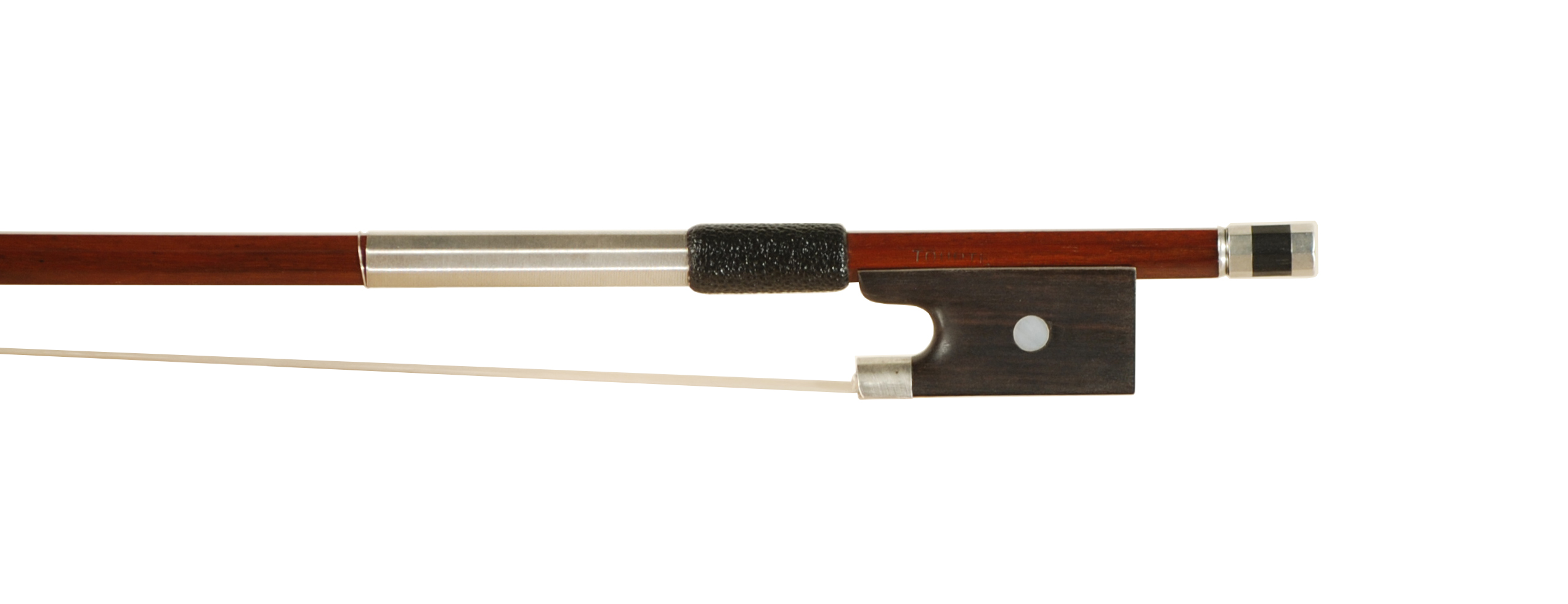
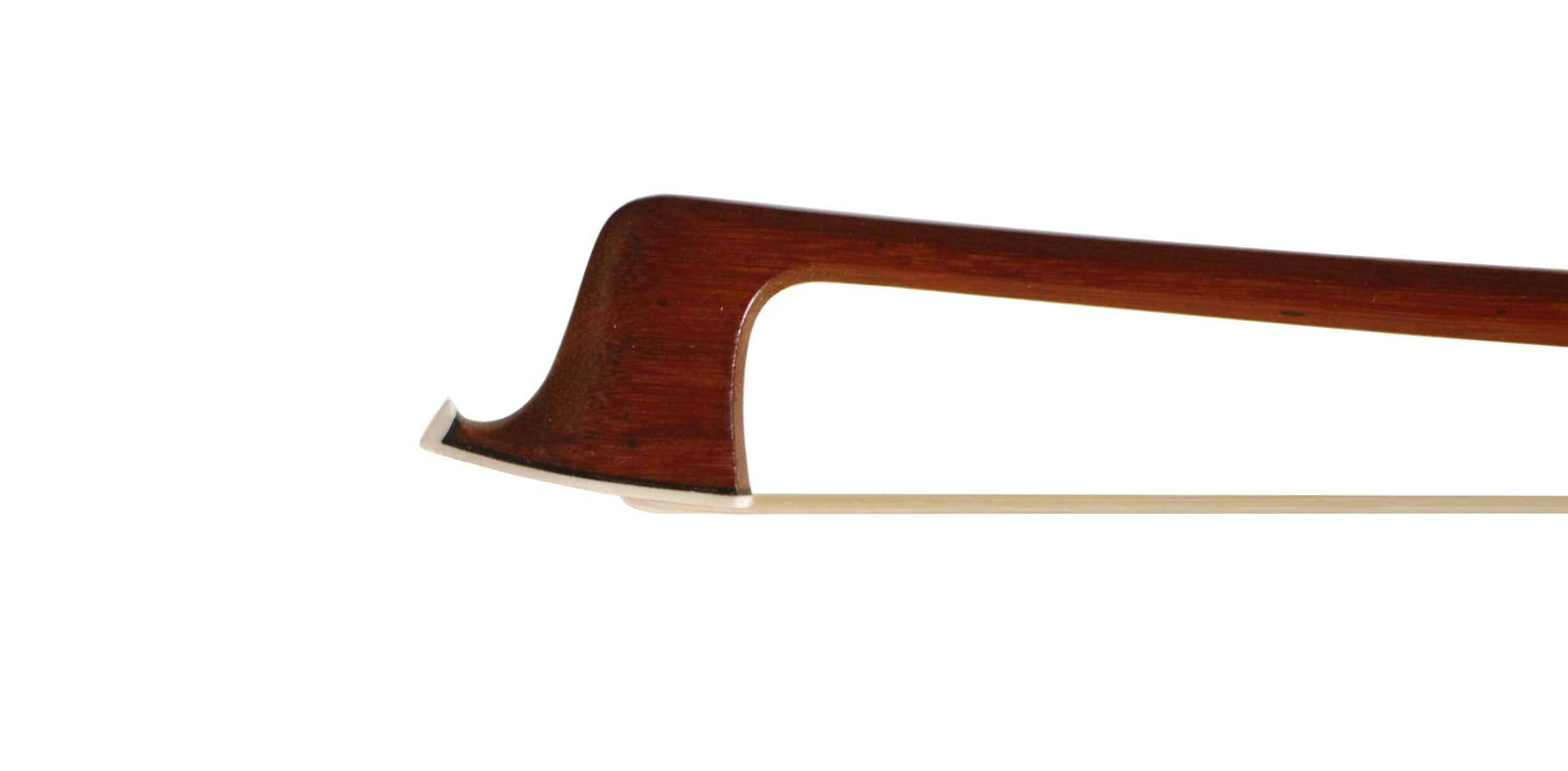
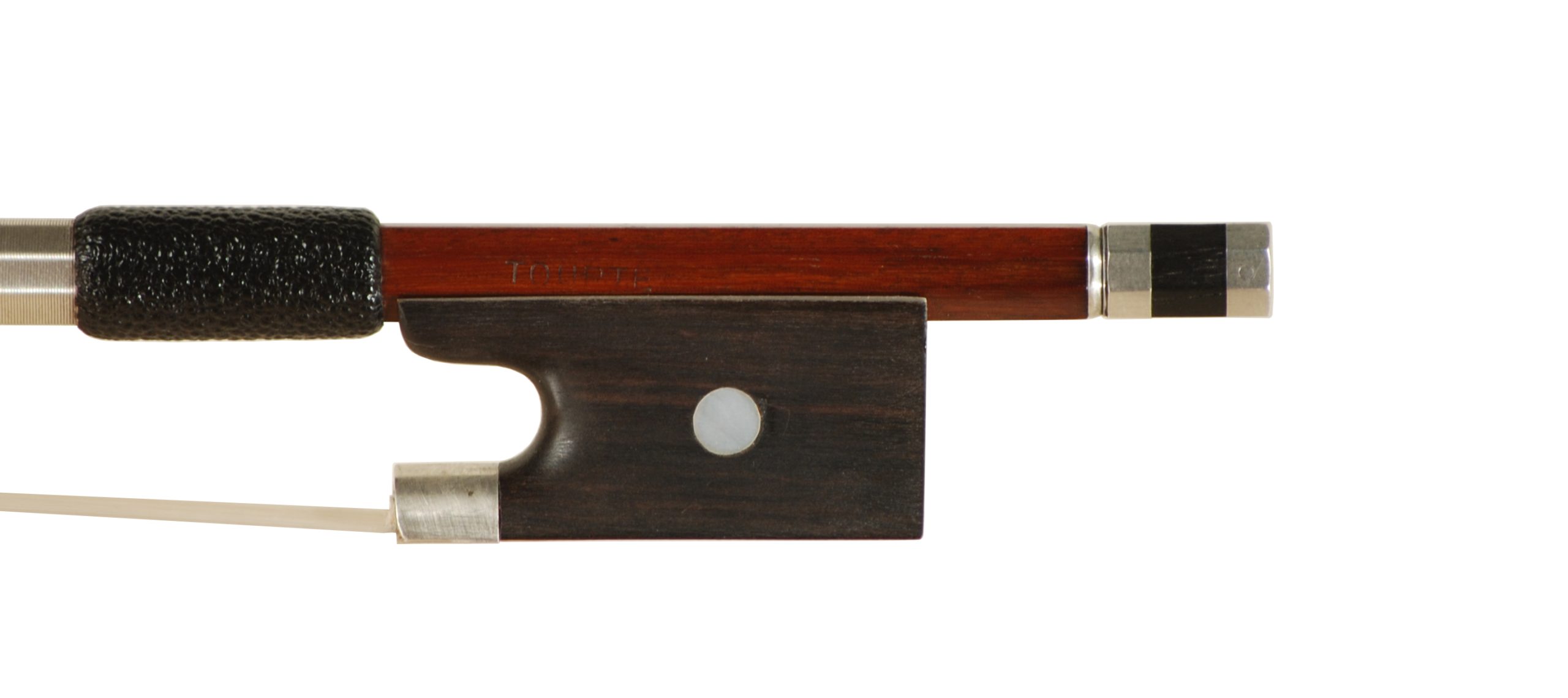
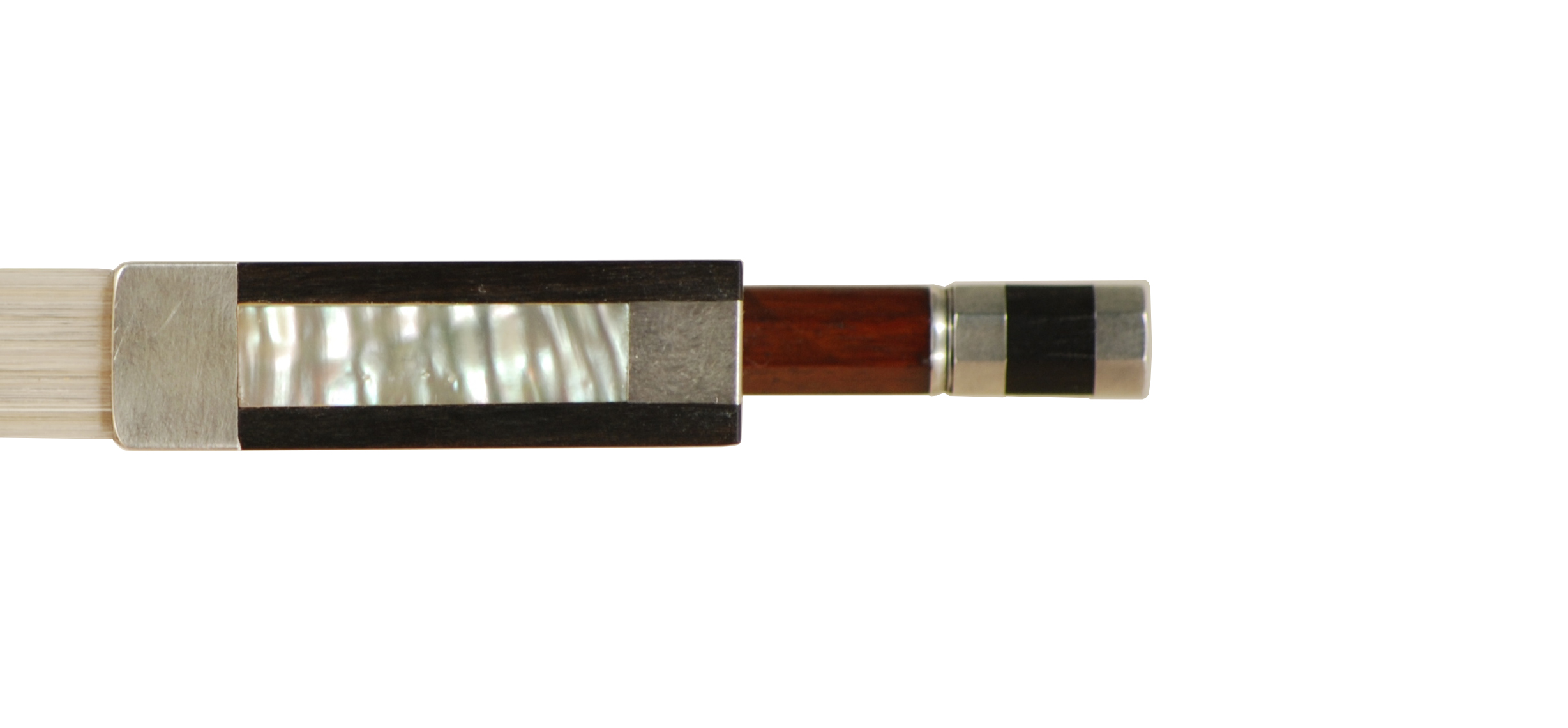
German Trade Violin Bow Stamped TOURTE- Markneukirchen circa 1910-1920
$1,295.00
click picture to enlarge
Stamped:
MADE IN GERMANY – on the audience side of the bow
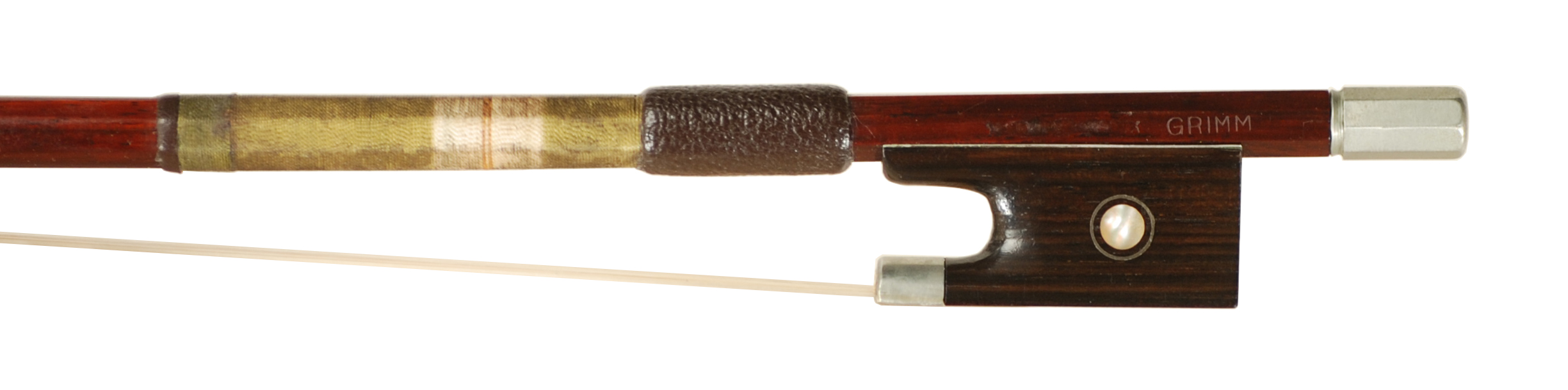
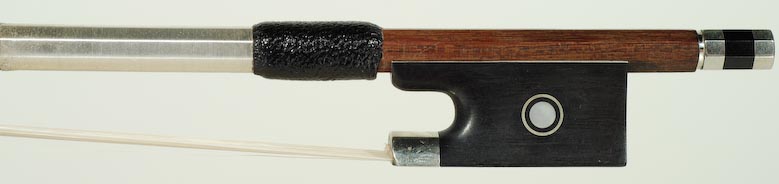
This is an interesting violin bow; it’s sterling silver mounted, pernambuco wood, and octagonal in section. With no real makers name stamped on it, this bow may be perfect for the player looking for something different. François Tourte was a famous Parisian maker and violin shop owner of the 19th century. This bow was made in a workshop in or around the town of Markneukirchen, Germany, not Paris. Historically, Markneukirchen was the German center for the string trade for centuries. Because of the tremendous growth in violin making during the 1800’s the bow trade followed and became just as well known. In this period many bow making families flourished, employing dozens of craftsmen to meet the need for bows. This is one of those bows from a family shop, but from the early 20th century. This is another bow from my collection of over 45 years, living and growing up in the New York/New Jesey Metropolitan area. As a teenager my father would take me to many estate sales and auctions. We would purchase dozens of old violins/violas/cellos and their bows. Sometimes bunches of old bows were tied up for the sale. With help from my dad, I purchased hundreds of bows and instruments from 1975-1985. Now in my 60’s I’m averaging restoring one or two bows per week. I love the detail of bow work and have about 400-500 more bows to complete.
This bow was made with older pernambuco wood harvested in Brazil in the mid-to-late 1800’s. The wood was transported to Germany, left to dry naturally for 15-20 years, and then created into a bow. The stick is firm in makeup and shows no flaws. The bow has fine pin work in the silver lining of the frog and the three-piece sterling silver button, which also has a double turn in the collar. Fine lathe turning work- this bow was not made by a second-year apprentice. The frog has a conical shaped ferule and simple lines, everything kept small and dainty. The bow is simply oiled for protection of the stick as it is handled and it brings the deep orange/brown color out. There is no excess wood on the stick. It is a beautifully tapered bow that is incremented well, very smartly thought out. The single pearl eyes are set into the frog without a silver ring, which was the standard model for frogs made pre-1920’s in the Markneukirchen and Klingenthal areas of Germany. The round eyes in the frog are 5.0 mm. diameter mother-of-pearl. This frog size is very different, slightly small. The mother-of-pearl slide is a tapered fit; smaller at the heel end than that of the ferrule end. All of this shows me and tells me handwork, excellent craftsmanship. This trade bow is balanced well and light in total weight. The bow is easy to manage and control. The original winding and leather where beyond restoring, worn through and discolored. I replace the winding in sterling to match and the leather thumb in in goat leather. I also replaced the ivory facial tip, which had a crack in the facial, with tip armor. The bow has natural wear, nothing unusual, and feels great in the hand. If you’re looking for a great stick with no real makers name, just a sterling silver mounted bow with age and great bones, this is your bow. The bow is in very good condition, older German workmanship, made and restored with honest workmanship. A player took wonderful care of this bow for possibly two or three generations. It is a WOW! bow looking for a new home after being here in the workshop for years.
Weight fully haired 57.4 grams