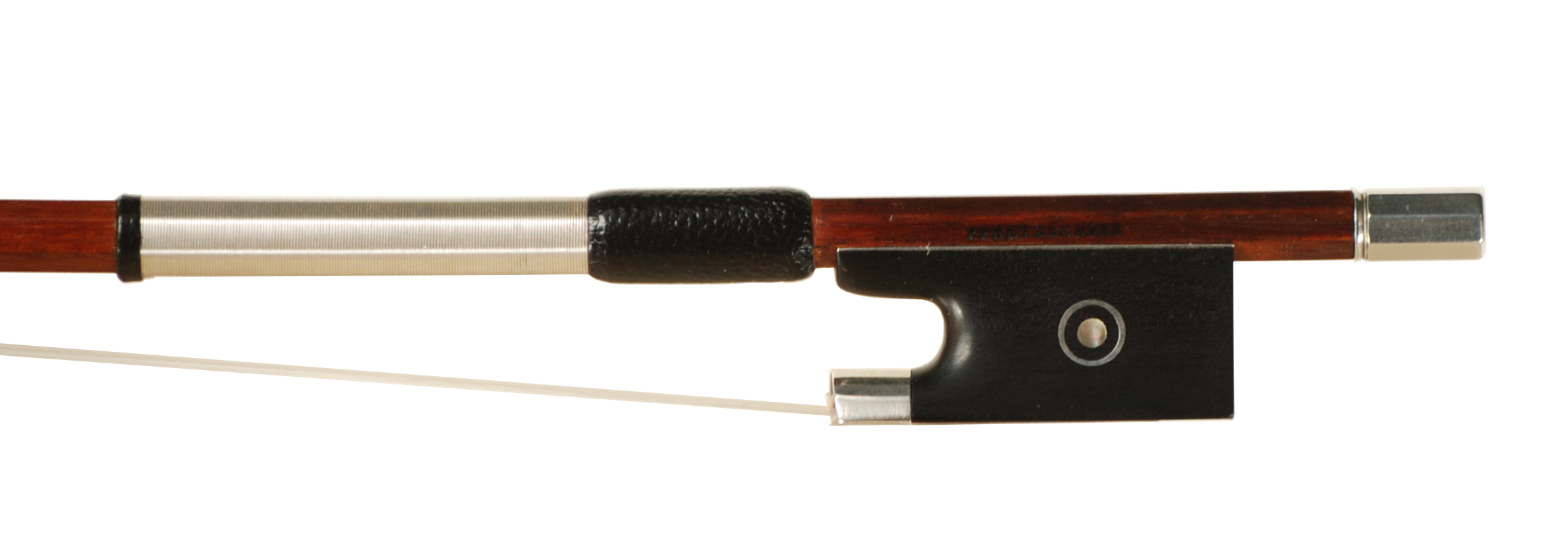
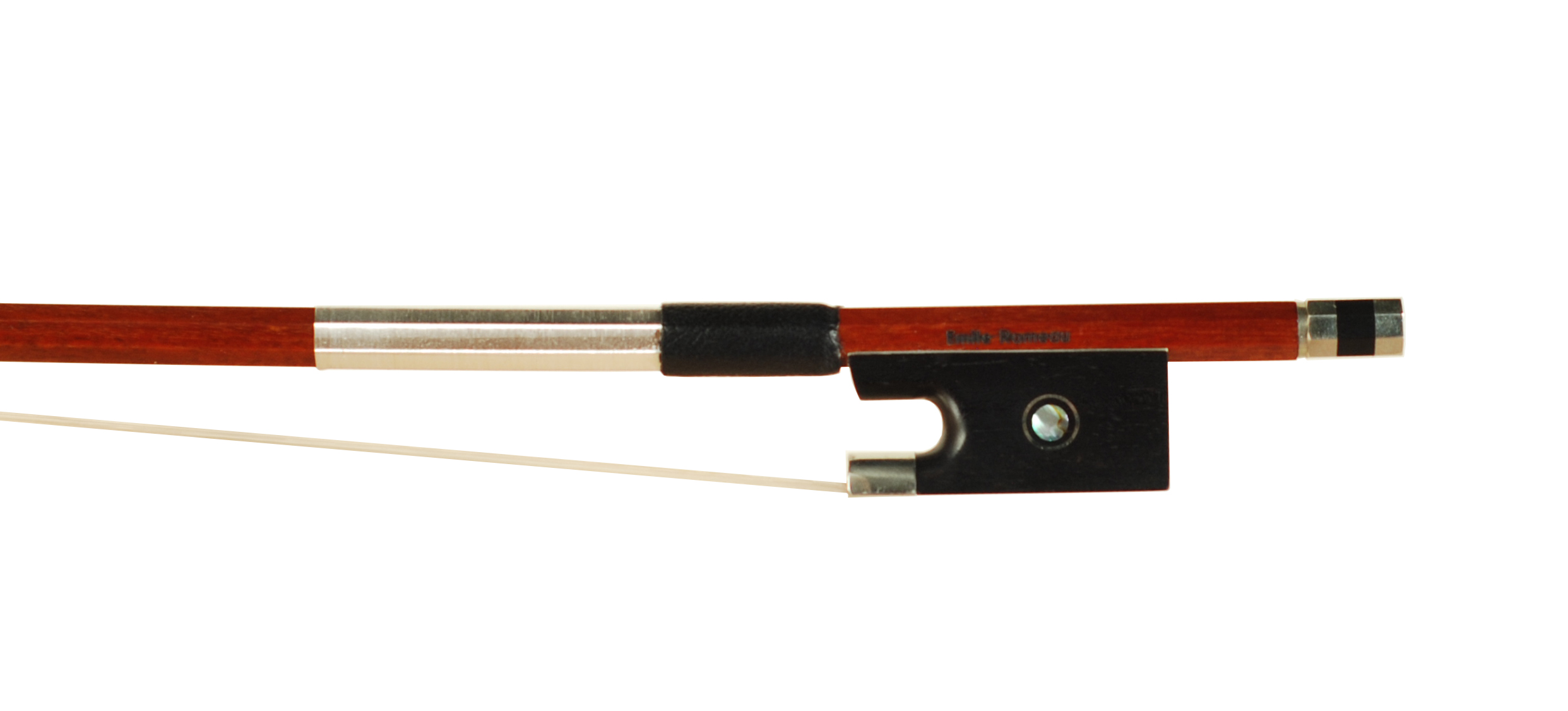
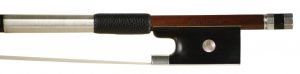
Emile Romeau Nickel Pernambuco Violin Bow – Bubenreuth 2015
$678.00
click picture to enlarge
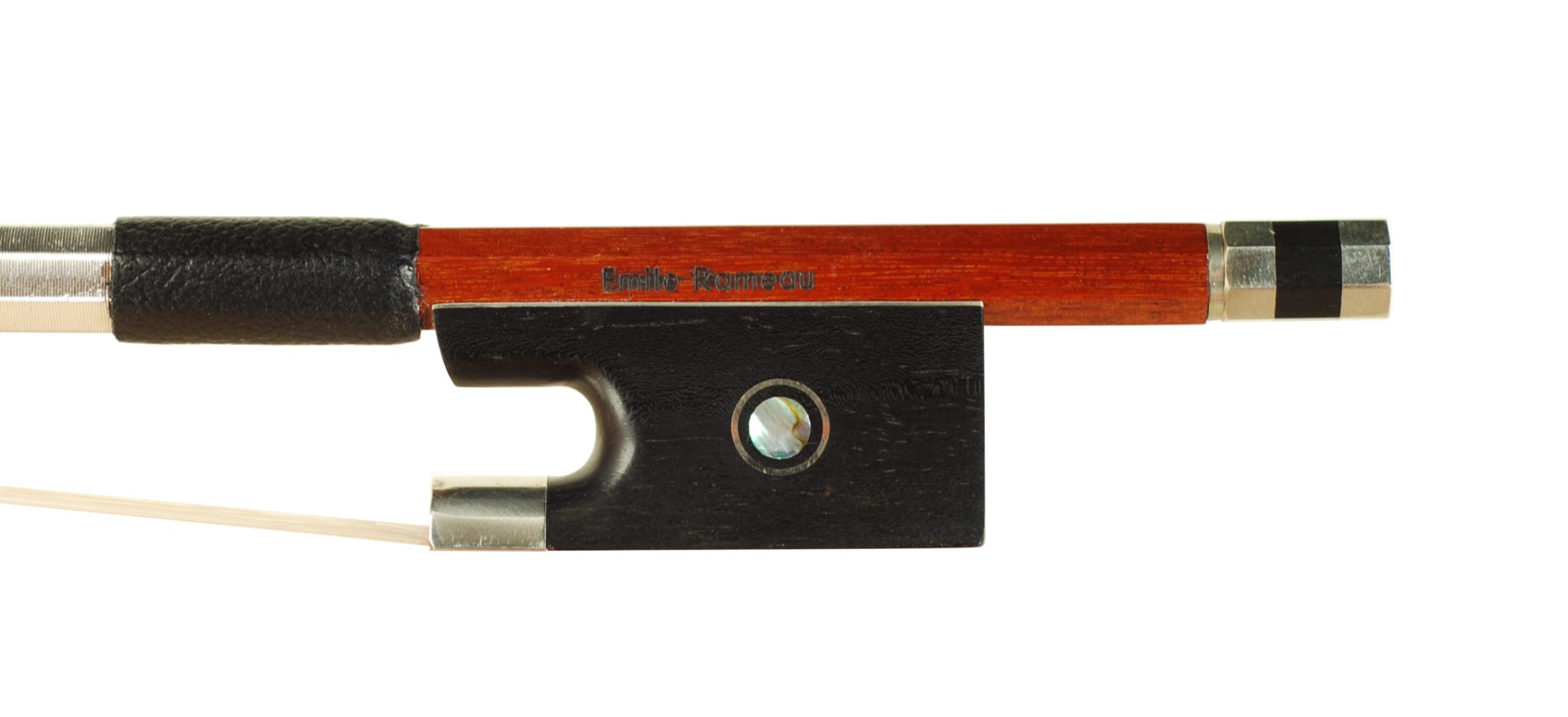
Stamped:
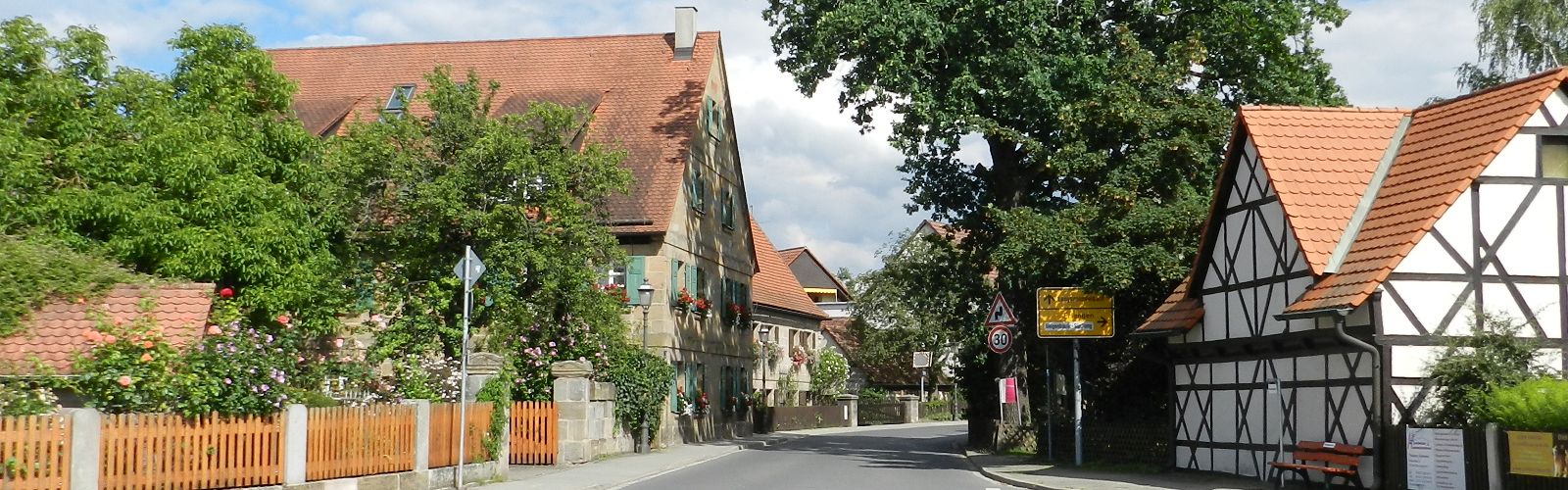
Not much is known about the founding of the village of Bubenreuth. The suffix “reuth’ indicates that it was created by the clearing of a mighty forest. The town is first mentioned as “Buberrode” in an early document from November 24, 1243. All I know is that the town had wood, which is the most important ingredient for making instruments.
Bubenreuth is a small town near Nuremberg in southern Germany. But this small town became a huge asset to the instrument and bow making production of orchestral string instruments soon after World War II. The mayor of Bubenreuth, with a few selected helpers, traveled to many of the refugee camps set up after WW II in and around Germany and Czechoslovakia. They had a mission to make their hometown something special. God blessed their efforts. They handed out flyers and spoke to hundreds, probably thousands of families, particularly looking to attract luthiers to their village to create a new center for artisan families in Germany. Over 2000 families responded and by 1949 Bubenreuth and the surrounding grew from a village of 400 to over 3,500 people. Wow! Bubenreuth was transformed from a small farming village into one of the main hubs of German string instrument making. These makers produced violins, violas, cellos, basses, bows for those instruments, lutes, mandolins, zithers, guitars, banjos, and recorders. They also attracted not just the displaced luthiers but the supporting cast the instrument and bow makers needed. The village attracted string makers, tonewood dealers, major lumber men, varnish producers, rosin makers, and tool makers. Many came from Schönbach area of Czechoslovakia and from all over Germany where they were trying to survive. They were welcomed with open arms to resettle in Bubenreuth for the next 10-18 years. The village not only grew in population but also in fame for what had happened. It started from a dream and a mayor who had a vision and acted, not sitting back and waiting. The town saved thousands of families, giving them hope and truly started a special “musical corner” of the world.
These are many family names that I used to study as a 13 to 17 year old kid growing up in the New York /New Jersey area: Ernest Roth, Seifert, Schuster, Stohr, Kirsrhnek, Snabi, Hofner, Sommer, Sandner, Teller, Neudorfer, Geipel, Gleissnerr, Richard Grünke, Hoyer, Junger, Glassel, Schuster, Klier, Paulas, Long, Gunter Lobe, Lorenz, Lutz, Volkmann, Wilfer, Rubner, Dozauer, and hundreds more that I’ve missed. Without this small village in Germany, the European and American music scene from the 1950s through the 1980’s would have been very different. Today, Bubenreuth still retains its importance in the musical world.
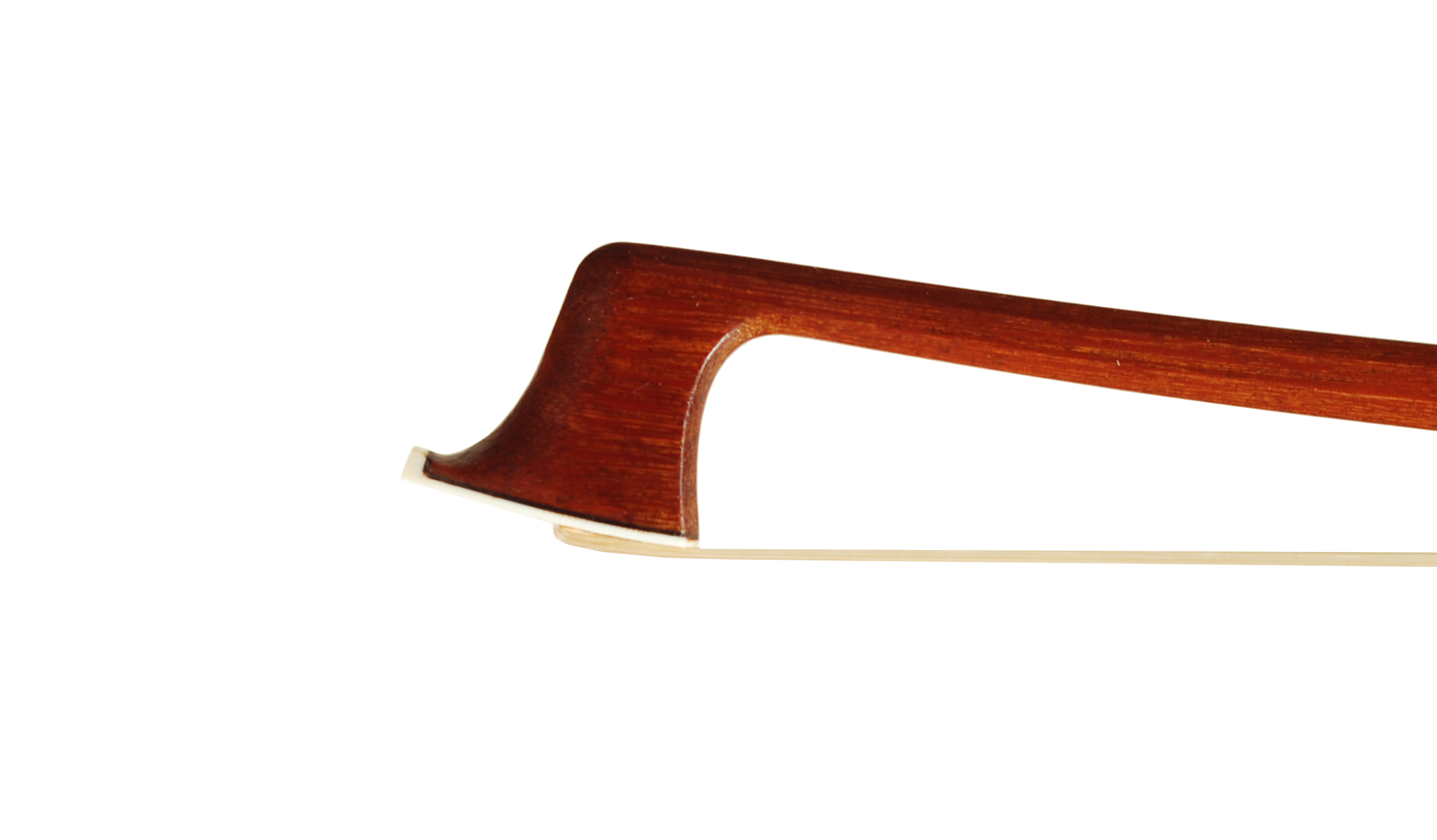
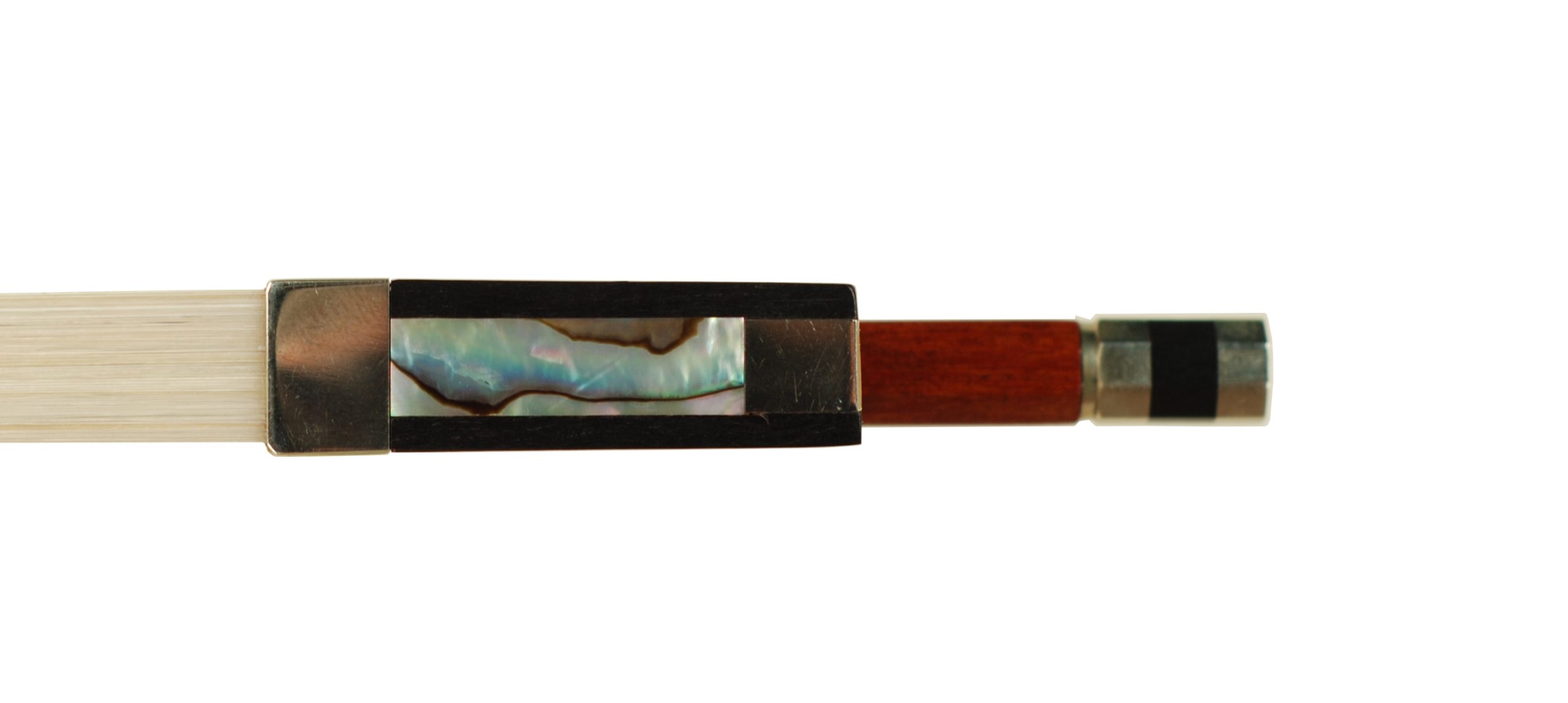
Our Emile Romeau bow comes from this famous area of Germany and was made in 2015. The bow is pernambuco, nickel mounted and is cut in octagonal section. The tip is erect and masculine in its line and the pernambuco is orange/brown color with a tight grain. A beautiful transparent color to the stick. The frog is a Parisian eye model that is fully lined. It has a colorful flecked pearl in the slide of pink hues, black veins, and green hues. The pearl eyes of the frog match in degree of color. The three-piece endscrew button has a white abalone pearl. This is a well-made bow, perfect for an up-and-coming player. I also love it because it was made in that famous corner of the world that is full of history. Created by hard working families that supplied musical instruments and bows to families like mine from 1970 through my girls in the late 1990’s.
Weight fully haired 60.8 grams
Related products
-
A.N. Sachsen Violin Bow
$1,500.00 Add to cart