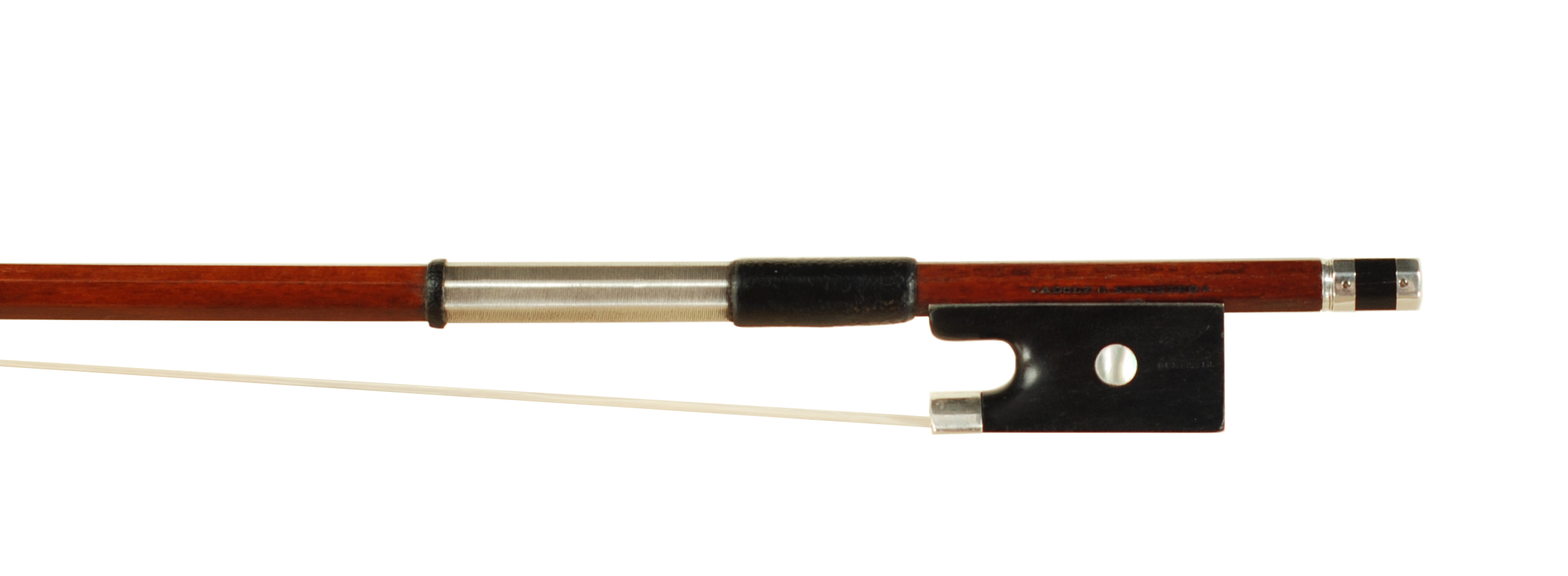
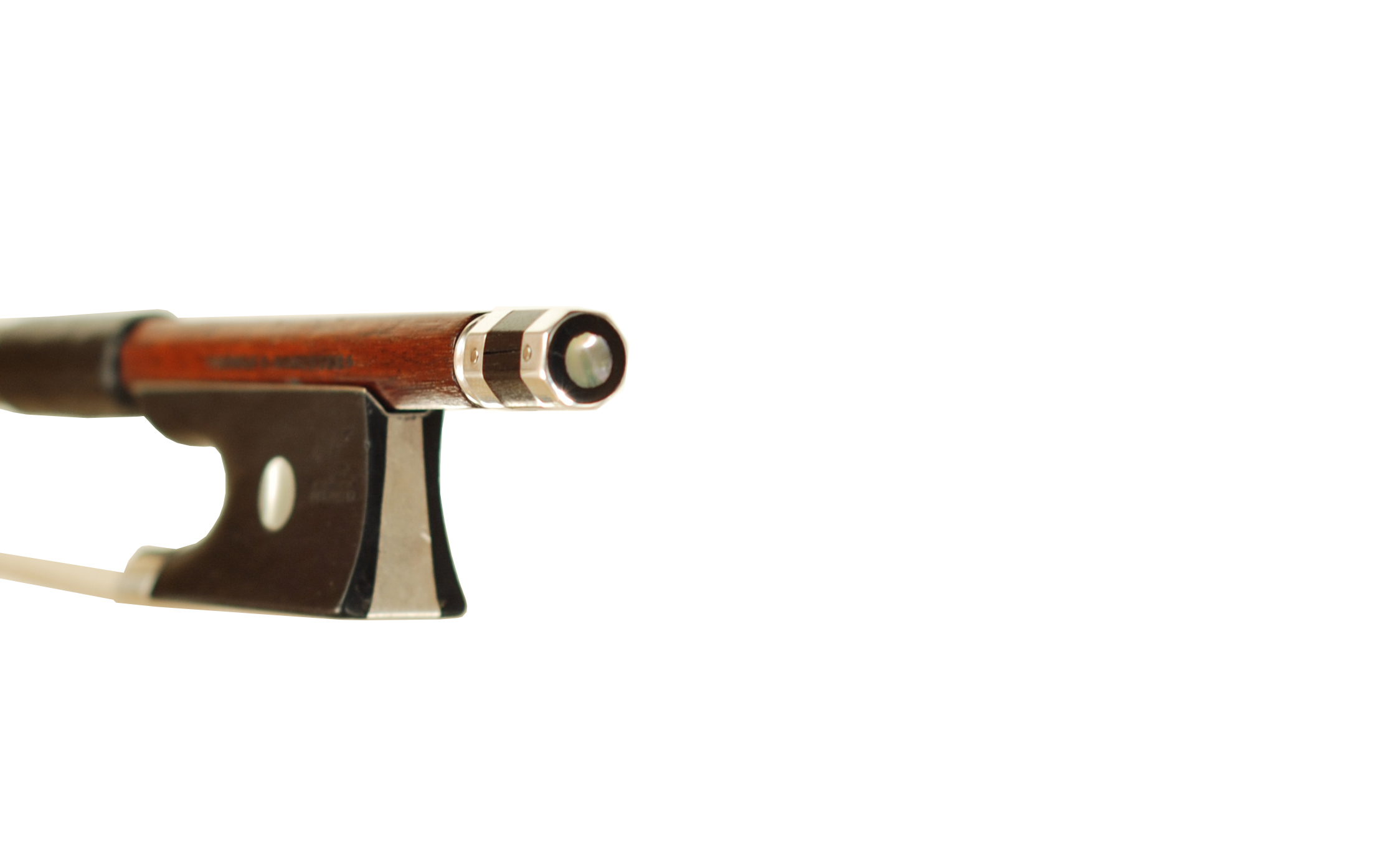
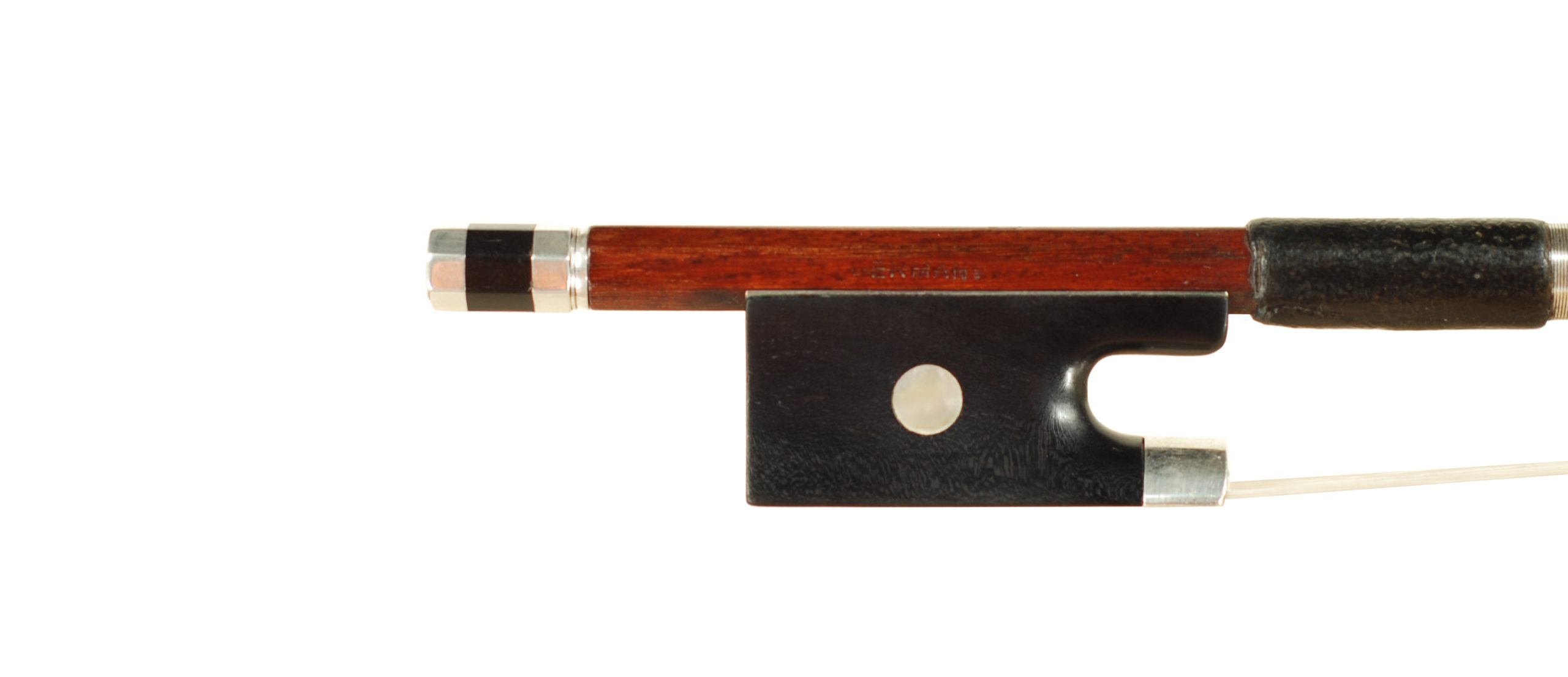
Adolf C. Schuster Violin Bow – Markneukirchen circa 1935 -CURRENTLY OUT ON TRIAL-
$3,000.00
click picture to enlarge
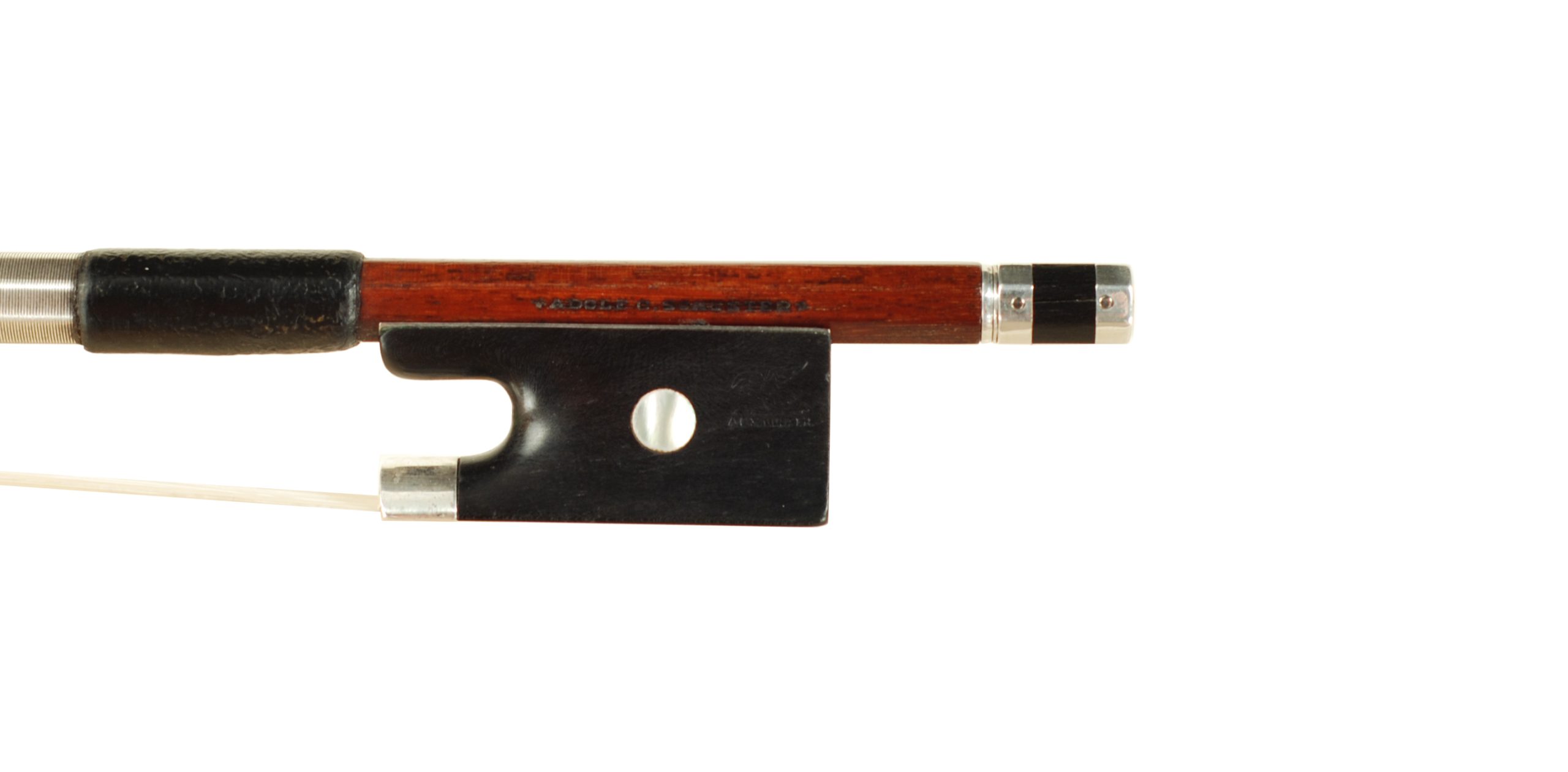
Stamped:
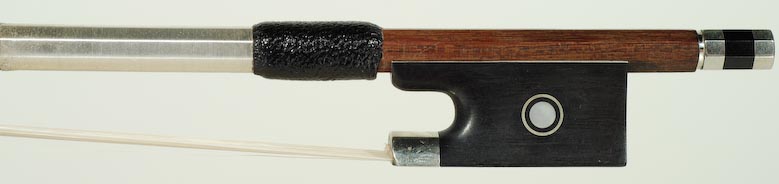
Heraldic bird and the name of the company on the frog, stamped player’s side
GERMANY on the audience side
Growing up in the New York City area as a young guy I frequented Ideal Music, Ltd. at West 25th Street and Avenue of the Americans owned by Jack and Kay Loeb. To say Jack carried a huge inventory of fine instruments and their bows would be quite an understatement. I was a 16-year-old kid then and he was 60 years old. Kay and the close staff, just a few, maybe 2-3 that I remember, always treated me very well and were always genuinely interested in me. It was a great time for me. I worked on and off with Mr. Menzel for nine years when I wasn’t in college and more years after I got married. I always had trouble sleeping the night before a visit to Ideal Music, especially if Mr. Menzel, my boss and the luthier of the shop, had a task for me to chew on. He would have me find a certain maker’s instrument for him and he always wanted me to examine bows, go through hundreds of them and take detailed notes on the specific qualities as he chatted with the owners. We would be there for hours. We always came home with a few new boxes of bows in nickel, sterling, and maybe one or two individual gold mounted bows. I found out that it is fun spending other people’s money. I remember each time we entered the huge building we went up in a small elevator to the 3rd or I think the 7th floor. You were buzzed in. Mr. Menzel would drive us to New York City two or three times a year (always on a Monday, our day off), springtime and summer trips in his JAGUAR! That was a wow for a kid! We always had to check my baseball and umpiring schedule. I got to look through hundreds of violins just bagged in brown paper bags sitting like library books and see rows and rows of metal shelving full of violins, violas, and cellos. There were basses too, even fully carved Roth basses with lion heads carved for the scroll. Not just one. I remember seeing 4-6 of them sitting in a wood rack at the front of the shop on two different occasions. Mr. Loeb’s bow collection was massive! The bows were housed all over in shelves, nickel mounted and sterling silver mounted, pernambuco bow areas, brazilwood bow areas, grouped more by specie and mountings than by size. They were also grouped by maker’s name and region/town in Germany. Just having a few boxes of every size is unbelievable. He had hundreds of boxes from hundreds of makers. They were in corrugated 32” x 8” x 2” boxes that housed 12 bows from each maker. Mr. Loeb had thousands of bows. It was way above awesome!
Adolf Schuster (1890-1947) bows were one of the many maker’s boxes I got to thumb through as a young kid. Adolf did his apprenticeship in the W.A. Pfretzschner workshop. To me as a kid that is huge, like a young high school baseball player getting to work out every day with a professional. Adolf must have shown great skill because he continued working there until the beginning of WW I. He served as a soldier in the German military and was wounded, losing an eye. After the war Schuster, being determined, set up his own workshop in 1918. Despite difficult circumstances and his loss of vision, Schuster gathered other talented bow makers to work with him after the war and established a successful bow making workshop in Markneukirchen. His most important employees were Otto Adler and Otto Paulus. I ran across many Paulus bows on my trips to New York. Otto Paulus was not only a fine maker, but a man of integrity, who continued to work for Adolf Schuster’s widow after his death until they decided in 1955 to close the shop.
The Shuster shop offered a large variety of models for sale. The bows were normally marked as our bow is with the ADOLF C. SCHUSTER stamp and the heraldic bird and the name of the company on the frog. Adolf also stamped bows with names of different French and English bow makers. I’m sure we have had many of these bows in our collection too.
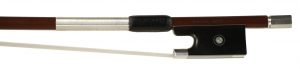
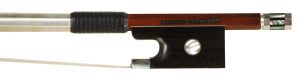
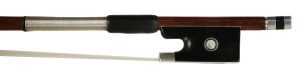
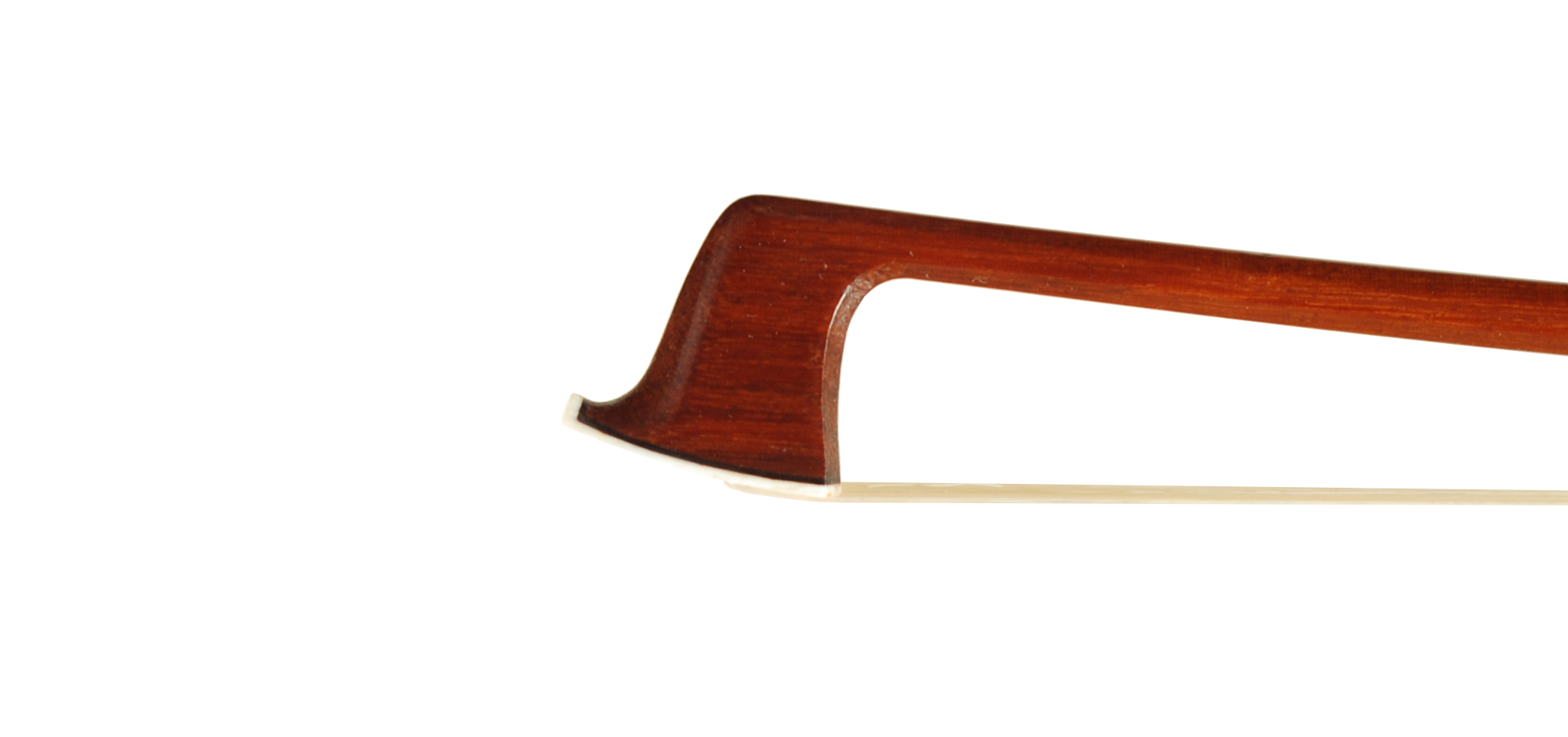
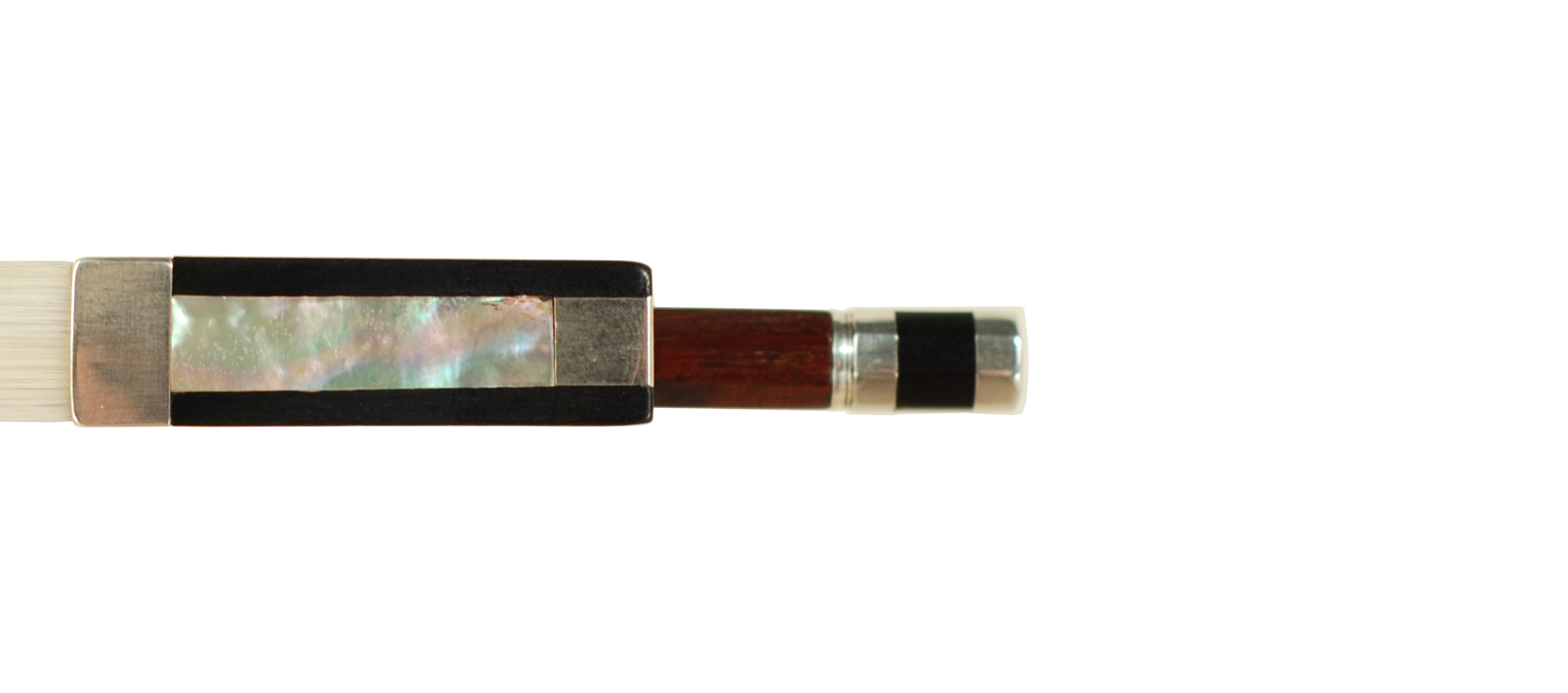
Our Schuster bow is pre-WW II era and could have made it to our shores because of Jack Loeb and Ideal Music Ltd. The bow is pernambuco, sterling silver mounted, and in octagonal section. I decided to remove the original old winding and replace the sterling winding with new and add a new lap at the north end and a new thumb leather towards the frog. Other than that, the bow is in original condition, a wow for a stick close to 100 years old. The workmanship on the bow is excellent. The head of the bow, with its convex front ridge, has been made using a Tourte model as a pattern. The pernambuco is firm, choice wood with a little bit of flex. A great playing stick. The wood is thinner than many bows and well incremented. There is no excess baggage. This bow belonged at one time to a player who took great care of the stick. The bow shows very little playing wear and no tapping damage. The block plane work on the octagon is a great study for a bow maker; the edges are fine and were slightly softened. The frog is standard Markneukirchen model, with single eyes rather than Parisian eyes and the pin work is exceptional on the one-piece heel and the lining, fastened with two small bronze pins. The color in in the slide carries pink, blue, and greens. The button is engineered well too and has a silver pin on each segment on the same flat and the collar shows a high level of lathe work, a double collar with a slight bevel in the end leading to the collar. This stick is authentic in every way and in very good condition, a beautiful bow from an area of Germany I’ve been studying since I was 17.
Weight fully haired 62.2 grams