Franz Rudolph Wurlitzer Silver Mounted Violin Bow – Saxony circa 1870-1880
$2,895.00
click picture to enlarge
Stamped:
Rudolph Wurlitzer (born 1831 Schöneck, Saxony – died January 14, 1914, Cincinnati, Ohio) was an immigrant who came to America in 1853 at age 22. He established a large musical instrument sales business from 1860-1910. Before all that Rudolph (he went by his middle name) arrived in Hoboken, New Jersey just outside New York City. He made some money working in a grocery store for a few months. Then he got himself to Cincinnati, Ohio where there was a very large German immigrant population. To earn money in Cincinnati, Rudolph worked as a door-to-door salesman and later in a department store. He was a very determined young man and saved money. By 1854, only one year after he got to the states he was working in a bank earning twice his previous earnings and lived in a single room above the bank.
Rudolph had trained as a young kid in his family business: instrument making and carving back in the Saxony area of northern Germany, and he had considerable knowledge of the musical instrument market. At age 23 he had managed to save $700, which is about $27,500 in today’s finances. He sent the entire sum to his father in Germany and received a selection of musical instruments and bows. He sold everything at one time to a local music shop and made a large profit. During his first 4 years importing instruments he continued working full-time at the bank and the other 20 or so waking hours per week part-time buying and selling instruments and operating out of his own room. In 1859 he quit his job at the bank and devoted all his attention to his new enterprise and also became an American citizen! By this time Rudolph was selling string instruments and German made drums, trumpets, and bugles. He signed a contract with the army to sell these items for the Union Army at the onset of the Civil War and later during the Spanish & American War. His army contracts allowed him to expand his business and open an additional retail store in Chicago in 1865.
The growing 19th century music industry helped Wurlitzer become a success. The company had a 200-page catalogue of instruments and bows by the 1870’s. In the late 1890’s he became friends with Henry Ford, who himself was into violins and bows and had purchased a few of his violins and bows. Ford had Scottish immigrant roots and played violin, mostly Scottish fiddling tunes, and through his life collected hundreds of fine violins and bows now housed at the Henry Ford Museum. I have seen part of that collection and yes there is a Rudolph Wurlitzer violin bow housed in his collection. The Rudolph Wurlitzer Music Company name is mostly known by Americans for its organs and player pianos. Rudolf Wurlitzer imported the best German instruments in and around the Markneukirchen area thanks to his family’s connections back home. This violin bow is one of those gems brought to America to be sold with the “RUDOLPH WURLITZER “name branded on the bow.
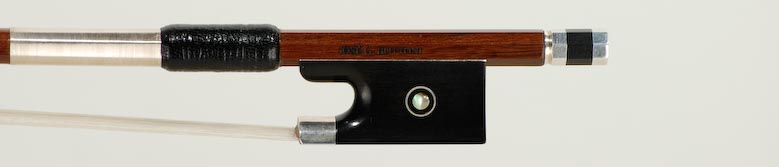
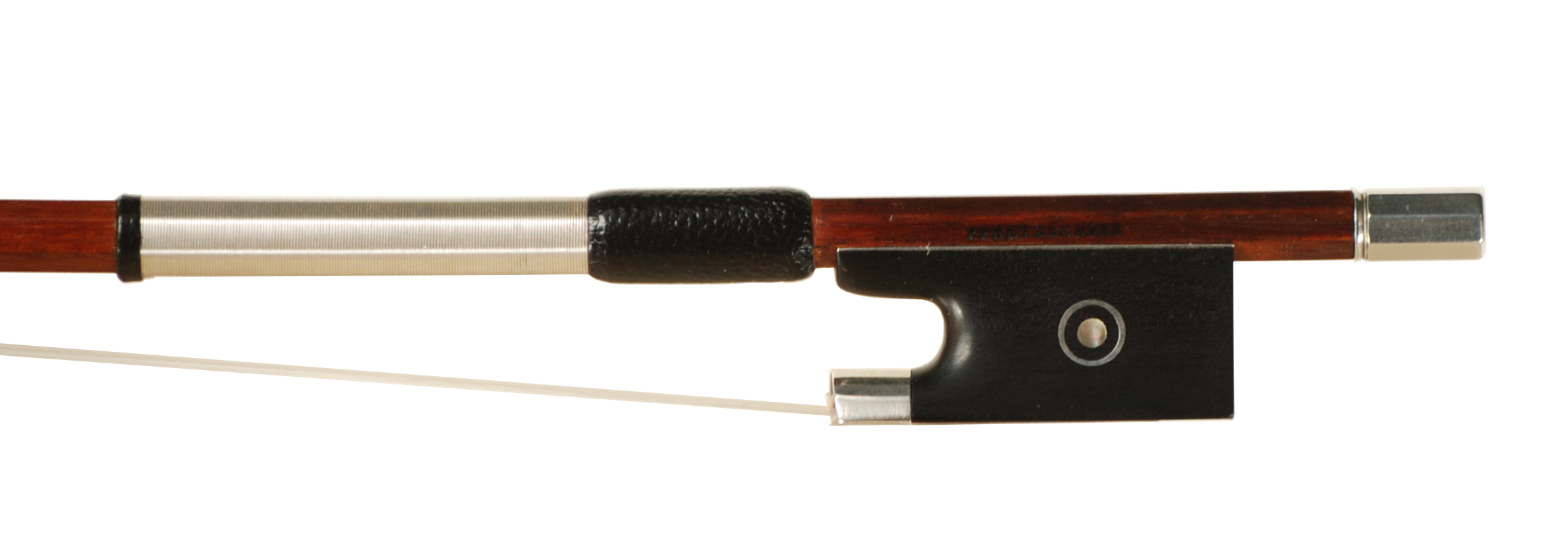
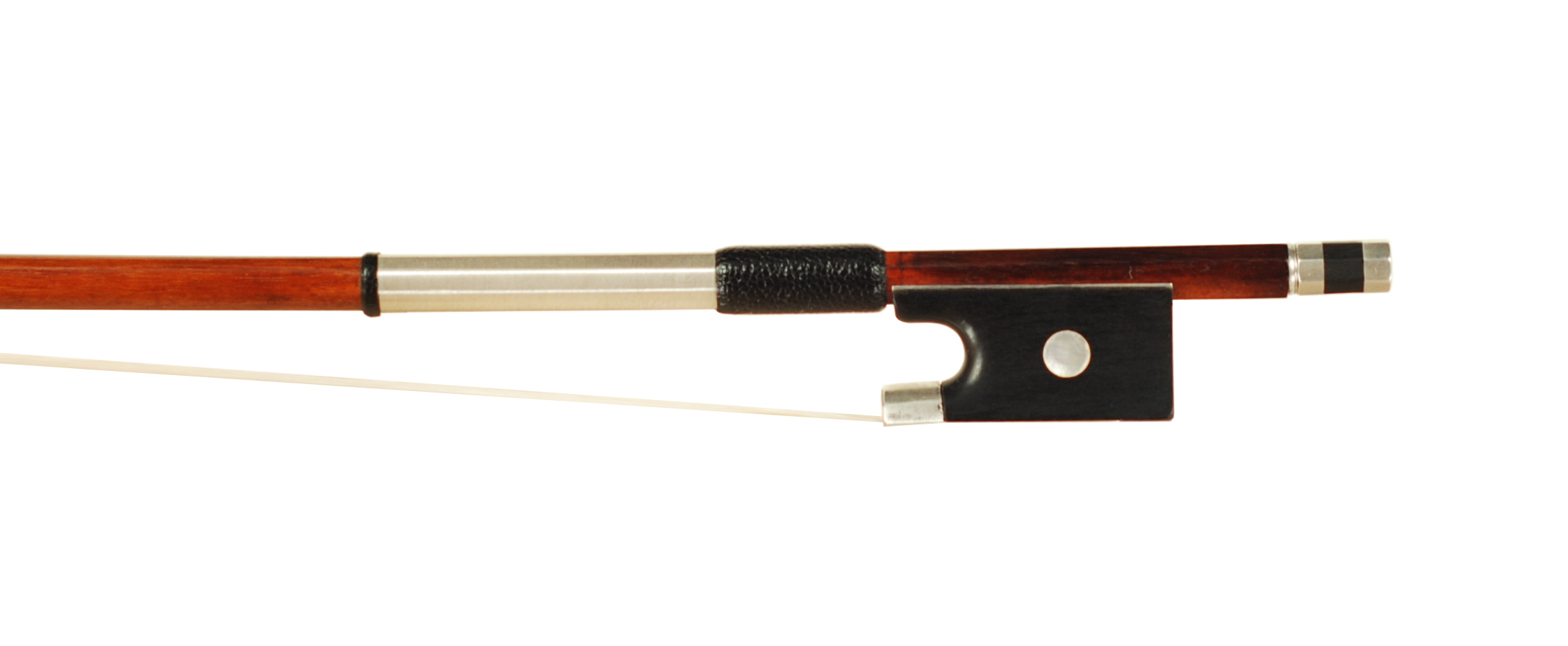
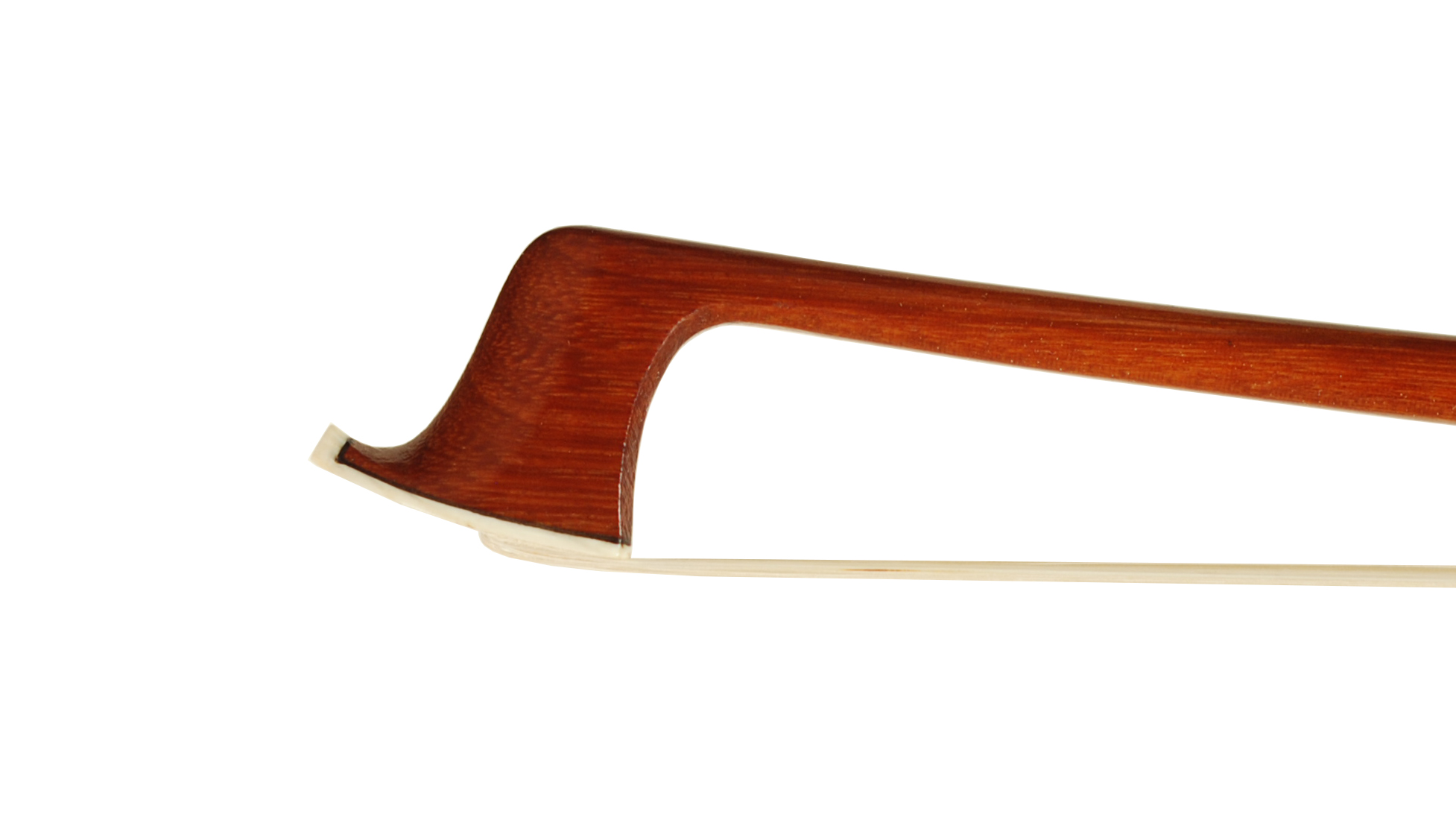
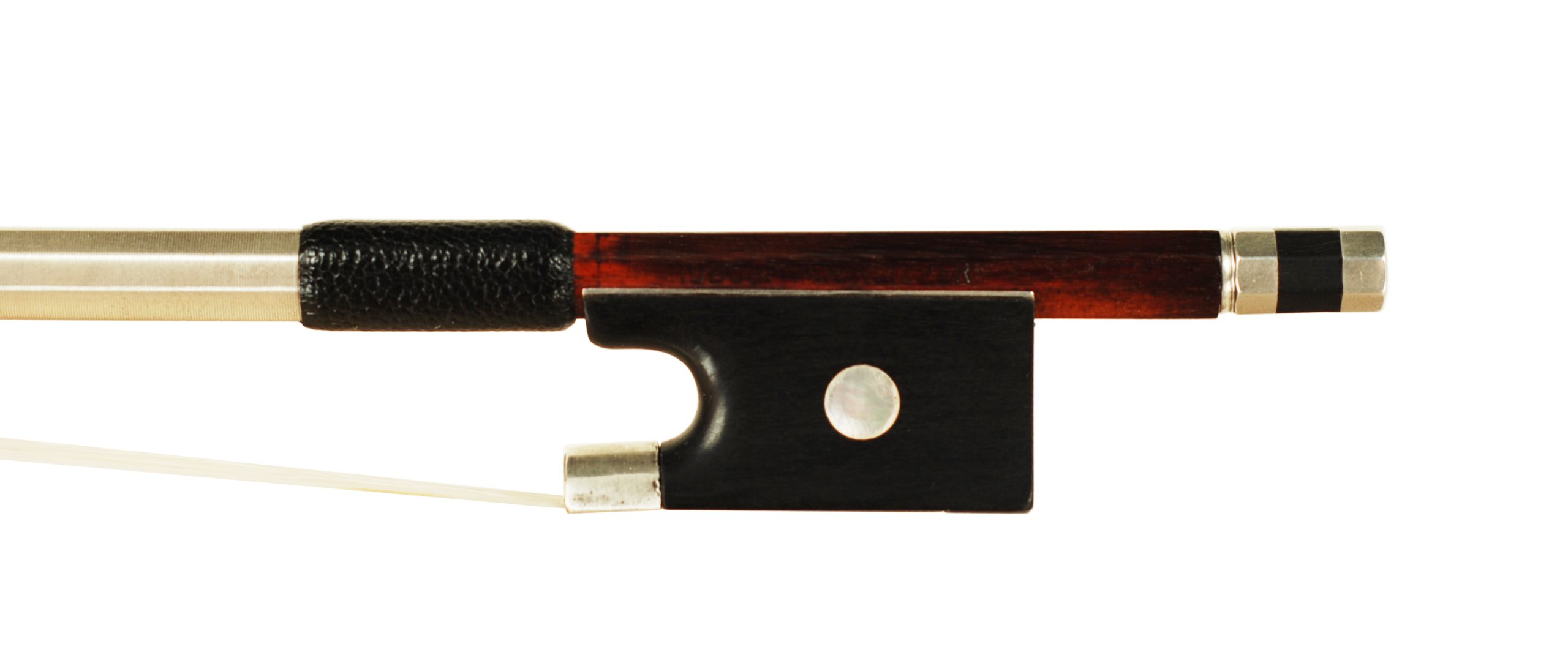
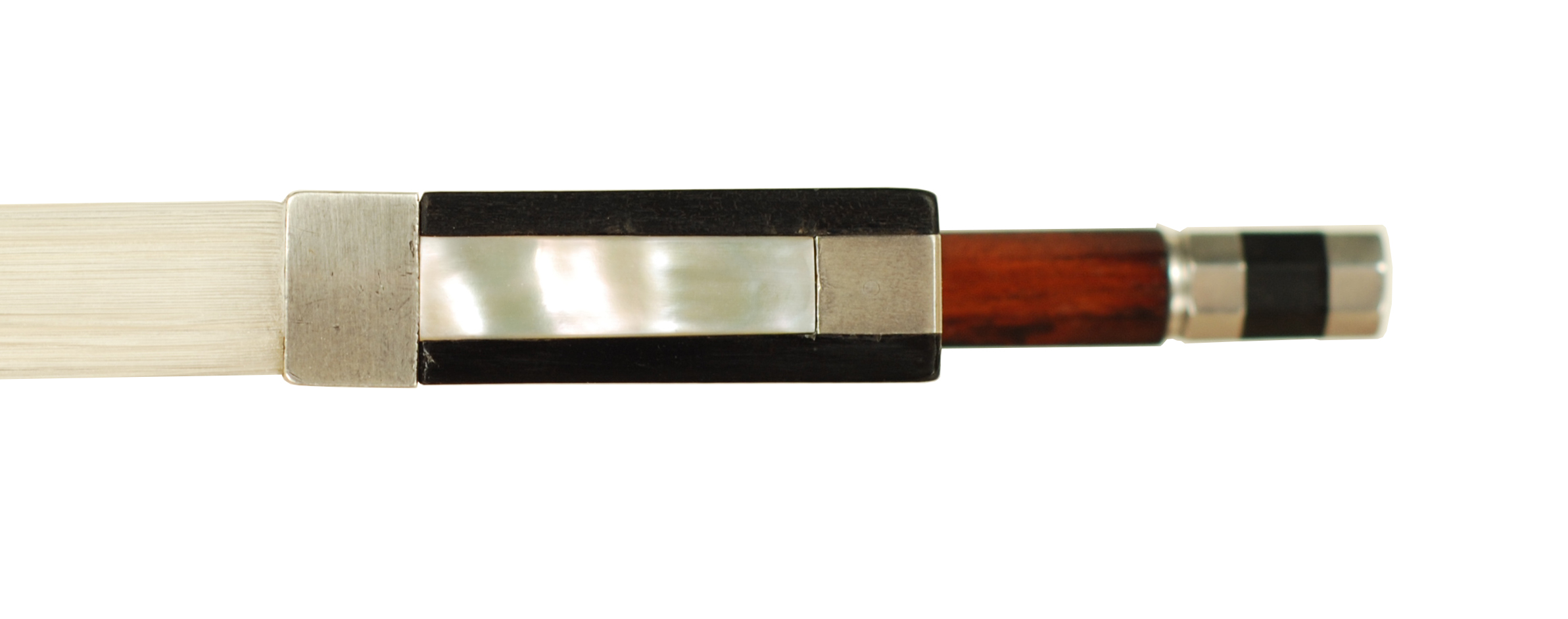
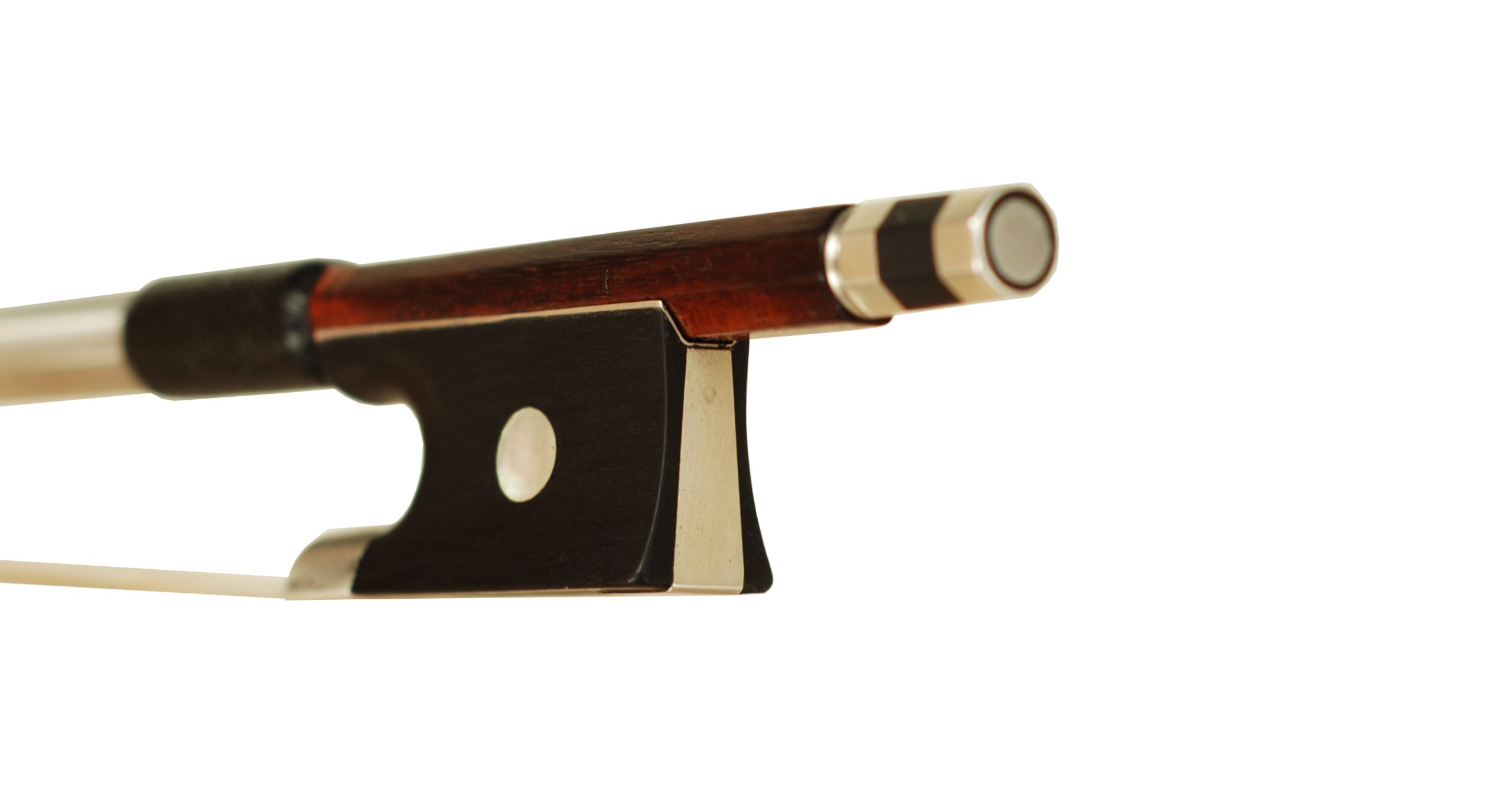
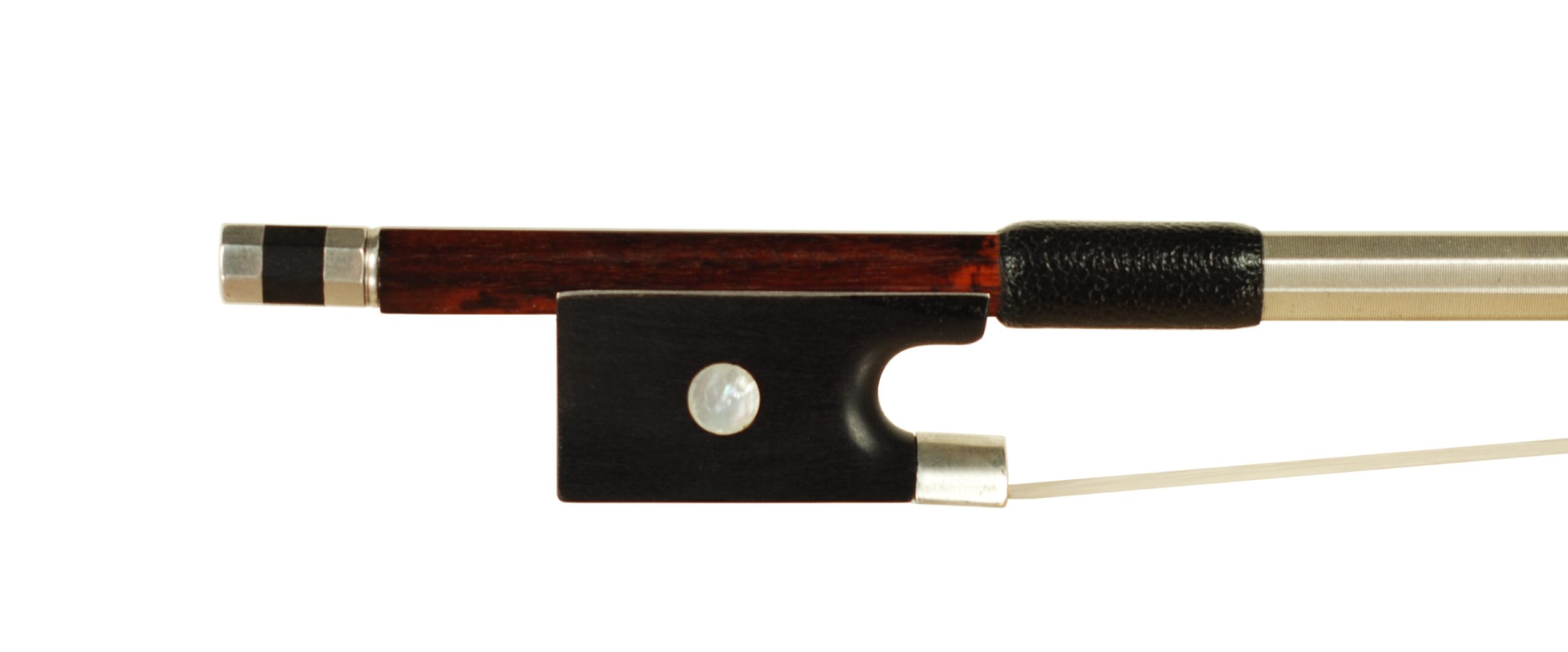
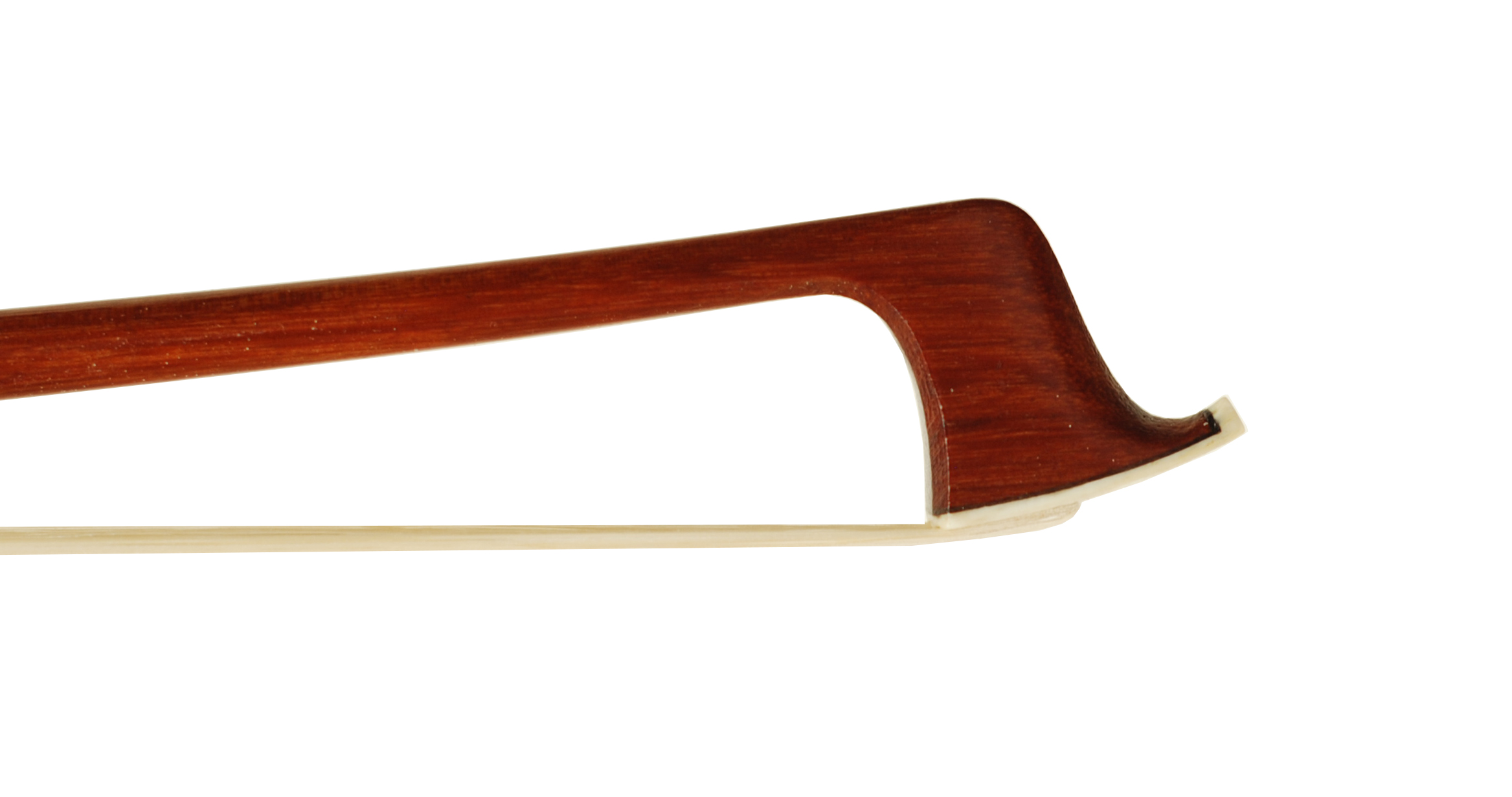
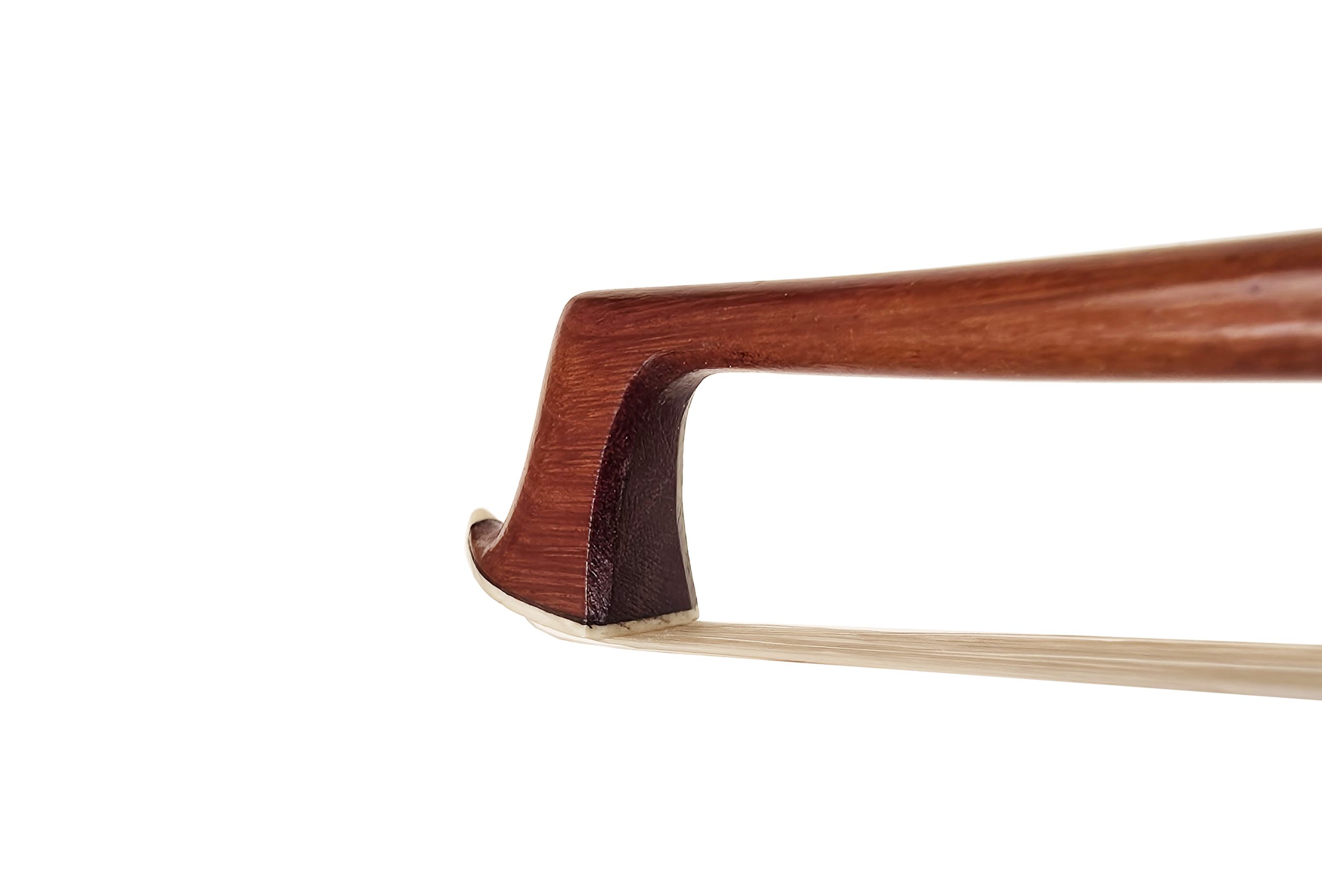
It is a beautiful sterling 130 years plus silver mounted pernambuco violin bow in round section and is in excellent condition. The head of the bow is original, even the ivory facial for the tip. Perfect. I love how the front of the tip is like a turned-up bull dog’s nose. A very strong and erect tip. I gave the bow a new sterling silver winding, a new leather lapping and thumb grip all in goat, one new mother-of-pearl 6.5 mm. eye on the player’s side of the frog and replaced the mother-of-pearl slide. The silver heel of the frog is one-piece and held to the frog by fine silver pins. The lining is also attached with fine silver screws. The ferrule extends past the throat by two millimeters. The bow plays in the hand – like Wow! The stick is firm and can handle aggressive play. The pernambuco is tight grain and the finish has a clear transparent golden/orange color. The pernambuco above the frog where the bow is handled, from years of playing is now a darker orange/brown color. This is all good and normal to see. A player or several players loved this bow; it didn’t just stay in their case. This decolorization above the frog is something I now look for as a bow restoration guy. The wood would have arrived from Brazil via a ship to Northern Germany, then by rail to the Saxony/Markneukirchen area in the mid 1800’s, selected to become a bow by a maker 10-15 years later after it had air dried. Then the bow made its way to America and the Rudolph Wurlitzer Company in Cincinnati to be sold. It could be made into a movie, the pernambuco bow’s life, its route from tree, to harvest, to maker, to players, and their lives too. Can you tell I love this stuff!
Weight fully haired 59.7 grams